
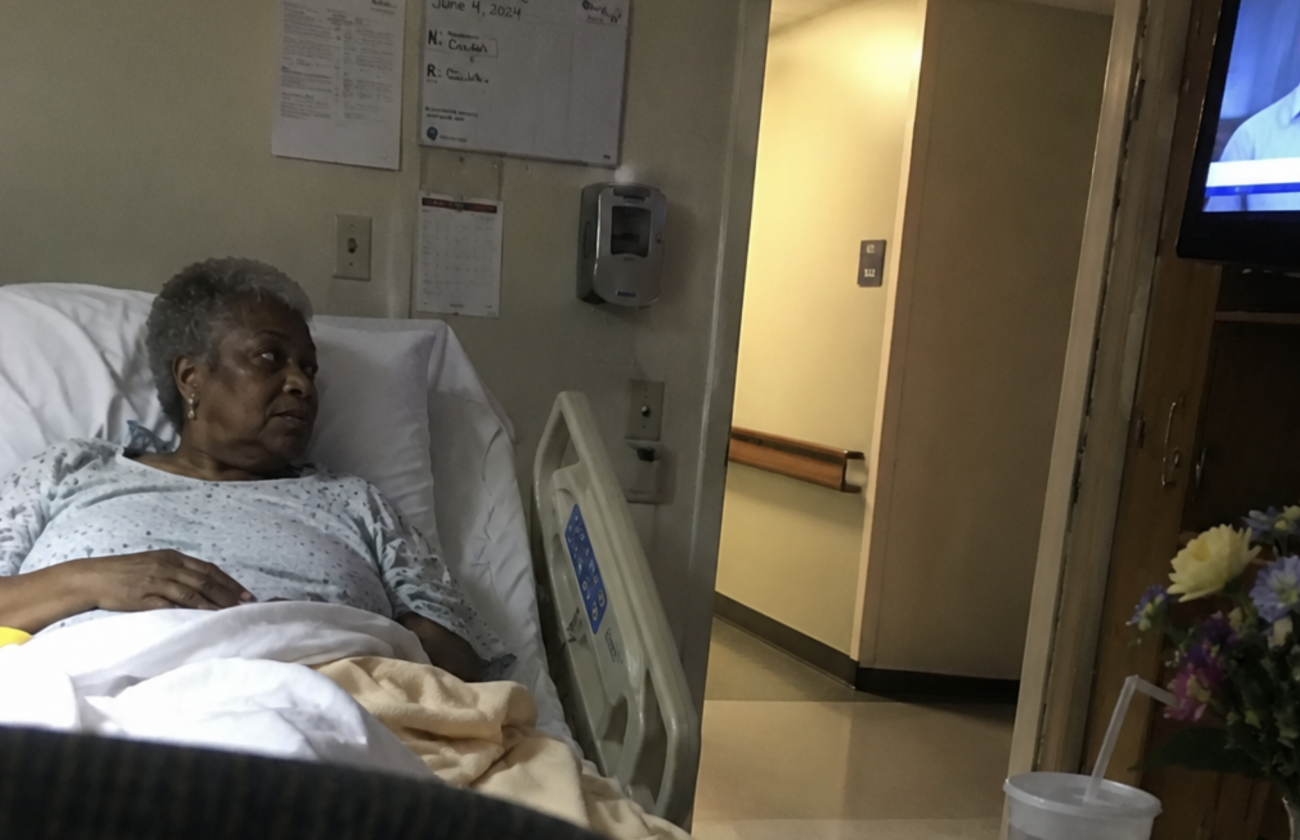
The Last Signature
The door opened just as Maria went quiet on the other end of the line.
Javier walked in wearing the expression he’d been rehearsing for weeks — grief tucked carefully into the corners of his eyes, a manila folder under his arm, his movements slow and deliberate, the way a man moves when he wants to be remembered as devoted.
I reacted without thinking.
“Yes, Mom,” I said into the landline, softening my voice. “I don’t know if I feel any better. I’ll call you later.”
I hung up slowly.
Javier watched me a beat too long.
“Your mother?” He set the folder on the table and adjusted my pillow with a tenderness so rehearsed it turned my stomach.
“She wanted to pray with me.”
“That’s good. You need the peace.”
Peace.
I almost laughed out loud.
Instead I closed my eyes, playing exhausted. When I opened them, the tenderness was already gone from his face. What was left was impatience.
“The doctor mentioned you might get more confused over the next few hours,” he said. “I brought some paperwork. Nothing complicated. Just so everything is in order.”
I looked at the folder without touching it.
“What kind of paperwork?”
“The house. Some accounts. I can walk you through it.”
The man couldn’t even wait for me to actually die. He wanted to manage me on the way out.
“Not now,” I whispered. “I’m dizzy.”
A small spasm crossed his jaw before he put the mask back on.
“Of course, my love.”
My love.
After what I’d heard from the hallway, those two words felt like something crawling across my skin.
Maria picked up on the first ring.
“He’s still here,” I said quietly.
“I’m on my way,” she said. “But listen to me. What I told you — that’s not all of it.”
The cold moved up my arms.
“What do you mean?”
She took a breath.
“That man has been killing you slowly. For weeks.”
For a moment the hospital disappeared around me. The hallway sounds, the air conditioning, even my own breathing.
“Maria—”
“Last time I cleaned the kitchen, I saw him throw out your real pills and swap the bottle. And I saw him put something in your evening tea. Dark drops. I thought it was vitamins. Until I heard him on the phone with a woman, saying it wouldn’t be long. That your liver was finally doing what it was supposed to.”
The nausea hit me so hard I had to press my hand over my mouth.
The nights.
The metallic taste that had been there for weeks.
The exhaustion that got worse exactly when Javier started insisting on taking care of me himself.
The way he always made the tea.
Everything lined up at once, and the shape it made was terrifying.
“Lucia.” Maria’s voice was steady in the way of a woman who has seen hard things and decided not to flinch. “If you fall apart right now, he wins. So you don’t fall apart.”
I swallowed.
“What do we do?”
No hesitation.
“First — you don’t sign anything. Second — I get into the house before he comes back. Third — you need a doctor who isn’t afraid of him.”
I thought of one immediately.
“Andrea Montalvo. She’s a hepatologist. She did her residency with my cousin. Javier talked me out of seeing her last year. Said there was no reason to complicate things.”
“Call her.”
I didn’t have my cell phone. Javier had taken it two days earlier, said I needed to rest.
But I knew Andrea’s number by heart — my cousin had pushed it on me so many times I’d memorized it just to make her stop repeating it.
I dialed with shaking hands.
A focused, alert voice answered.
“Dr. Montalvo?”
“This is Lucia Serrano. We met at a dinner at Adriana’s — I need help. Right now. And I need my husband not to know.”
Whatever she heard in my voice, she didn’t ask unnecessary questions.
“Give me the room number and hospital. I’m close.”
The next hour was the longest of my life.
Javier came and went twice. Once with juice I didn’t touch. Once with the folder again. I faked sleep, confusion, weakness. Every time he touched my hand I had to resist pulling it away. At one point he stood by the window sending messages on my phone, a small smile on his face I wasn’t supposed to see.
I watched him from under my lashes and stored every detail like it was already evidence.
At six-fifteen, someone knocked.
A woman in a white coat stepped in — hair pulled back, posture straight, eyes clear and unhurried.
“I’m Dr. Andrea Montalvo. I’m here to review Mrs. Serrano. Interconsult, requested by the patient.”
Javier stood up immediately.
“We didn’t request any interconsult.”
Andrea didn’t look at him.
“The patient requested it. As long as she can speak for herself, that’s enough.”
It was the first time since I’d heard him in the hallway that I watched Javier genuinely lose his footing.
Andrea examined me carefully. She read my charts. She asked me specific questions — when the decline started, who had been managing my medications, whether I’d had episodes of sudden fatigue, nausea after certain drinks, changes in my symptoms since someone else took over my pills.
I answered everything.
Javier tried to cut in twice. The second time, Andrea stopped writing and looked at him.
“If you answer for her one more time, I’ll have you removed.”
He left, saying he was going to call the hospital director. Andrea waited until the door closed.
“Your liver values are poor,” she said quietly, turning her tablet toward me. “But not poor enough to justify ‘two days’ without something else going on. These spikes don’t fit the diagnosis on your chart. I want to run a full tox panel and review everything you’ve been given.” She paused. “Has someone been giving you something outside of your prescribed medications?”
I held her gaze.
“Yes.”
She looked at me for a moment and understood I wasn’t confused.
“Alright. Don’t eat or drink anything unless I bring it or a nurse I’ve cleared brings it. And I need a sample of whatever he’s been giving you at home.”
“Maria is getting it.”
A small furrow between her brows.
“Maria?”
“The woman who is going to save my life.”
She didn’t smile. But she nodded.
“Then let’s move fast.”
At seven-ten, a note arrived through a nurse Andrea had stationed on my side. It was folded inside a gauze packet.
Maria’s handwriting, small and deliberate:
*I have the folder. I also found an unmarked bottle hidden behind the flour canister. There’s more: a life insurance policy signed three weeks ago. Sole beneficiary: Javier. Very large sum.*
Three weeks ago.
Right when he started suggesting I stop seeing certain doctors because they “stressed me out.”
I folded the paper with cold fingers.
When Javier came back he was carrying coffee and wearing an expression that didn’t quite cover the panic underneath.
“Who exactly is Dr. Montalvo and why is she ordering new tests?”
“Because I want to live,” I said.
His face went hard for just a second. Then the grieving husband came back.
“Don’t be dramatic. We all want that.”
*We all.*
Something about those two words made me want to laugh.
“Javier,” I murmured, letting my voice go soft and tired, “if I really don’t have much time left — I want you to stay here with me tonight.”
He blinked. He’d been expecting resistance, not closeness.
“Of course,” he said. “Of course I will.”
“And tomorrow… I’ll sign whatever you need.”
I saw it — just a flash, gone almost before it appeared. The most naked greed I’ve ever seen on a human face.
He leaned down and kissed my hand.
“I knew you’d do the right thing.”
I didn’t sleep that night.
Andrea came in at midnight with a second nurse and slipped a folded paper under my blanket.
*Preliminary toxicology positive for microdose hepatotoxic compounds. Cannot close diagnosis yet, but I can confirm someone has been poisoning you.*
I had to clench my jaw so Javier, dozing in the chair across the room, wouldn’t hear me.
I wasn’t crying from fear.
I was crying at the sheer obscenity of having let a man into my home, my body, my trust — a man who had been calculating my ending the way you calculate a return on investment.
At three in the morning he woke with a start and came to the bed. He touched my forehead. Then his hand moved slowly to my neck — not the way someone touches a person they love, but the way someone checks something they own.
I kept my breathing slow and even.
After a few seconds he went back to the chair.
I understood then that he wasn’t just waiting anymore.
At six a.m., with pale light beginning to show behind the blinds, Maria walked in.
Simple uniform. Hair tied back. Tired eyes.
But something new on her face.
Resolve.
Beside her was a thin man in a dark suit carrying a leather briefcase.
“Ma’am,” he said, approaching without acknowledging Javier, “I’ve brought the notary your father used. The only one in this city who doesn’t owe your husband any favors.”
Javier was on his feet immediately.
“What is this?”
Maria looked at him directly for the first time in all the years I’d known her — not with defiance, but without apology.
“The lady is putting her affairs in order. You’re going to stand there and be quiet.”
Javier laughed — the short, disbelieving laugh of a man who has never been told no by the right people.
“And who do you think you are?”
The notary opened his briefcase without hurry.
“Someone who reads property deeds,” he said. “And who knows what coercion of a vulnerable patient looks like. If you stay in this room, you stay silent and at a distance.”
I had never seen Javier back down.
That morning he did.
Not out of respect.
Out of calculation. Because he still believed, somehow, that he was going to come out ahead.
I signed with a trembling hand, but a steady one.
A new will. Revocation of all powers of attorney. Cancellation of his access to my accounts. Suspension of bank authorizations. Transfer of the house into a trust managed by a foundation my mother had spent years supporting. A life annuity for Maria. A fund for my cousin’s children. And one specific clause: if my death occurred while under investigation for suspected poisoning, no directly interested party could touch a single dollar until a court issued its ruling.
Javier went pale with each page.
“Lucia, this is insane,” he finally said, his voice losing its softness. “You’re confused. You’re medicated. Someone is manipulating you.”
Andrea walked in at exactly that moment.
“No,” she said, setting a printout on the table. “She was being manipulated before. Right now she’s informed.”
Javier looked at the results. Then at me. Then at Maria.
And understood, for the first time, that the room was no longer his.
“What exactly did that woman tell you?”
Maria didn’t wait for me to answer.
She reached into her apron pocket and set the unlabeled bottle on the table in front of him.
The color left his face completely.
The room went silent. Even the monitor seemed to beep louder.
Javier took one step back. Then another.
“You don’t know what you’re looking at.”
Andrea crossed her arms.
“Enough to have already called toxicology, and to have two officers on the way up.”
I looked at him from the bed. Still weak. Not broken.
“I heard you in the hallway,” I said.
The sentence went into him like something structural giving way.
His face changed. Not to remorse. Never to remorse. To something uglier — the hatred of a person who has been caught.
“You should have died last night,” he said, quietly.
Maria said something sharp under her breath. Andrea took a step forward. The notary snapped his briefcase shut.
And I, who had spent the last thirty-six hours genuinely afraid I would not make it out of this room, felt something cold and clear rise up in me.
“No,” I said. “You’re the one who planned the wrong funeral.”
Javier glanced toward the door, running the numbers — exits, versions, lies. He wasn’t finished. Just cornered.
A nurse appeared in the doorway and said officers were on their way in to speak with me.
And at that moment Maria leaned close to my bed and said, very quietly:
“Ma’am. The house is taken care of. But there’s one more thing you need to see before he tries to walk out of here.”
She held up my phone — the one Javier had taken from me three days ago — and showed me the screen.
An open conversation with a contact saved as *Vero ❤️.*
The last message, sent by Javier at 3:12 in the morning, read:
*If she signs tomorrow, we’re free by tomorrow night. If she doesn’t — we’ll have to move up the timeline on the old woman.*
I set the phone down on the blanket.
I didn’t look at him.
There was nothing left to see.
*Author’s Note: This is a work of fiction created for entertainment purposes. All characters, locations, and events are fictional. Any resemblance to real persons or events is entirely coincidental.*