
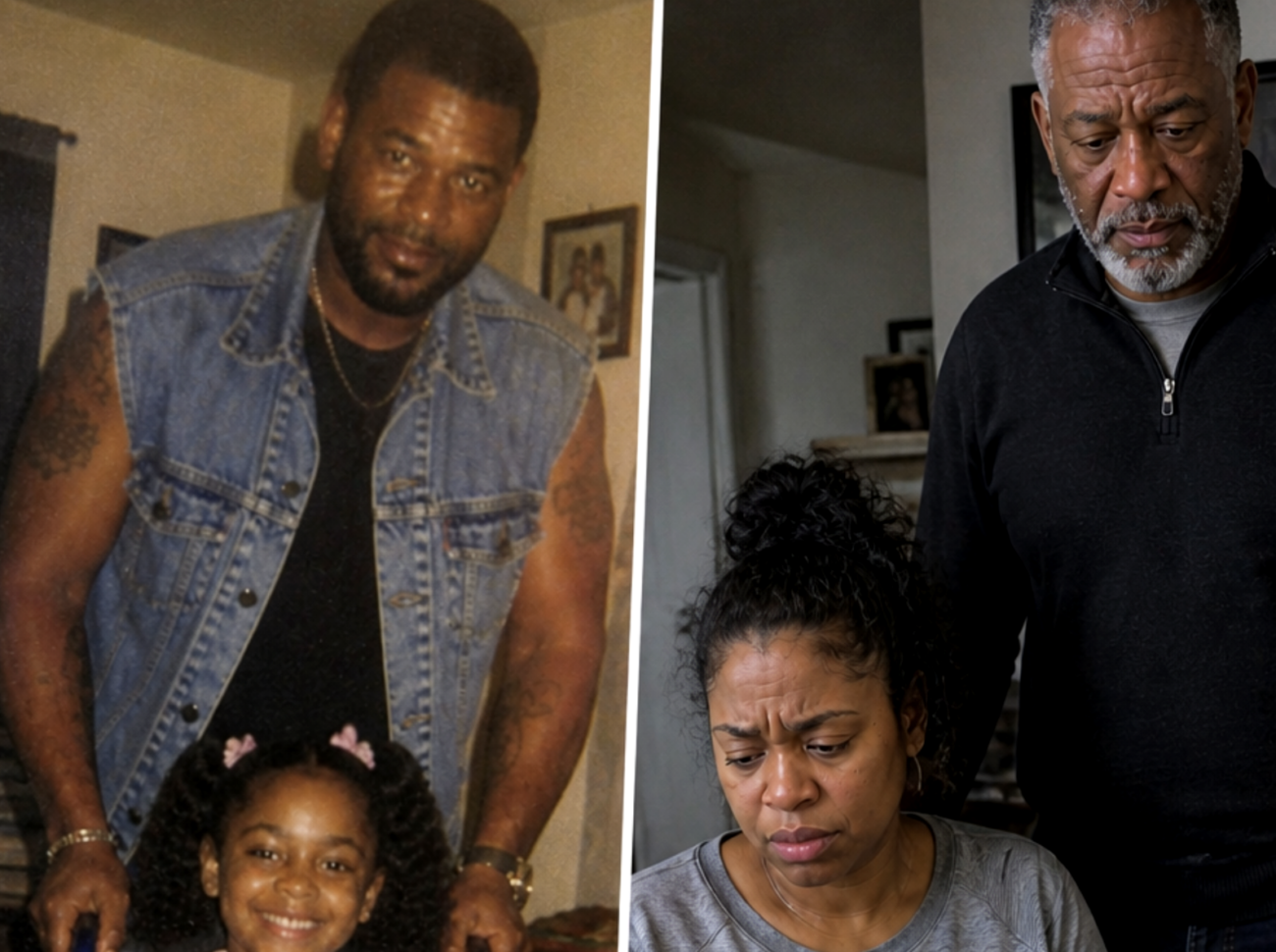
I was 26 when my uncle died—the man who raised me after my parents were gone.
At his funeral, I thought I was saying goodbye to the only person who had ever truly been there for me.
Then Mrs. Patel handed me a letter.
My name was written on it in his rough, familiar handwriting.
I opened it with shaking hands.
The first line made my chest tighten.
“Hannah, I’ve been lying to you your whole life.”
I don’t remember the accident.
That’s what I’d always been told—that there was a crash, my parents died, and I survived… but I never walked again.
That was the story. Clean. Simple. Final.
But before that, I had a life.
My mom used to sing too loudly in the kitchen. My dad always smelled like motor oil and peppermint gum. I had light-up shoes and a purple cup I refused to let go of.
Then one night, everything ended.
Or at least, that’s what I believed.
After the accident, the state started talking about “placements.”
Then my uncle Ray showed up.
Big hands. Quiet voice. Always looking like he hadn’t slept enough.
“They’re not taking her,” he told the social worker. “She’s mine.”
He didn’t know what he was doing.
But he learned.
He watched nurses, wrote things down, practiced until he got it right. He woke up every two hours the first night we got home, checking on me like I might disappear if he didn’t.
He built ramps. Fought insurance companies. Burned dinners while arguing on the phone about things we couldn’t afford not to have.
He never said it—but everything he did said it for him:
You’re staying. You’re safe.
He learned how to braid my hair by practicing on a doll.
It was terrible.
I loved it.
When I hit puberty, he handed me a bag of “supplies” and refused to make eye contact.
“You watched YouTube, didn’t you?” I asked.
He grimaced. “Those girls talk too fast.”
We didn’t have much.
But I never felt like a burden.
When I cried about everything I’d never be able to do, he’d sit beside me and say, firm and steady:
“You’re not less. You hear me? Not less.”
As I got older, my world got smaller.
My room became everything.
Ray made sure it was enough.
Shelves I could reach. A makeshift tablet stand. A little herb garden by the window because I once said I liked basil.
“It’s perfect,” I told him, crying.
He just shrugged. “Try not to kill it.”
Then he started slowing down.
At first, it was small things.
Forgetting keys. Sitting down halfway up the stairs. Breathing heavier than before.
Eventually, he went to the doctor.
Stage four.
Everywhere.
He didn’t change much after that.
Still made my breakfast. Still brushed my hair.
Still said, “I got you.”
Even when he clearly didn’t have much left.
The night before he died, he sat beside me and held my hand.
“You know you’re the best thing that ever happened to me, right?” he said.
I tried to joke, but my voice broke.
“I don’t know what to do without you.”
“You’re gonna live,” he told me. “You hear me?”
Then, quieter:
“I’m sorry. For things I should’ve told you.”
The next morning, he was gone.
And then there was the letter.
He told me the truth.
Not the version I grew up with.
The real one.
That night… my parents had come to see him.
They were leaving. Starting over somewhere new.
Without me.
He lost it.
He yelled. Accused them. Called them selfish.
He saw my dad had been drinking.
He could’ve stopped them.
He didn’t.
“They drove away angry,” he wrote. “Because I wanted to win.”
Twenty minutes later—
the crash.
I sat there, unable to breathe.
My whole life had been built on a lie.
He didn’t stop there.
He told me something worse.
That in the beginning…
he resented me.
Not because of me—but because I reminded him of what his anger had caused.
“I’m ashamed of it,” he wrote. “But it’s the truth.”
And then—
he told me everything else.
The money he never talked about. The overtime. The trust he set up so I could have a future bigger than that room.
Everything he did…
was his way of trying to make it right.
“I couldn’t undo that night,” he wrote.
“But I tried to give you a life anyway.”
I didn’t know how to feel.
Anger. Love. Gratitude. Pain.
All at once.
A month later, I rolled into a rehab center.
For the first time in years, I tried.
Really tried.
They strapped me into a harness.
My legs trembled.
“Again,” I said.
And again.
And again.
Last week—
for the first time since I was four—
I stood.
Not perfectly. Not for long.
But I stood.
Do I forgive him?
Some days… no.
Some days, all I feel is what he took from me.
But other days—
I remember his hands steadying me. His terrible braids. His voice telling me I wasn’t less.
And I realize…
I’ve been forgiving him in pieces for years.
He couldn’t undo what happened.
But he didn’t run from it either.
He stayed.
He carried me as far as he could.
And now—
the rest is up to me.