
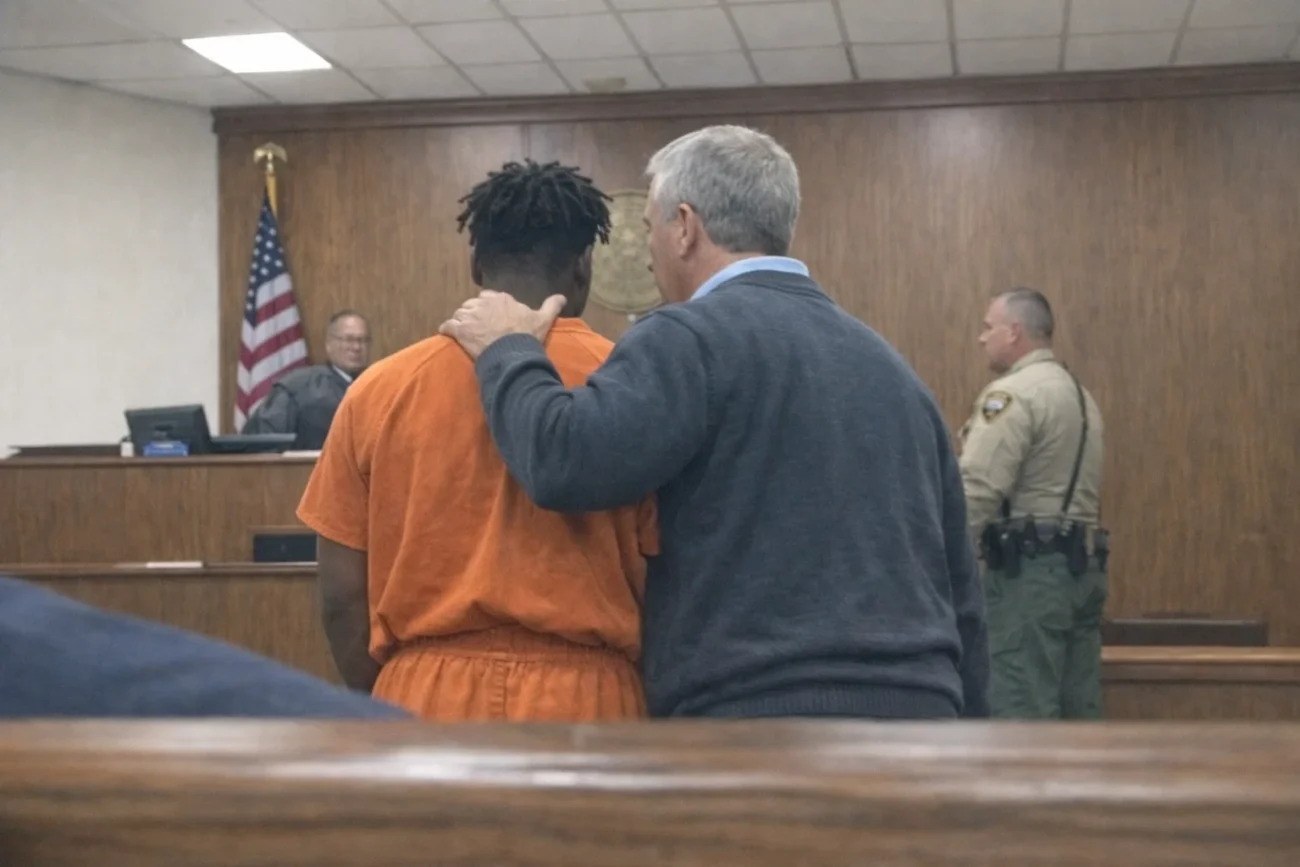
When the judge asked me why I wanted mercy for the teenager who shot me, the entire courtroom was staring at me.
The prosecutor looked irritated.
My brother wouldn’t look at me at all.
Keon sat at the defense table with his head down, hands trembling inside a pair of handcuffs that looked too big for his wrists.
“Mr. Reynolds,” the judge said, “this young man shot you at point-blank range. You nearly died. He is facing twenty years in prison. Why would you ask this court to reduce his sentence?”
The truth didn’t start in that courtroom.
It started three days before the shooting.
I own a small convenience store on the corner of Maple and 8th. It’s not glamorous, but it’s mine. I built it from nothing after my divorce. It paid the bills. It gave me purpose.
Three days before I was shot, I noticed a teenager pacing near the baby aisle.
I watched him on the security monitor.
He picked up a can of formula. Put it back. Picked it up again. Looked over his shoulder. Slipped it into his backpack.
I stepped out from behind the counter and stopped him at the door.
He froze.
Didn’t run. Didn’t fight.
Just stood there shaking.
He was thin. His hoodie sleeves were too short. He smelled like cheap detergent and stress.
“What’s in the bag?” I asked.
He didn’t answer.
I unzipped it myself.
Formula.
I remember thinking how expensive it had gotten. I remember thinking about shrinkage reports and insurance and how small businesses don’t survive on sympathy.
So I called the police.
I didn’t ask him why.
I didn’t ask who it was for.
I didn’t ask anything.
They arrested him in front of customers. In front of neighbors. In front of whoever happened to be walking by.
He didn’t cry.
He didn’t beg.
But when they pushed him into the back of the squad car, he looked at me.
It wasn’t anger.
It was humiliation.
Three nights later, he came back.
The footage shows him standing outside my store for almost ten minutes. Walking away. Coming back. Walking away again.
When he finally stepped inside, I recognized him immediately.
He pulled the gun before I could speak.
I don’t remember the sound of the shot.
I remember the expression on his face after.
It wasn’t rage.
It was panic.
Like he had just realized he’d done something permanent.
I collapsed on the floor between the candy rack and the soda fridge.
He ran.
I survived.
Months later, his mother knocked on my door.
Her eyes were tired in a way that didn’t come from one bad day.
She handed me a letter from juvenile detention.
Keon wrote that the formula was for his baby sister. Their benefits had been delayed. The baby had been drinking watered-down milk. He said he panicked.
He wrote that when he was arrested in front of neighbors, his stepfather beat him for “bringing shame to the house.”
He wrote that when he came back to my store, he wasn’t thinking clearly.
He wrote, “I thought if I scared you, I could scare the feeling away.”
That line sat with me.
Because I remembered the look on his face the night I called the police.
And I realized something uncomfortable.
I had seen the fear.
I had seen the desperation.
And I still chose procedure over people.
In court, I made it clear that Keon had to take responsibility.
He pulled the trigger.
That matters.
But I also told the judge that punishment alone wouldn’t fix what led to that moment.
If we locked him away for twenty years without addressing the poverty, the instability, the violence at home—what exactly were we solving?
The prosecutor said mercy would send the wrong message.
Maybe.
But what message do we send when we refuse to acknowledge context?
The judge reduced his sentence. Not erased it. Reduced it. Mandatory counseling. Education requirements. Vocational training. Family services.
Keon still faces consequences.
But he also faces a chance.
Last month, I received another letter.
He earned his GED. He’s in a trade apprenticeship. He helps care for his sister.
He wrote, “You didn’t excuse what I did. You just didn’t give up on me.”
I still have the scar across my chest.
It aches when the weather changes.
But I’ve learned something about scars.
They can harden you.
Or they can remind you that survival gives you choices.
The night I was shot could have ended two lives.
Instead, it changed two.
And that’s why I asked for mercy.
Not because I forgot what happened.
But because I understood how it started.
If this story moved you, share it with someone who believes accountability and second chances can exist at the same time.