A deep vibration rolled through the floor, low and heavy, rattling the windows of my nearly empty diner. Outside, the blizzard screamed like it was trying to erase the world, but this noise was different. Mechanical. Organized. Alive.
I stood behind the counter counting the last money in the register. Forty-seven dollars. That was it. Seven days left before the bank took everything.
The rumble grew stronger.
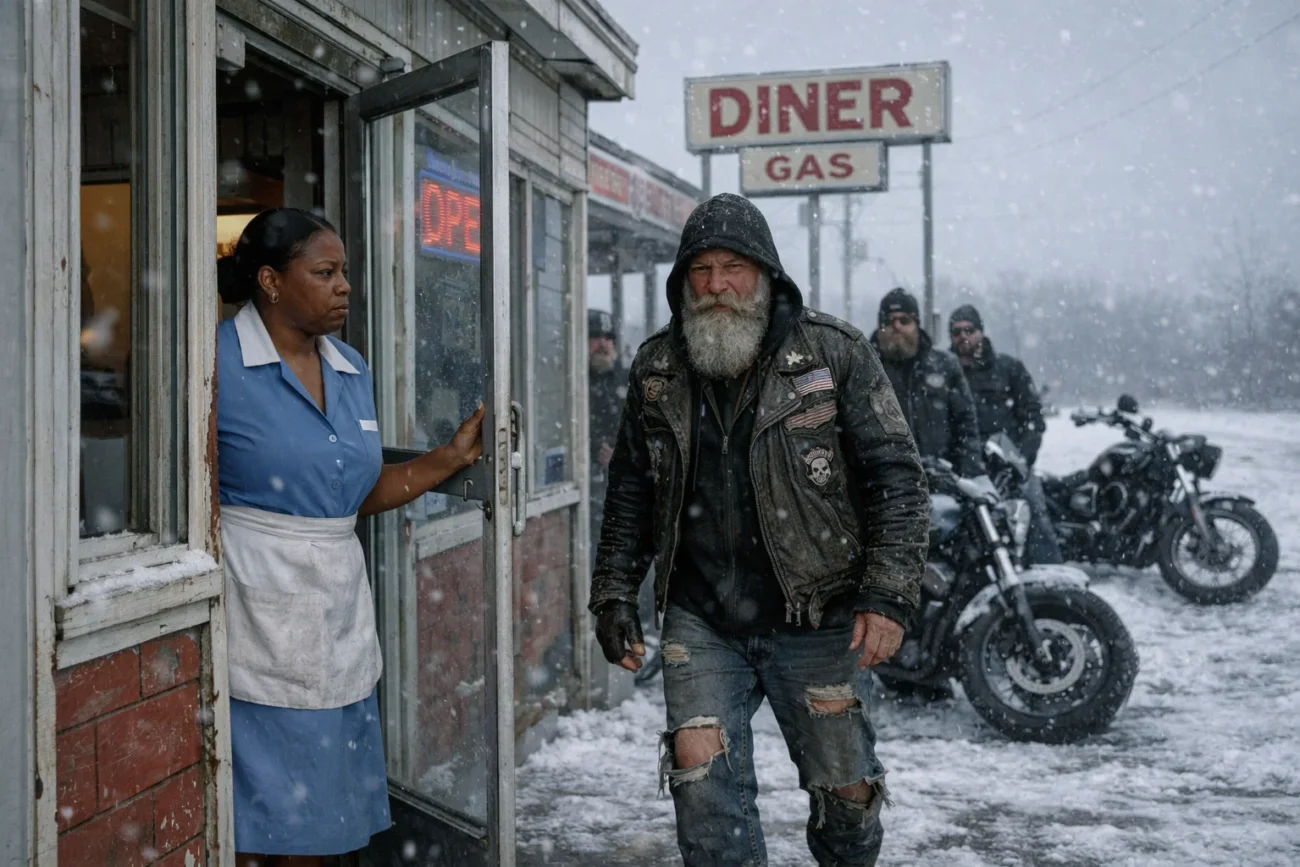
Headlights appeared through the snow—one, then many—cutting sharp lines through the white chaos. Not cars. Motorcycles. Big ones. Moving in formation, engines roaring against the storm like they had something to prove.
Fifteen bikes pulled into my parking lot.
My chest tightened.
A man dismounted from the lead bike. He was huge, moving slowly, favoring one leg. The others followed, stiff with cold, shoulders heavy with exhaustion. They didn’t look like hunters. They looked like men who had been fighting the night for too long.
I thought about turning off the lights. Pretending I wasn’t there.
Then I remembered my husband David’s words, spoken years ago in this same diner:
“We keep the light on, Anna. Someone out there always needs it.”
The knock came—three firm taps. Not aggressive. Final.
I opened the door.
The wind hit like a punch. Ice burned my skin as the man stepped inside, his beard crusted with snow. When he turned, I saw the patch on his leather vest: a flaming skull with wings.
The Warlords.
My stomach dropped.
“We saw your light,” he said quietly. “The road’s gone. We have cash. We just need warmth.”
Every instinct screamed no.
But he didn’t push past me. He waited. So did the others, still standing in the storm.
“How many?” I asked.
“Fifteen.”
I stepped aside. “Come in.”
Relief flickered across his face.
They entered carefully, filling booths meant for families and truckers. Leather creaked. Steam rose from frozen jackets. The diner smelled like gasoline, snow, and fatigue.
I made coffee. Strong. Hot. Fifteen mugs lined the counter. Hands wrapped around them like lifelines.
I cooked what I had—chili and grilled cheese. Nothing fancy. Just food meant to keep people alive.
They ate quietly.
One man read a paperback. Another sketched salt shakers. They said “thank you.” Every time.
The leader sat at the counter watching me, saying little. His name was Cole.
“You’re alone out here,” he said.
“My husband passed,” I replied. “It’s just me.”
“I’m sorry,” he said, and I believed him.
The lights went out suddenly.
Before panic could rise, one of the bikers fixed the generator like it was nothing. No questions. No drama.
Later, one of them collapsed. A deep wound. Infected. I treated it with what little I had. I’d been a nurse once. Training comes back when it’s needed.
I found a photo in his jacket—a little girl missing two teeth, smiling like the world hadn’t taught her fear yet.
“He’s trying to get back to her,” someone whispered.
Then another engine arrived.
A truck.
My blood ran cold.
Mr. Sterling. The banker. The man counting down the days until my diner disappeared.
He walked in smiling, talking about offers and deadlines.
Cole stood.
The room shifted.
Names were spoken. Old wounds uncovered. Deals exposed. Power changed hands without a single punch thrown.
By morning, the storm broke.
The diner was saved. Debt erased. The deed placed gently on the counter.
“You earned it,” Cole said. “You gave us shelter.”
They left with the sunrise, engines fading into the distance.
I stood alone again, sunlight spilling over the counter.
Forty-seven dollars still lay there.
But it didn’t feel like fear anymore.
It felt like a beginning.
Because kindness is a light—you don’t shine it expecting anything back. But sometimes, when the night is at its worst, the right people see it.
And they bring the dawn.