I’m twenty-six years old now, and I haven’t felt the ground beneath my own feet since I was four. Most people look at this wheelchair and think they know my whole story—they see a girl who was born in a hospital bed. But I had a “before.” I had light-up sneakers and a purple sippy cup. I just don’t remember the day all that stopped.
The story I was fed my whole life was simple: a terrible car crash, my parents gone, I survived, but my spine didn’t. The state was ready to toss me into the system, but then my Uncle Ray walked in.
Ray looked like he was built out of concrete blocks and bad weather. Big, rough hands and a permanent scowl that could stop a clock. He told the social worker, “Nah. She’s mine. I ain’t handing her over to no strangers.”
He brought me home to a little house that always smelled like burnt coffee and motor oil. Ray didn’t have kids. He didn’t have a wife. To be honest, he didn’t have a clue.
The Man Who Learned to Be a Mother
But that man stayed up nights learning. He watched the nurses like a hawk and copied every single move. He set alarams for every two hours, shuffling into my room with his hair sticking up just to roll me over so I wouldn’t get sores.
I remember the first time he tried to braid my hair. His huge, calloused hands were shaking so bad my heart almost hit the floor for him. It looked a hot mess—lumpy and crooked—but he tried. He fought insurance companies on speakerphone, pacing the kitchen tiles, shouting, “Don’t you dare tell me what she can ‘make do’ with. You come down here and tell her that yourself!”
When I was a teenager and I’d cry because I knew I’d never dance at a prom or just stand in a crowd, Ray would sit on the edge of my bed, jaw tight, and look me dead in the eye. “You ain’t less, Hannah. You hear me? You ain’t less.” He made that house a whole world because he knew the real world wasn’t built for a girl like me.
The Letter That Buried the Hero
Ray started slowing down in his fifties. By the time he actually went to the doctor, the cancer had already moved in and taken over. He died at 53—worked himself straight into the dirt.
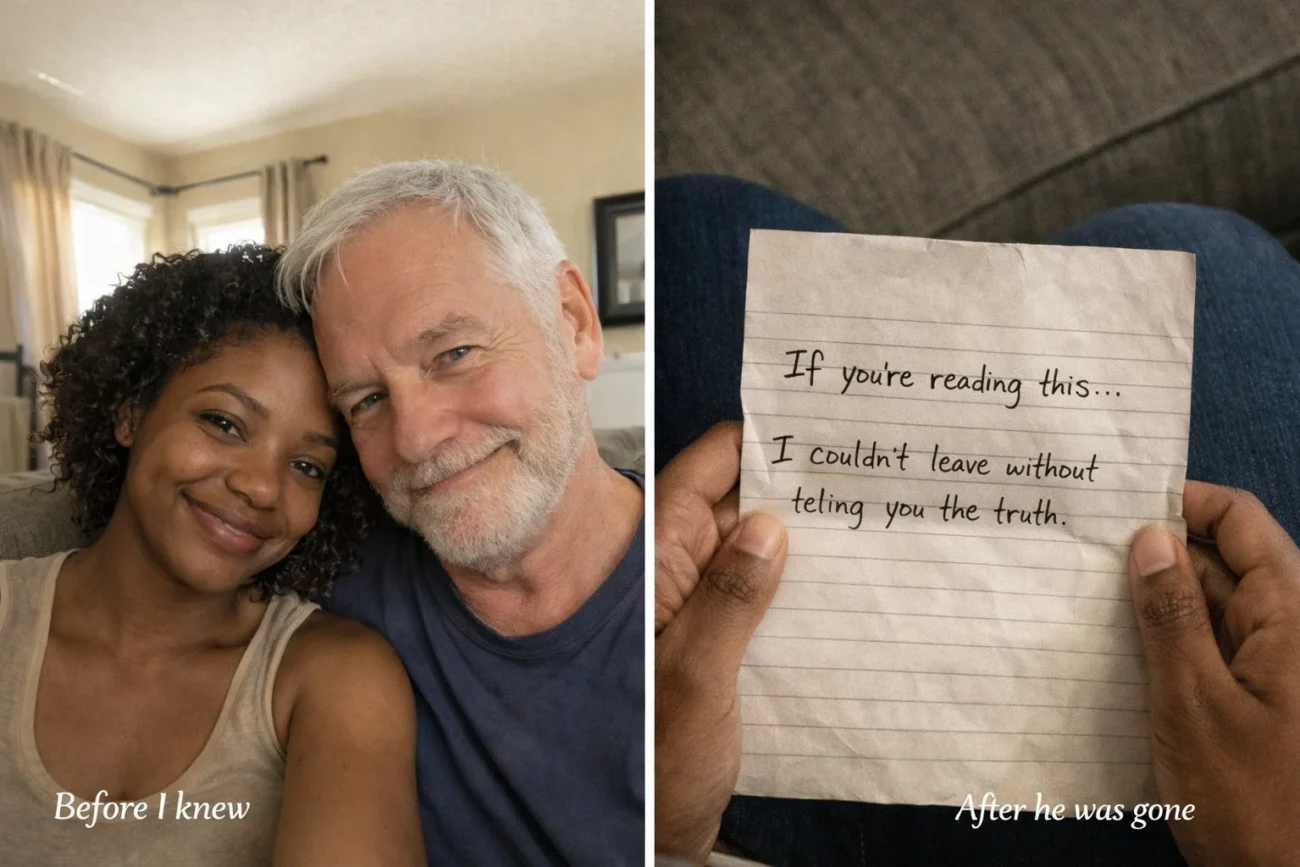
After the funeral, the house felt ghost-quiet. His boots weren’t by the door. His mug was still in the sink. That afternoon, our neighbor, Mrs. Patel, walked in with an envelope. It was Ray’s heavy, blunt handwriting. She’d been crying so hard her eyes were swollen shut.
The first line of that letter turned my blood to ice: “Hannah, I’ve been lying to you your whole life. I can’t take this with me.”
He wrote about the night of the crash. It wasn’t just “bad luck.” My parents had come over that night to drop off my overnight bags. They told him they were moving for a “fresh start” in a new city—and they weren’t taking me. They called me a “burden.” They were drunk, messy, and screaming.
Ray wrote that he saw the bottle in the car. He knew my dad was twisted. He wrote: “I could have taken his keys. I could have called a cab. But I was so angry at them for trying to abandon you that I wanted to win the fight. My pride let them drive away angry.”
Twenty minutes later, they wrapped that car around a pole.
Paying a Debt That Never Ends
He wrote that when he first brought me home, looking at me in that chair felt like God was punching him in the soul every single day. He confessed that, in the beginning, he even resented me—not for what I did, but because I was the living proof of his temper.
But then the letter shifted. I always thought we were just scraping by, but Ray had been working insane overtime as a lineman for twenty years. Storm shifts, overnight calls, holidays—he never missed a beat. He took my parents’ life insurance and hid it from the state so they couldn’t touch it.
“I put it all in a trust,” he wrote. “I sold the house. I wanted you to have enough for real rehab, the kind that costs a fortune. Real equipment. Real help. Your life doesn’t have to stay the size of this room. I broke it, Hannah. I tried my best to fix it.”
The Choice to Stand
A month later, I checked into a high-end rehab center. Last week, they strapped me into a heavy harness over a treadmill. My heart was hammering against my ribs. I was doing it because Ray paid for it with his life.
For the first time since I was four years old, I stood up. I felt the floor. I was shaking, tears blurring my vision, but I was upright.
Do I forgive him? Some days, hell no. He let my life break because he wanted to be right. But other days, I remember his rough hands washing my hair in the kitchen sink, whispering that I mattered.
Ray couldn’t undo that night. But he didn’t run from it, either. He spent the rest of his life walking right into the fire, carrying me the whole way. He gave me love, he gave me a home, and in the end, he gave me a door out. Now, it’s on me to walk through it.