
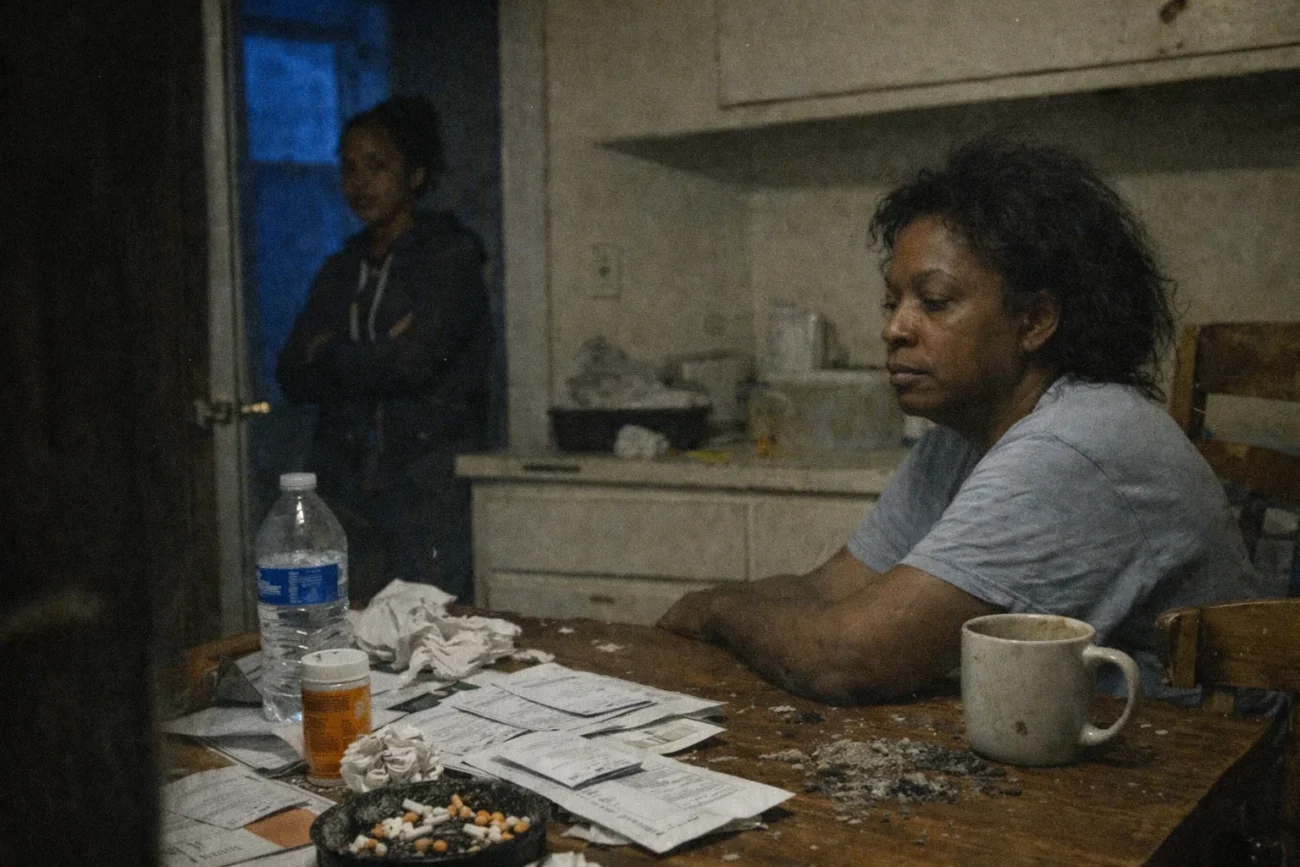
For decades, I viewed my mother as the living embodiment of a cautionary tale. In our judgmental hometown, she was the girl who “went wrong” at seventeen, carrying a child whose father remained a ghost. I grew up under the heavy weight of her public shame, listening to the whispers of aunts and neighbors who warned me never to let her “filthy blood” dictate my own character.
My mother was a wall of silence. After her marriage to my father burned down, I was left with my grandparents. My grandfather was my hero—the man who attended every school play and helped with my math while my mother lived in a cold, bitter poverty across town. Whenever she visited, she would scream at him, calling him “the devil” and “Satan incarnate.” I watched him calmly take her insults, shaking his head at her “madness.” I chose his kindness over her rage every single time.
When I moved back with her as a teenager, we barely survived. She jumped from one failing job to another, and when the hunger got too loud, she would go to my grandfather’s house, pick a fight, and come back with cash. I once asked her why she took money from a man she hated so much. She looked at me with hollow eyes and said, “He owes me a debt that gold can’t touch. You’ll understand when you’re older.”
The truth didn’t come until the dawn of my grandfather’s burial. My mother hadn’t attended the funeral. She sat by the window in a house filled with an ugly, starless dark. “Kurtis wasn’t just my son,” she whispered, her voice like a cold razor. “He was your grandfather’s child. And he didn’t die. They ended him.”
At sixteen, the man the world saw as a saint had cornered her, stealing her innocence and sealing her mouth with ritualistic death threats. She was so sheltered she didn’t know she was pregnant until the fourth month. Her mother beat the “shame” out of her while her father stood in the corner, showing her the bottles and eggs he claimed would kill her if she ever spoke. After a traumatic birth that nearly paralyzed her, she confessed the truth to her mother. She never saw baby Kurtis alive again. My grandmother simply told her, “A child born of such sin is not meant for this world.”
The love I had for that man died in that gray dawn. I realized then that my mother wasn’t “mad”—she was a survivor who had been bleeding on everyone because the one man who should have protected her had cut her to the core. She hadn’t taken me away to make me suffer; she had taken me away to keep me from the monster I was too blind to see.