
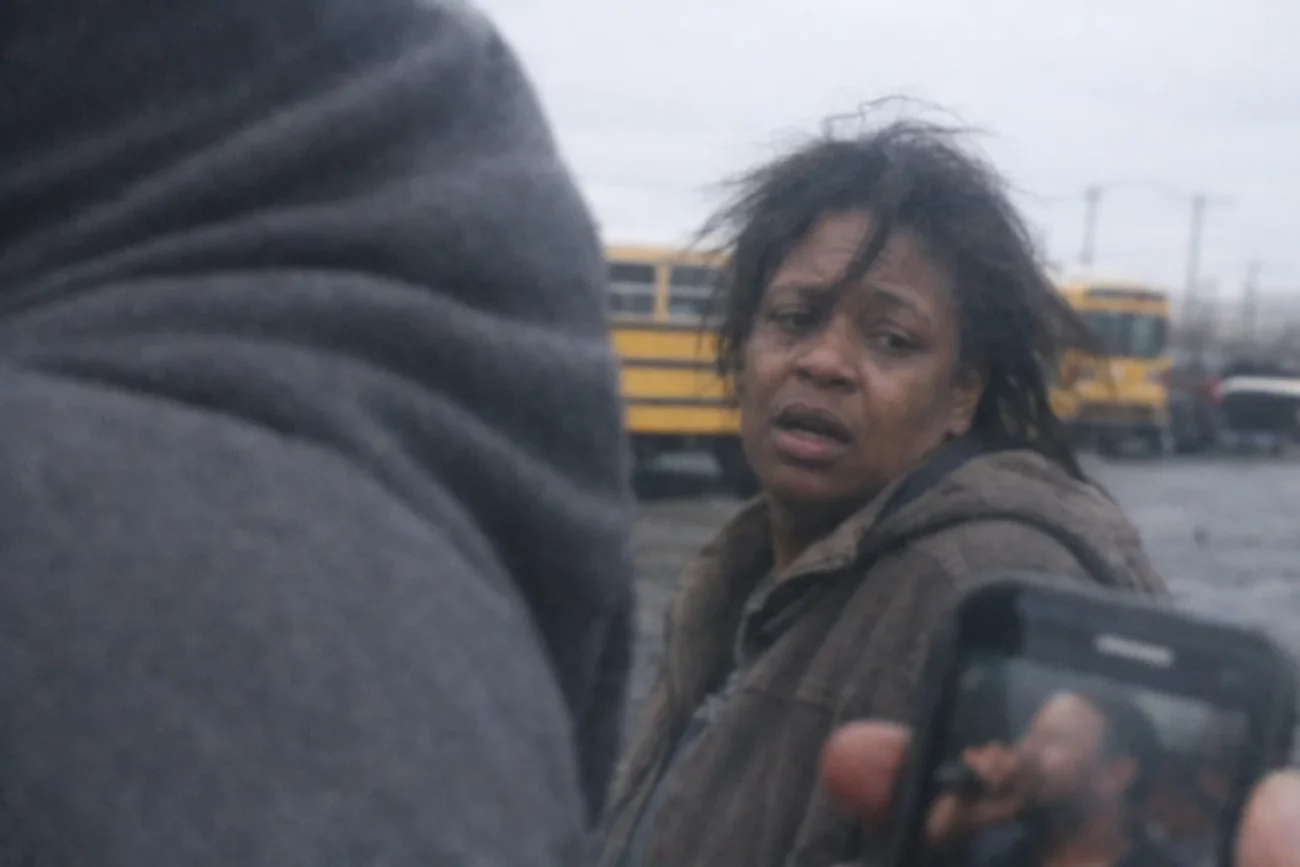
27 Years Ago Her Son Vanished on a School Bus, Today She Finds Him Singing Live on TikTok
For nearly three decades, Dawn Holloway woke up the same way every morning in Marcusville, Alabama — by glancing toward the quiet stretch of road where the number 17 school bus used to stop.
It was a habit she never broke.
Not since March 12, 1998 — the day her eight-year-old son, Jamal, disappeared.
That morning didn’t feel different. Dawn tied his sneakers, straightened his shirt, kissed the top of his head, and watched him climb onto the bus. Before the doors closed, they exchanged their usual double thumbs-up — a small ritual, something just between them.
By that evening, everything was gone.
Jamal never made it to school.
The bus driver, Walter Phelps, said he dropped him off at the front gate like always. But no one saw Jamal walk inside. The newly installed camera on the bus malfunctioned, capturing nothing but static.
Search teams flooded the area. Police combed through nearby woods, fields, and creeks. Volunteers joined in. Helicopters circled overhead.
Nothing.
No trace.
Days turned into weeks. Weeks into years.
Dawn printed flyers until her hands hurt. She followed every lead, no matter how small. She hired investigators she could barely afford. She joined online groups filled with other families holding onto the same kind of hope.
Her marriage didn’t survive the weight of it.
Her life became something else entirely — work, searching, waiting.
And refusing to let go.
As time passed, Dawn made sure Jamal didn’t fade into memory. She organized vigils. Spoke at events. Built what she called her “war room” — a space inside her home where maps covered the walls, marked with pins and notes tracking every possible sighting.
When technology started changing, she adapted.
Her niece, Tasha, helped her learn how to use a smartphone, how to navigate social media, how to stay connected to a world that kept moving even when hers felt stuck.
And then, 27 years later, something shifted.
It happened late one night.
Dawn was scrolling without really paying attention when a livestream stopped her.
A street musician in New Orleans.
The camera wasn’t steady. The lighting wasn’t great. Just a young man sitting on a crate, playing blues guitar.
At first, it meant nothing.
Then he turned slightly.
And Dawn felt it before she understood it.
A mark near his left ear.
Small. Oval.
She had traced that same mark with her finger when Jamal was a baby.
Her chest tightened.
She leaned closer to the screen.
The eyes.
The way he smiled — slightly uneven, familiar in a way that made her hands start to shake.
She didn’t breathe for a second.
Then she replayed it.
Again.
And again.
The man on the screen went by the name “Miles Carter.” At one point, he laughed at a comment and said, almost casually, “My mama used to call me Jay… short for Journey. Guess I never stopped moving.”
Dawn froze.
“Jay” wasn’t something anyone else used.
That was hers.
That was what she called Jamal.
She recorded the stream and called Tasha immediately. Together, they tracked down the account, found older videos, and eventually located where he was performing — near the French Market.
Then they called Detective Andrea Lopez.
She had reopened Jamal’s case years earlier.
Within hours, something clicked.
The livestream traced back to a hostel in New Orleans. The man was listed as Miles Carter.
Age: 27.
The math didn’t lie.
Dawn didn’t wait.
She booked a flight.
When she landed, everything felt unreal — the noise, the heat, the movement of the city. But none of it mattered.
All that mattered was a face she hadn’t seen in nearly three decades.
The meeting was arranged carefully.
Miles was asked to come to a local community center under a routine pretext.
When Dawn walked into the room, she saw him immediately.
Older. Changed. A stranger in so many ways.
And still…
not a stranger at all.
She didn’t rush him.
She sat down and slid a small photograph across the table.
“I used to know a boy who looked like this,” she said quietly.
Miles looked down.
His expression shifted — not recognition exactly, but something close.
When asked, he pulled back his collar slightly.
The birthmark was there.
Exactly where it had always been.
Dawn felt her composure break.
She started explaining. The bus. The day he disappeared. The years that followed.
When she said the name “Jay,” he flinched.
Not dramatically.
Just enough.
Enough to mean something.
What came next wasn’t immediate clarity.
It was fragments.
Miles spoke about a childhood that never quite settled. Moving constantly. A man he called his uncle — George Randall — who avoided attention, changed names often, and kept him out of school systems whenever possible.
He remembered being called “Jay” sometimes.
Mostly when the man had been drinking.
He remembered a song, too.
A lullaby that didn’t belong to that life.
“Row, Row, Row Your Boat.”
Dawn used to sing it every night.
The confirmation came later.
A DNA test.
No doubt left.
Miles Carter was Jamal Holloway.
The reunion wasn’t clean or cinematic.
It was raw. Complicated. Emotional in ways that don’t resolve in a single moment.
News spread quickly after witnesses posted about police activity in the area. Soon, the story reached far beyond New Orleans.
Jamal chose to speak.
Not just for himself — but for families still searching.
At a press conference, Dawn said something that stayed with people:
“Hope doesn’t move in a straight line. It bends. It breaks. But it doesn’t disappear.”
The investigation uncovered more.
Walter Phelps — the bus driver — had been living under another identity: George Randall.
He was arrested in Mississippi.
He later pleaded guilty to kidnapping and trafficking, receiving a 30-year sentence.
The case sparked wider conversations.
Dawn testified before lawmakers, pushing for stricter safety measures on school buses — tracking systems, accountability, changes that might prevent another family from living through what she had.
Back in Marcusville, the community showed up.
They organized a benefit concert.
Jamal — still known publicly as Miles — performed.
Not for attention.
But for something that finally felt like a beginning.
The money raised went to organizations supporting missing and exploited children.
A mural appeared on the wall of the local high school — a yellow school bus with open windows, silhouettes inside holding books and guitars.
Underneath it, a simple message:
“Every child deserves a ride home.”
Dawn and her son are still learning each other.
There are years that can’t be returned. Gaps that don’t close overnight.
But there are new memories now.
Small ones.
Real ones.
And sometimes, that’s enough.
These days, Dawn still walks past the road where the bus used to stop.
But it doesn’t feel the same.
The silence isn’t empty anymore.
Because after 27 years, the story she refused to let end… finally didn’t.
This story is a fictional narrative created for storytelling purposes. Names, events, and details have been adapted to preserve emotional authenticity.