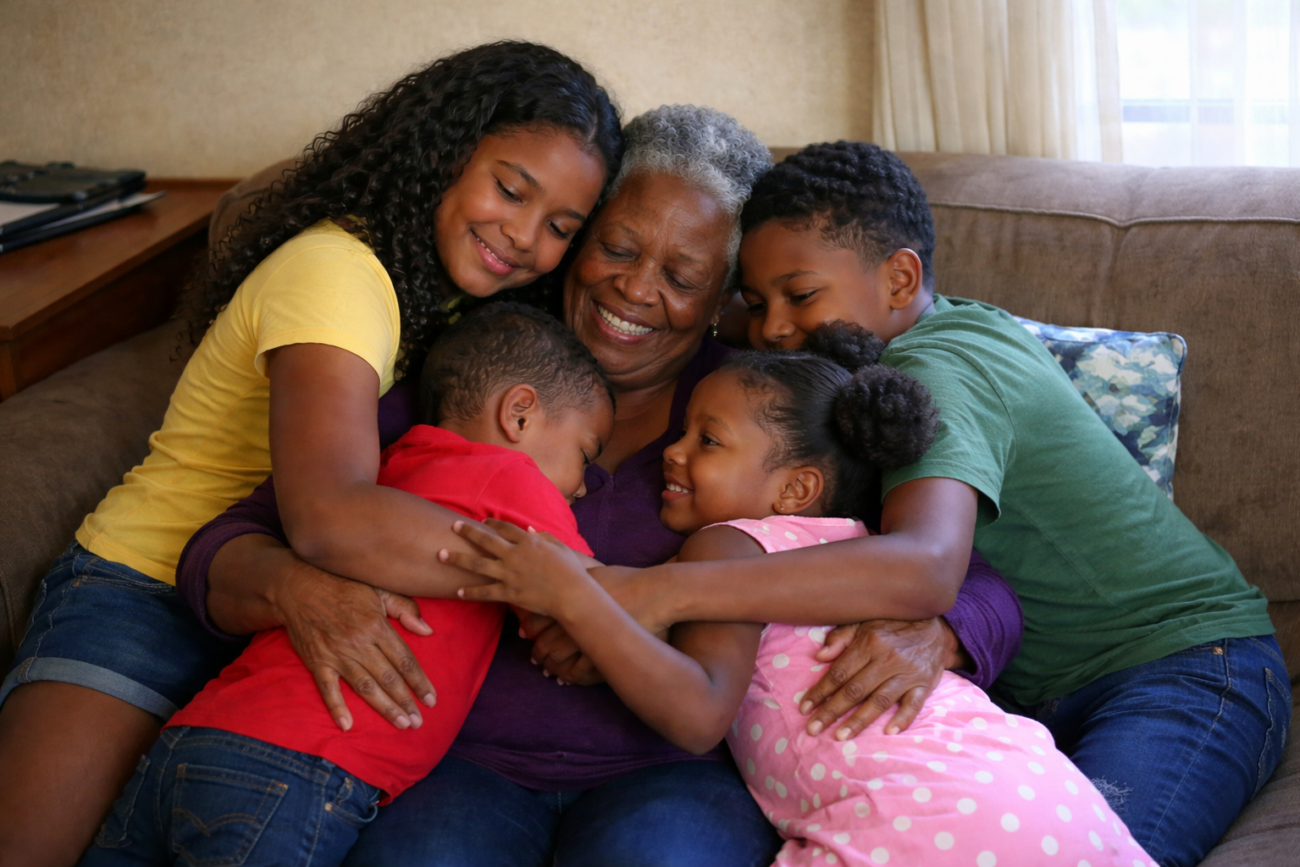
At 71, I became the guardian of my four grandchildren after my daughter and her husband were killed in a car accident. Six months later, a massive package arrived at my door—with a letter from my daughter that changed everything.
Six months ago, my world ended on a rainy highway.
My daughter Darla and her husband were driving back from a weekend conference. A truck lost control. The police said it happened fast. Neither of them survived.
That same night, I went from being Grandma… to being everything.
Lily was nine.
Ben had just turned seven.
Molly was five.
And little Rosie had only recently learned to tie her shoes.
The first weeks were unbearable. The house was filled with questions I couldn’t answer.
“Is Mommy coming home?”
“Why won’t Daddy call?”
Rosie kept setting a place for her mother at dinner.
I told them their parents loved them more than anything. That part was true. The rest… I tried to say gently, through tears I thought would never stop.
At 71, I went back to work. My pension barely covered utilities. I picked up shifts at a local diner. My back hurt. My hands shook sometimes from exhaustion. But every morning I got up because four small faces were depending on me.
We slowly created a fragile rhythm—school, homework, bedtime stories, quiet crying after lights went out.
Then, exactly six months after the accident, something arrived that shook everything again.
A delivery truck pulled up while the children were at school.
The driver knocked and asked where I wanted the box.
I hadn’t ordered anything.
The label said only:
To My Mom.
The handwriting on the shipping form looked painfully familiar.
It took three men to carry it inside.
When they left, the house felt impossibly silent.
I opened it carefully.
On top was a sealed envelope.
My heart knew before my eyes confirmed it.
Darla’s handwriting.
I opened it with trembling fingers.
“Mom, if this letter reaches you, it means I didn’t get the time I hoped for.”
I stopped breathing for a moment.
She wrote that there were things she hadn’t been able to tell me. That I would understand after I saw what was inside.
Beneath the letter were dozens of smaller boxes.
Each labeled with a future date.
Lily – 10th birthday
Ben – First day of middle school
Molly – First bike
Rosie – Kindergarten graduation
There were packages for heartbreaks, for college acceptance letters, for turning eighteen.
My daughter had prepared for moments she knew she would never witness.
At the very bottom was another note with an address and two words:
Go see him.
Two days later, I drove nearly two hours to a quiet neighborhood and knocked on a modest door.
A man named William answered.
He was Darla’s oncologist.
That’s when the second tragedy revealed itself.
A year before the accident, Darla had been diagnosed with stage-four cancer. Advanced. Aggressive.
She had kept it hidden.
From me.
From her husband.
From everyone.
William told me she spent her final months preparing for her children’s futures—quietly, deliberately. Buying gifts. Writing letters. Recording messages.
“She didn’t want anyone watching her fade,” he said.
He handed me a small velvet pouch.
Inside was a locket.
The photo inside showed the children hugging me at the lake last summer. Darla had taken it.
“She trusted you,” he added softly.
On the drive home, something kept bothering me.
Why had she hidden the diagnosis from her husband?
The answer came unexpectedly.
One afternoon, Molly showed me a drawing she had made months ago.
Four children. Mommy. Daddy.
And another woman labeled “Mommy 2.”
I felt my chest tighten.
Carefully, I asked her about it.
She said it was a lady who used to visit when Darla was at work. A lady Daddy hugged. One day Mommy yelled, and the lady stopped coming.
I spoke to a neighbor.
Her name was Jessica. The nanny.
I eventually found her.
She admitted the affair.
It had lasted months.
Darla had discovered it shortly before her diagnosis.
She hadn’t told her husband about the cancer because she no longer trusted him. She had planned to leave quietly after securing the children’s future.
But fate intervened before any of that could happen.
I sat in my kitchen for a long time that night.
My daughter had carried two unbearable burdens alone: betrayal and a terminal illness.
And she chose me to carry what remained.
The next morning, I made my decision.
The children would never hear about their father’s mistake.
They had already lost enough.
On Lily’s tenth birthday, I opened the first milestone box.
Inside was a beautiful leather journal.
On the first page, Darla had written:
“My brave girl, fill these pages with your dreams. I’ll always believe in you.”
Lily cried into my shoulder.
And I realized something.
My daughter hadn’t just left behind gifts.
She left behind strength.
And the responsibility to protect her children—not only from the world, but from truths that would break them.
At 71, I thought my life was winding down.
Instead, it began again—with four children, a box full of love, and a secret I will carry for the rest of my days.
This story is a fictional narrative created for emotional and inspirational purposes.