When I said the wrong child was standing at that table, I felt something inside me break in a way that doesn’t fix.
Not because I stopped loving my son.
But because I knew I was about to change his life forever.
My name is Daniel Whitaker. I’m forty-six years old. I’ve worked construction my entire life. I don’t speak in public. I don’t argue in courtrooms. I don’t know legal language. The only reason I was standing there that day was because a fourteen-year-old boy was about to lose his future for something he didn’t do.
The fire happened on a Thursday night in October.
It wasn’t some dramatic explosion. It started in our living room. A candle. A stupid argument. A moment that should have passed and didn’t.
Alana and Caleb had been fighting for weeks. He had just been accepted to a college three states away. It was his dream. It was also expensive. We were already behind on bills. Alana was proud of him, but she was scared. She didn’t want him to struggle the way we did. Caleb felt trapped. He felt like every decision he made carried the weight of our entire household.
That night, the argument escalated.
I wasn’t home yet. I was finishing a late shift.
What I didn’t know until weeks later was that Caleb had accidentally started recording on his phone earlier that evening. He used it to save music ideas sometimes. It stayed recording in his pocket.
You can hear everything.
Their voices raised. Not violent. Just tired. Frustrated. Two people who loved each other but didn’t know how to stop pushing.
Then something falls.
There’s a sharp sound. Fabric catching. Caleb panicking.
You can hear him trying to smother something. You can hear coughing. You can hear him swear under his breath.
And then you hear him run.
The fire spread faster than anyone could think.
Our building was old. Dry wood. Narrow stairwells. Smoke that filled the air before flames were visible.
Caleb made it outside.
Alana didn’t.
And Isaiah — the boy who confessed — had been upstairs studying with him.
When Caleb stumbled out, coughing and disoriented, Isaiah went the opposite direction.
Back inside.
That’s the part nobody talks about.
He didn’t run.
He didn’t hesitate.
He went back in because he thought he could reach her.
Firefighters found him near the hallway, unconscious from smoke. He survived.
Alana didn’t.
In the chaos that followed, everything blurred together. Police. Investigators. Reporters. Neighbors standing outside watching our lives turn into headlines.
They found Isaiah inside the building.
They found chemical traces on his clothes because he had knocked over a cleaning bottle trying to push through smoke.
They found confusion.
They found a scared teenager who said, “It was me.”
At the time, I thought he was in shock.
I thought he was confused.
I didn’t know he was protecting my son.
Caleb changed after the funeral.
He stopped sleeping in his own room. He stopped answering messages from friends. He deleted social media. He barely spoke at dinner.
I assumed it was grief.
It was guilt.
Three weeks after the fire, I was going through his old phone trying to retrieve photos for insurance documentation. That’s when I saw the voice memo file.
The timestamp was twelve minutes before the first emergency call.
I almost didn’t play it.
When I did, I had to sit down.
You hear Caleb say, “I didn’t mean to.”
You hear Isaiah ask, “What happened?”
You hear panic.
And then you hear the moment everything changed.
Caleb says, “It’s spreading.”
You hear a door slam.
And you hear Isaiah say, “I’ll get her.”
That sentence has lived in my head ever since.
When I confronted Caleb, he broke in a way I had never seen before.
He told me Isaiah made him promise not to say anything.
He told me Isaiah said one family losing everything was enough.
He told me Isaiah said prison would be easier than watching his best friend carry the blame for his mother’s death.
Imagine being sixteen and hearing that.
Imagine being fourteen and deciding that was your responsibility.
Isaiah signed a confession.
He told detectives he had been experimenting with fire.
He said he acted alone.
He thought he was saving my son’s future.
And for weeks, I let the case move forward because I didn’t know the truth.
That’s the part I struggle with.
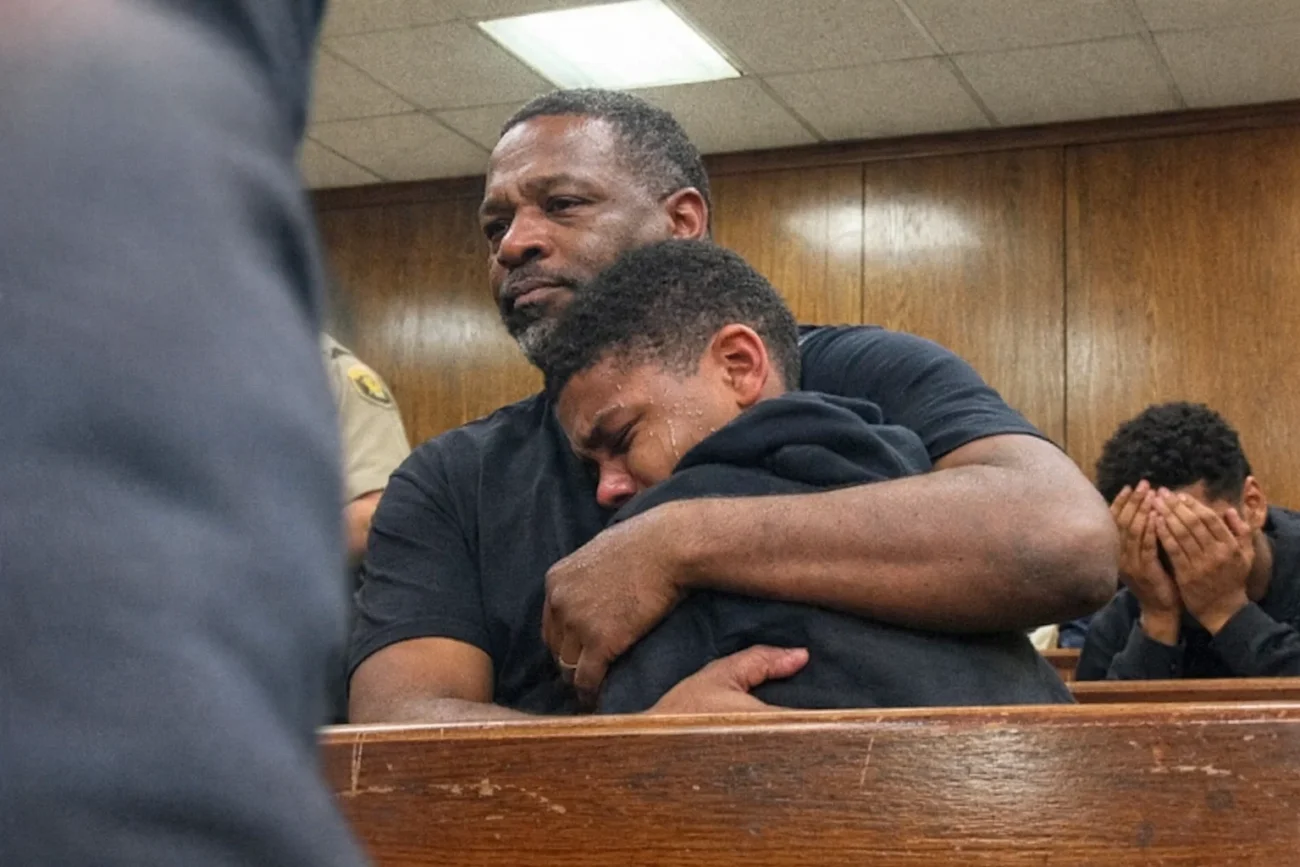
In court, when I finally stood up, I wasn’t choosing Isaiah over Caleb.
I was choosing honesty over fear.
The prosecutor looked like I had just dismantled months of work.
The judge reopened the investigation that day.
The confession was withdrawn pending review of the recording.
Experts analyzed the audio. They confirmed the timeline matched the fire report.
Isaiah’s role changed from suspect to attempted rescuer.
Caleb now faces consequences — not for intentional harm, but for negligence. For leaving. For not telling the truth immediately.
Legal consequences are still unfolding.
So are emotional ones.
Caleb is in therapy three times a week.
He cries more than he talks.
He asks me if I hate him.
I don’t.
I hate the moment.
I hate the argument.
I hate the candle.
I hate that a teenager believed prison was easier than honesty.
Isaiah is back home for now. He still checks on Caleb. They don’t talk about that night. Not yet.
People online have called me heartless.
They say I destroyed my own son.
What they don’t understand is this:
Lies don’t protect children.
They delay the damage.
If I had let Isaiah take the fall, Caleb would have grown up knowing someone else carried his mistake.
That would have destroyed him slowly.
This way, it hurts all at once.
But it’s real.
Alana believed in accountability. She believed in owning your mistakes and standing back up.
I don’t know what the final legal outcome will be.
I do know that no fourteen-year-old should go to prison for trying to save someone.
And no father should choose comfort over truth.
If you made it this far, ask yourself something difficult:
If protecting your child meant exposing them, would you do it?
Because love isn’t always soft.
Sometimes it’s standing in a courtroom and saying the words nobody wants to hear.