Thirteen years ago, I was barely starting out as an emergency room nurse. I wore my scrubs with the uneasy feeling that I hadn’t truly earned them yet. My hands sometimes trembled when I filled out charts. I checked everything twice, then a third time. I lived with the constant fear of making a mistake that could never be corrected.
That night, just before midnight, the alert came through: a multi-vehicle collision. Two adults. One child.
When the stretchers rushed through the doors, the ER erupted into controlled chaos—overlapping commands, monitors sounding, hurried footsteps echoing across the floor. Almost immediately, my attention locked onto the child. She was three years old. Small. Fragile. Dressed in a pink-striped shirt far too thin for the cold she must have felt.
Her parents didn’t survive. We still tried. We always do. But when the physician finally shook his head, the room fell into a silence heavier than any noise.
And there she stood. Avery. Alone. Her eyes wide as she watched unfamiliar faces move around her, as though she weren’t really there.
I knelt and opened my arms. She didn’t hesitate for a second. She ran straight into me and held on as if I were the last solid thing left in her world.
She refused to let go.
So I stayed.
I brought her apple juice in a flimsy paper cup and let it soak my scrubs. I found a battered children’s book from the waiting area and read it aloud. Again. And again. The third time, she tapped my badge and studied my name with great seriousness.
“You’re the good one,” she said.
I nearly came apart right then.
Later, a social worker pulled me aside. “No known relatives,” she said quietly. “Temporary placement. We’ll sort something out in the morning.”
Before I could stop myself, I spoke. “Can she stay with me tonight? Just until you figure it out.”
She looked at me carefully. “You’re young. You work shifts. You’re single.”
“I know,” I replied. “But I can’t let strangers take her away.”
One night turned into a week.
A week turned into months of inspections, parenting courses squeezed between shifts, and late-night internet searches on things like how to braid hair. I learned how to pack lunches. How to calm night terrors. How to survive on even less sleep than nursing school had required.
The first time she called me “Dad,” it slipped out in the frozen food aisle at the grocery store. I suddenly found frozen peas fascinating so no one would see my face.
Yes—I adopted her.
I moved to a more stable schedule. Opened a college savings account as soon as I could. Made sure she never doubted she was wanted. When she asked about her past, I told her the truth—about the accident, about how we met—but I always ended the same way.
“You didn’t lose everything,” I told her. “We found each other.”
Avery grew into a clever, strong-willed, funny kid. She inherited my sarcasm and her biological mother’s eyes—deep brown and warm, the only detail I knew from a single photo in an old hospital file. She loved drawing. Hated math. Teared up at animal rescue commercials and pretended she didn’t.
I didn’t date much. My life already felt complete. But last year, I met Marisa at work. She was composed, confident, sharp-witted. She liked that I prepared meals for Avery during night shifts. Avery was reserved but polite—which, for a teenager, meant approval.
After eight months, I bought an engagement ring.
Then one evening, Marisa came over acting strangely.
She didn’t sit down. Didn’t remove her coat. She simply shoved her phone toward me and said, “Your daughter is hiding something horrible. Look.”
My mouth went dry as the screen filled with messages.
Screenshots. Accusations. A name I didn’t recognize. Messages written in all caps, claiming Avery was lying about her identity—that she had “stolen a life” and manipulated me.
The room seemed to tilt.
“What is this?” I asked.
Marisa folded her arms. “I didn’t want to believe it, but I investigated. She’s been talking to this woman behind your back.”
I didn’t shout. I didn’t argue. I walked down the hall and knocked on Avery’s door.
She opened it immediately, her eyes already red.
“I was going to tell you,” she said. “I promise.”
We sat on her bed. She handed me her phone, her hands shaking.
The messages told a very different story.
They were cautious. Respectful. Uncertain.
Avery had taken a DNA test for a school assignment—never expecting anything. Against all odds, she matched with a woman who had been searching for her niece for more than a decade: the sister of Avery’s biological mother.
“She didn’t ask for anything,” Avery whispered. “She just wanted to know if I was okay.”
I read the final message: You don’t owe me anything. I just wanted you to know—you were loved before that night, too.
I looked at my daughter. My child. The one I taught to ride a bike. The one who still sent me jokes during my shifts.
“You didn’t hide this,” I said quietly. “You were scared.”
She nodded, tears spilling over.
Behind us, Marisa scoffed. “So that’s it? You’re fine with her lying?”
I stood.
“No,” I said calmly. “She’s been surviving.”
Marisa left that night. The ring stayed in a drawer.
A few weeks later, Avery asked if I would meet her aunt with her. We sat together in a small café. The woman cried when she saw Avery. She thanked me until I didn’t know where to look.
When we left, Avery slipped her hand into mine.
“I choose you,” she said. “Every time.”
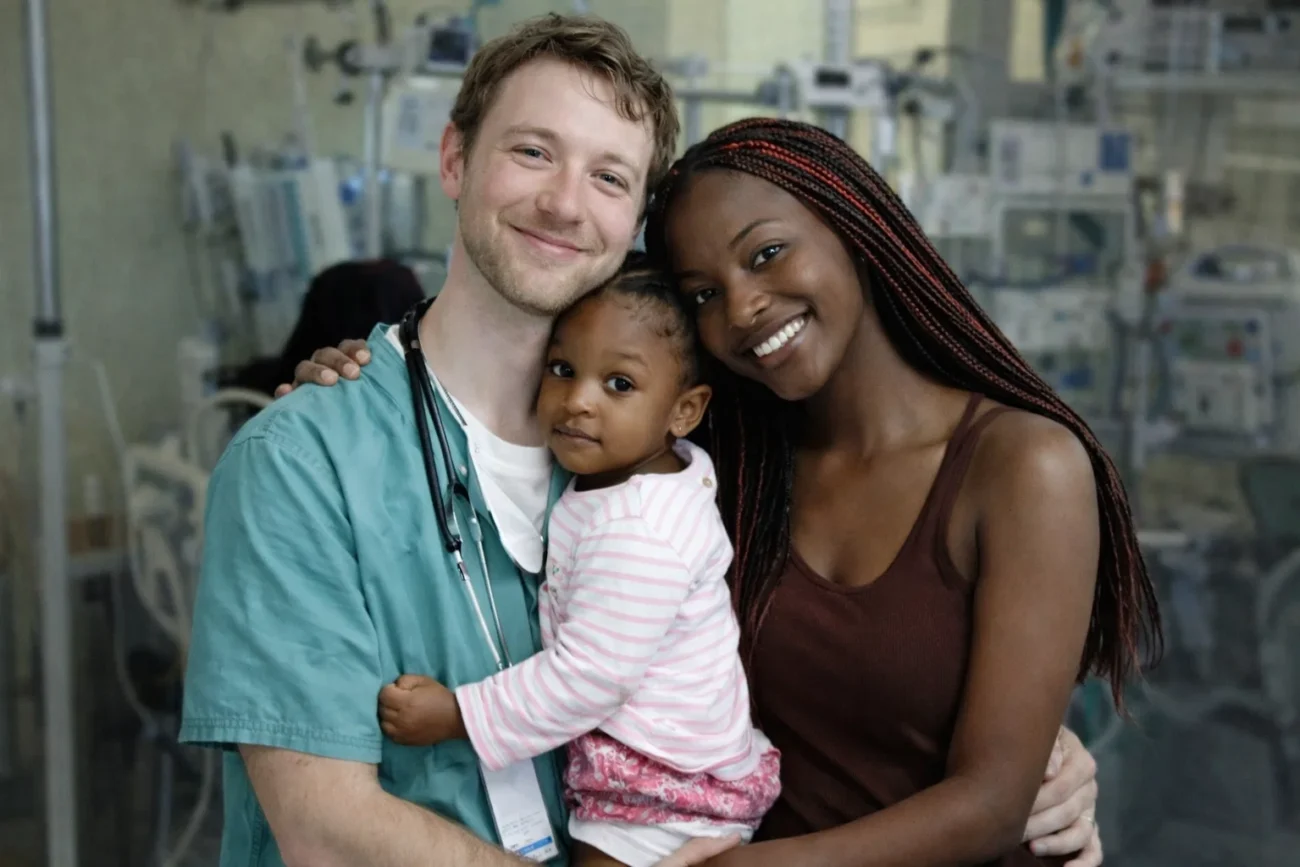
This morning, we recreated an old photo—me holding a frightened child in oversized scrubs. Now she’s taller. Stronger. Smiling without fear.
People say I saved her.
But the truth is, thirteen years ago, in a cold emergency room, a three-year-old girl chose me.
And I’ve spent every day since trying to deserve that choice.
Note: This story is a work of fiction inspired by real-life themes. Names, characters, and details have been altered. Any resemblance to actual persons or events is coincidental. The author and publisher disclaim responsibility for interpretations or reliance. All images referenced are for illustrative purposes only.