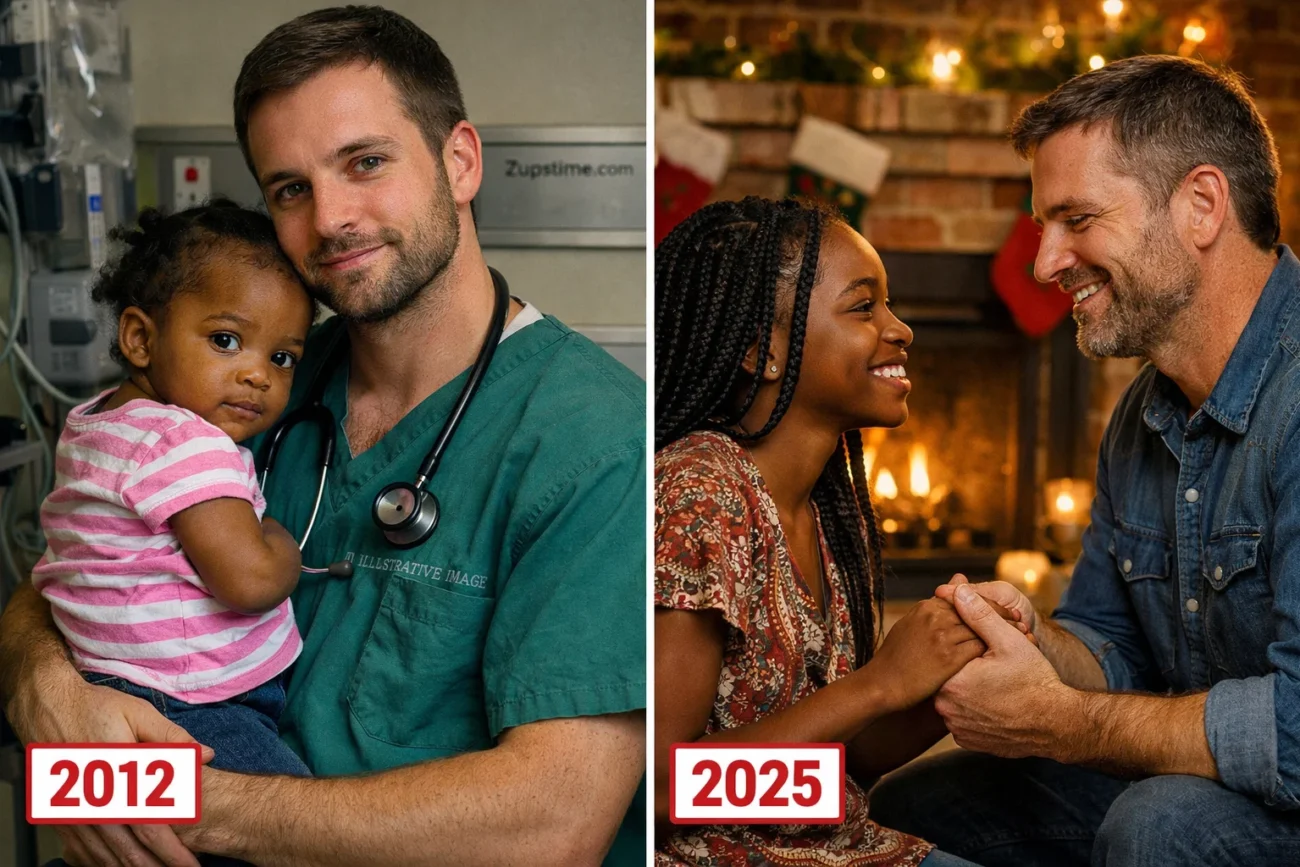
Thirteen years ago, I became a father in the middle of a night shift.
I was 26, barely six months into my first job as an ER doctor, still learning how to steady my hands when chaos rolled through the doors.
That night, chaos arrived on wheels.
Two adults under white sheets.
And a three-year-old girl sitting upright on a stretcher, eyes wide and searching, as if she could still find her parents somewhere in the noise.
She couldn’t.
They were gone before the ambulance ever reached us.
I wasn’t assigned to stay with her. But when a nurse tried to guide her to another room, she wrapped both arms around mine and refused to let go.
“My name’s Avery,” she whispered. “I’m scared. Please don’t leave.”
I sat with her.
I found apple juice in pediatrics. Read her a children’s book about a lost bear who finds his way home. She made me read the ending three times.
Happy endings mattered to her that night.
When social services arrived in the morning, they asked if she knew any relatives. Grandparents. Aunts. Anyone.
She shook her head.
She didn’t know addresses or phone numbers.
She knew her stuffed rabbit’s name and that her bedroom curtains had butterflies.
And she knew she didn’t want me to walk away.
When the caseworker said she’d be placed in temporary foster care, something inside me refused.
“Can she stay with me?” I asked.
The woman stared at me like I’d lost my mind. I was single. Overworked. Living in a modest apartment and working night shifts.
But I couldn’t watch her be handed to another stranger.
One night turned into a week.
A week turned into background checks, parenting classes squeezed between shifts, and home visits from skeptical social workers.
Six months later, I signed adoption papers.
The first time she called me “Dad” was in a grocery store aisle.
She said it accidentally.
Then froze.
I crouched down and told her she could say it again if she wanted.
She nodded, and I saw something heal in her eyes.
I built everything around her after that.
I switched schedules. Opened a savings account for her future. Learned how to braid hair badly. Showed up to every recital, every soccer game, every parent meeting.
She grew into a sharp, sarcastic teenager who pretended not to care when I cheered too loudly — but always checked to make sure I was there.
She was my whole world.
I didn’t date much. When you’ve seen how quickly people can disappear, you’re careful about who you let in.
But last year I met Marisa at work.
She was confident, intelligent, easy to talk to. She remembered Avery’s favorite drinks. Offered to help when I ran late.
After months together, I started to believe I could have both — a partner and the daughter I’d raised.
I bought a ring.
Then everything nearly collapsed.
One evening Marisa showed up at my house with security footage on her phone.
A hooded figure entered my bedroom, opened my safe, and took cash from inside.
The build looked familiar.
The hoodie looked like one Avery owned.
“She’s hiding something,” Marisa said softly.
I felt sick.
But when I asked Avery if she’d been in my room, she looked hurt — not guilty.
Then she told me something simple.
Her gray hoodie had gone missing two days earlier.
That detail cracked everything open.
I reviewed the camera archive myself.
And there it was.
Minutes before the hooded figure appeared, Marisa was captured holding Avery’s hoodie.
Then she entered my room.
Opened the safe.
Took the money.
My chest went cold.
When I confronted her, she didn’t deny it for long.
“She’s not even your real daughter,” Marisa snapped. “You’ve given her everything.”
And that was the truth behind it.
Jealousy.
Resentment.
Competition with a sixteen-year-old girl.
“Get out,” I told her.
She tried one last time — even pulling out the ring I’d hidden.
I took it back.
And I chose.
Not because it was difficult.
But because it wasn’t.
Avery heard the argument from the stairs.
She looked terrified — like she was three again and about to lose someone.
“I didn’t do it,” she whispered.
“I know,” I said. “I should never have doubted you.”
I held her the way I had the night we met.
The next day, I filed a police report. Quietly. Calmly. No drama.
And I told my supervisor before Marisa could twist the story.
Two weeks later, the house feels peaceful again.
Last night, Avery and I sat at the kitchen table reviewing her college savings plan.
Every deposit. Every small sacrifice.
“This is yours,” I told her. “Because you’re my daughter.”
Not by blood.
But by choice.
Thirteen years ago, a frightened little girl decided I was “the good one.”
Every day since, I’ve tried to prove she was right.
Family isn’t DNA.
It’s showing up.
It’s staying.
It’s choosing each other — again and again — even when it costs you something.
And I would choose her every time.