My name is Benjamin. I’m 58, and for most of my life I believed I had built something that couldn’t be taken away from me.
A family.
Six children. Four sons. Two daughters.
I paid for everything. School. Cars. Weddings. University. I missed birthdays and school events because I was working, but I told myself it was worth it. One day they’d understand.
When I paid the last semester for my youngest, I sat there staring at the confirmation like I had crossed a finish line.
“That’s it,” I told Sarah. “We’re done. We made it.”
She smiled. But something about it didn’t feel right.
I ignored it.
Two weeks later, I sat in a doctor’s office expecting to hear something about my prostate.
Instead, he asked me a question that made no sense.
“Do you have biological children?”
I laughed.
“Six.”
He didn’t.
He turned the screen toward me and said it calmly, like he was reading a weather report.
“You were born with a rare condition. You’ve never produced viable sperm.”
I didn’t understand at first.
Then he said it again, simpler.
“It’s not unlikely. It’s impossible.”
The drive home is a blur I can’t replay.
All I could think about were moments.
Teaching my sons how to shave. Walking my daughters down the aisle. Sitting at dinner tables after long days.
Thirty years.
What was all of that?
Who was I?
That night, I didn’t say anything.
I waited.
The house went quiet. Lights off. Doors closed.
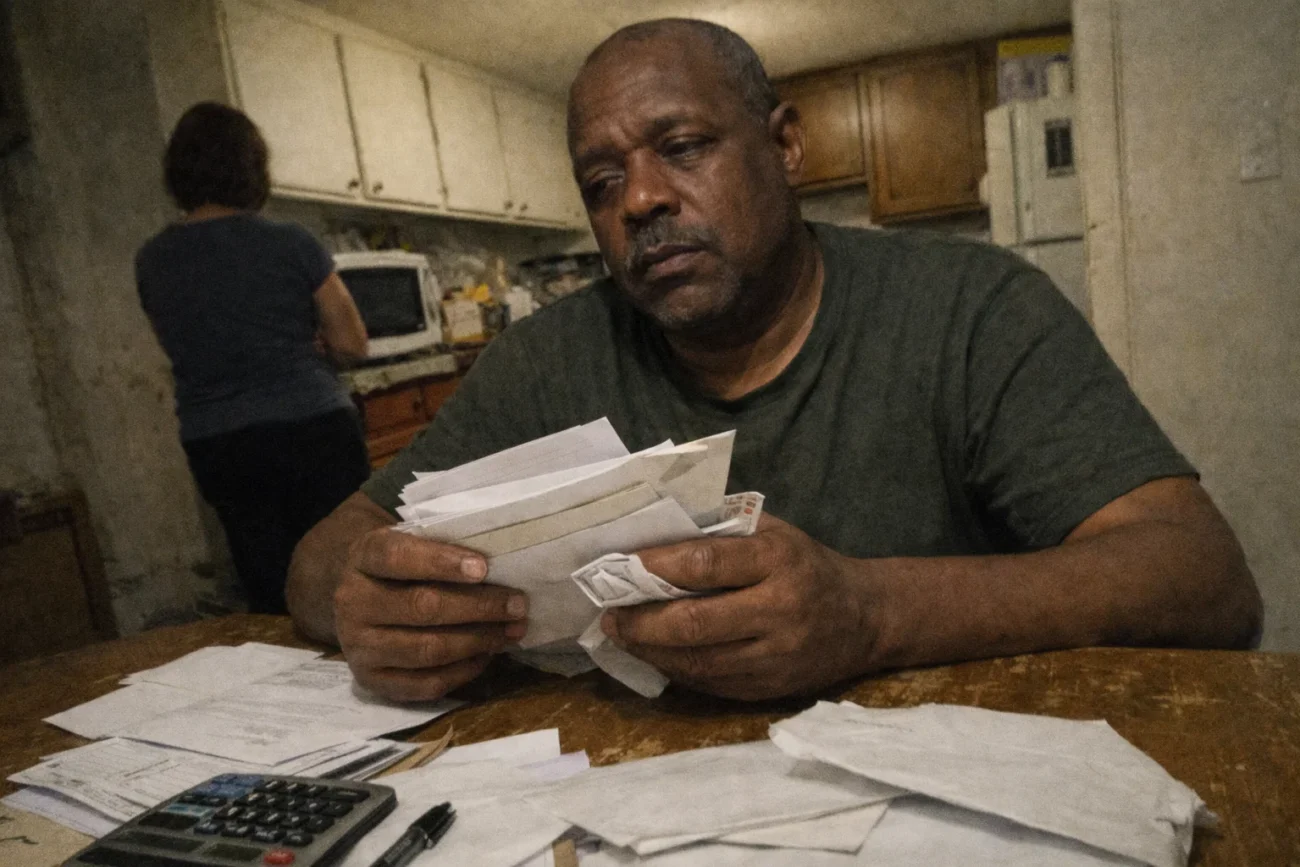
I sat at the kitchen table with the report in front of me.
When Sarah walked in, I slid it toward her.
“Whose are they?”
My voice barely came out.
I expected denial. Anger. Something.
Instead, she froze.
Then she turned, walked to the hallway, opened the wall safe, and came back with an envelope I had never seen before.
Her hands were shaking when she placed it in front of me.
“It wasn’t my idea,” she said.
Then she looked at me, directly.
“It was your mother’s.”
My name was written on the envelope.
Her handwriting.
I opened it.
Inside was a clinic invoice. A donor file. Dates.
And a letter.
“Benjamin,
If you ever find out, understand this was done for you. You were meant to be a father. You would not have accepted the truth. This way, you got the life you deserved.
Protect this family.
— Mom”
I don’t remember how long I sat there.
I just remember the silence.
Then I looked at Sarah.
“How long?”
“From the beginning,” she said.
She told me everything slowly, like each word hurt.
After a year of trying, my mother stepped in. Said we needed help. Said she knew people. Said I had already been tested.
I remembered that test.
A room. A nurse. A conversation I never followed up on.
“They told me it was stress,” I said.
Sarah nodded.
“That’s what she wanted you to hear.”
I felt something inside me shift.
Not anger first.
Not even betrayal.
Just… distance.
Like I was standing outside my own life.
“And the donor?” I asked.
She hesitated.
Then said it quietly.
“Michael.”
My brother.
I laughed once.
Not because it was funny.
Because I didn’t know what else to do.
“So everyone knew.”
She didn’t answer.
She didn’t need to.
A few days later, Michael came over like nothing had changed.
I didn’t waste time.
“You knew.”
He looked at me for a second, then nodded.
“Mom said it was the only way,” he said. “She said you’d break if you knew.”
“And you believed that?”
“I believed you deserved a family.”
That was the first time I felt anger.
Not loud. Not explosive.
Just deep.
A week later, the house was full again. One of the kids’ birthdays. Everyone laughing, moving around like always.
Nothing had changed for them.
Everything had changed for me.
My mother showed up late, like she always did, carrying gifts like nothing in the world had ever gone wrong.
She pulled me aside.
“You look tired,” she said.
I didn’t lower my voice.
“Why did you do it?”
She didn’t flinch.
“I protected you.”
“No,” I said. “You controlled everything.”
People started to notice.
The room got quiet.
“You built a life on lies,” I told her.
“And you lived it,” she snapped. “You were happy, weren’t you?”
For a moment, no one spoke.
Then Grace stepped forward.
She didn’t know everything.
She didn’t need to.
“Grandma… you should go.”
The door closed behind her.
And for the first time in my life, I felt like something had actually ended.
Later that night, when the house was quiet again, I sat outside.
I didn’t know what came next.
I didn’t know what I was supposed to feel.
Then I heard the door.
Victoria stepped out, eyes red.
She sat next to me without asking.
“I heard enough,” she said.
I didn’t respond.
She took my hand.
“You’re still my father.”
That was it.
No speech. No explanation.
Just that.
And somehow, that was the only thing that still felt real.
This story is a narrative interpretation inspired by real-life themes. Names and certain details have been adapted for storytelling purposes.