My name is Jimmy. I’m 36, and for most of my life I was ashamed of a coat.
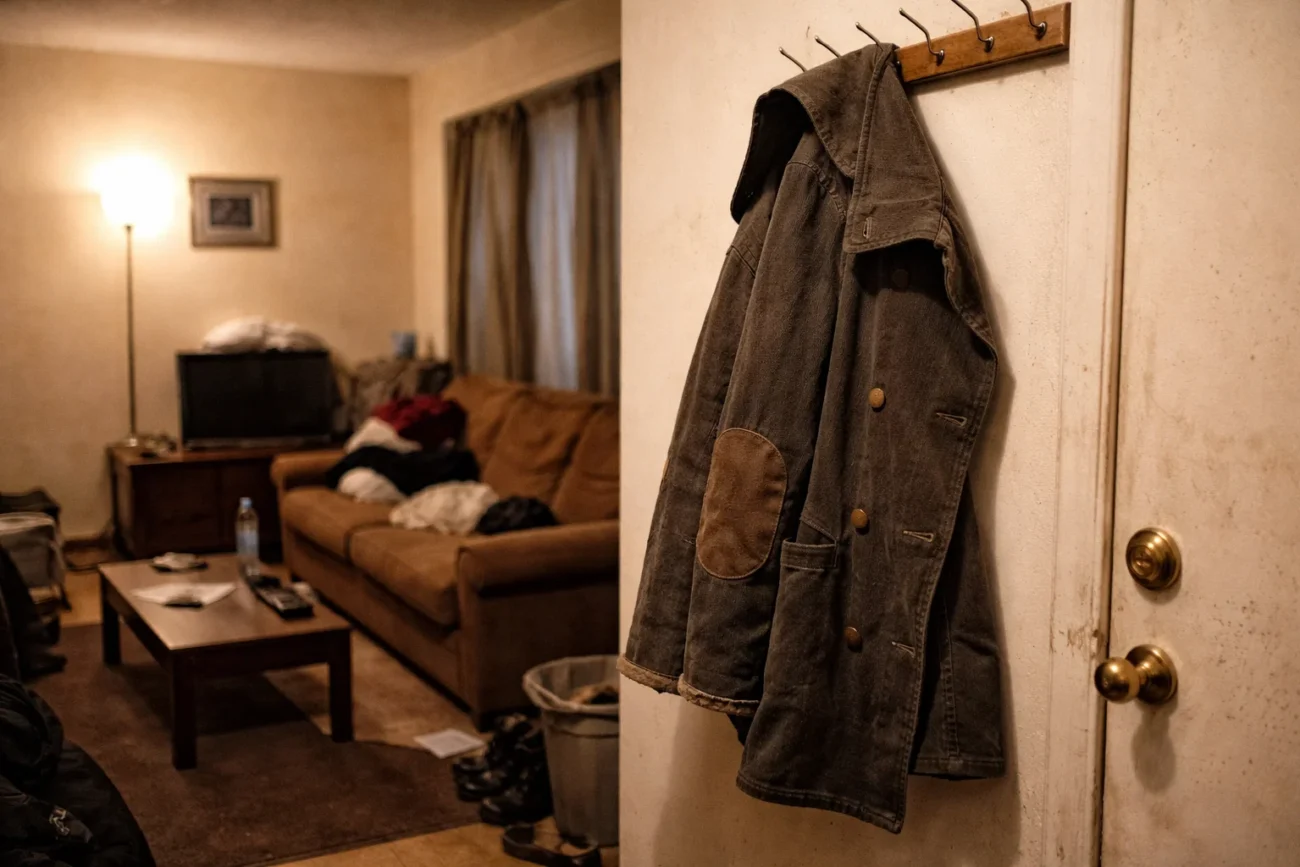
It was always the same one. Gray wool, worn thin at the elbows, sleeves frayed, buttons that didn’t match because she kept replacing them one by one. You could spot it from across the street.
That coat told people everything about us.
When I was a kid, I hated it. Not quietly — I hated it out loud. At fourteen, I asked her to drop me off before school so no one would see me getting out of the car next to that coat.
She just smiled, like she always did.
“It keeps the cold out. That’s enough.”
Back then, it didn’t feel like enough.
I promised myself I’d fix that someday. That I’d give her something better. Something that didn’t scream struggle.
Years later, I did.
First real paycheck. Architect. I walked into a store I never thought I’d belong in and bought her a coat that cost more than anything she’d ever owned. Soft cashmere. Clean lines. The kind of thing people notice for the right reasons.
She hugged me when I gave it to her. Thanked me like I’d handed her something precious.
She hung it in the closet.
Next morning, she walked out wearing the old one.
We argued. More than once.
I told her she didn’t have to live like that anymore. That we weren’t those people anymore. That she didn’t have to carry that image on her back.
She listened. Nodded. And then kept doing the same thing.
“I can’t throw it away,” she said once.
She didn’t explain. I didn’t push hard enough to understand.
She just kept wearing it. Through every winter.
Until the last one.
She died in February. Sixty years old. Quick, unexpected. The kind of call that leaves you standing still in a room that suddenly feels too big.
They said it might have been caught earlier.
That part doesn’t leave you.
After the funeral, I went back to her place alone. Small apartment. Quiet. Everything exactly where she left it.
The coat was still by the door.
Same hook. Same shape, like she’d just taken it off and stepped out for five minutes.
Something in me snapped when I saw it.
I was tired of it. Tired of what it meant. Tired of not knowing why she held onto it like it mattered more than anything I gave her.
I pulled it off the hook, ready to get rid of it for good.
That’s when I felt it.
It was heavier than it should’ve been.
Not by much. Just enough to stop me.
I ran my hand along the inside lining. She had stitched hidden pockets in there years ago. Deep ones. I remembered that.
They weren’t empty.
I reached in.
Paper.
A bundle. Thick. Tight.
Envelopes. Dozens of them, held together with an old rubber band.
Each one numbered in her handwriting.
No names. No addresses.
I sat down on the floor without thinking.
My hands were already shaking when I opened the first one.
“Jimmy, if you’re reading this, I’m gone. Don’t judge me yet. Just read them all.”
I didn’t move for a long time after that.
Then I kept going.
The first letter told me about him.
Robin.
My father.
She wrote about meeting him like it had just happened yesterday. A cold day. Groceries falling onto the pavement. A stranger who stopped to help and never really left after that.
They were together for two years.
Then he left to work abroad. Promised he’d come back. Promised he’d build something for them.
The day he left, he took off his coat and wrapped it around her.
The same coat.
She found out she was pregnant after he was gone.
She wrote to him. More than once.
He never answered.
For years, she believed he chose not to.
So she kept the coat.
That was all she had left of him.
And she wore it through every winter of her life.
Letter after letter filled in the rest.
My first steps. My first day at school. The times I got sick. The way I used to cry when she left for work. Everything she couldn’t tell him.
She wrote it all down.
Every year, the same day.
One letter.
Thirty years.
Somewhere in the middle, everything changed.
She found a newspaper clipping by accident.
A small notice. Easy to miss.
Robin had died in a work accident. Months after he left.
Before he ever knew about me.
He didn’t disappear.
He didn’t leave.
He never had the chance to come back.
She spent years angry at someone who was already gone.
The letters after that felt different.
Softer. Sadder.
She apologized to him. Told him about me. Told him what I became.
“He builds things that last,” she wrote in one of them. “You would’ve been proud.”
I had to stop reading after that.
The last envelope was newer.
Inside was a photo. Her and him. Young. Laughing. The kind of happiness you don’t question when you’re in it.
And a final note.
She’d found his sister. Jane. Still alive. Not far from where we grew up.
She never reached out.
Fear, she said. Of being wrong. Of being rejected. Of dragging me into something that might not want me.
But she left the choice to me.
“You’re not alone,” she wrote.
Three days later, I drove to the address.
Small house. Quiet street. Snow falling.
She opened the door and looked at me like I was interrupting something she’d already decided.
I told her who I was.
She didn’t believe me.
Not at first.
I showed her the photo. The letters. The coat.
She pushed back.
People lie, she said. People show up with stories.
I stepped outside.
The cold hit fast.
I stayed there.
Didn’t knock again. Didn’t leave.
I just stood there, wearing that coat, the same way my mother had.
Minutes passed. Maybe more.
Then the door opened.
She looked at me. Really looked this time.
Her eyes dropped to the collar.
Her fingers touched a stitch near the seam.
And something in her face broke.
“He fixed that himself,” she said quietly. “He was terrible at sewing.”
That was enough.
She stepped aside.
“Come in.”
We sat at her kitchen table for a long time without saying much.
Then she looked at the photo again.
“He has your eyes,” she said.
We didn’t rush anything after that.
Some things take time.
When I left that night, I didn’t take the coat with me.
I hung it by her door.
It felt right to leave it there.
For years, I thought that coat was a sign of everything we didn’t have.
I was wrong.
It was the only proof she had that she’d been loved.
And she carried it with her through every winter.
This story is a narrative piece inspired by real-life emotions. Names and details have been adapted for storytelling purposes.