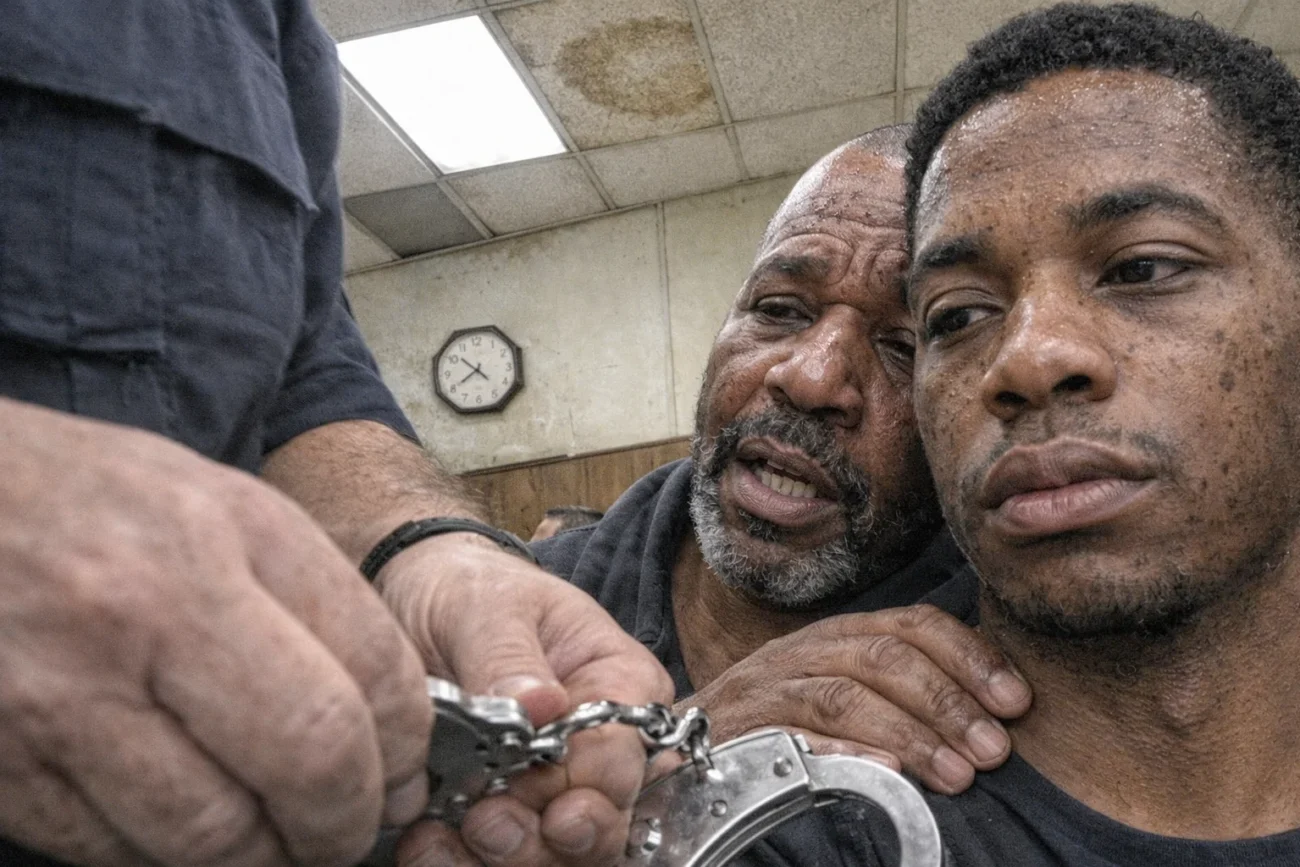
When I told the judge to put the handcuffs back on my son, I wasn’t trying to punish him. I was trying to stop something worse from happening.
The metal had just come off his wrists. The red marks were still pressed into his skin. He had been home for three days after I put my house up for bond. Three days of silence, short answers, and a kind of fear that didn’t look like fear of prison. It looked like something else.
To the courtroom, I looked like a father who had lost his mind. My wife was crying. My mother stood up and said my name like I had betrayed our bloodline. My son, Marcus, stared at me as if I had just ended his life myself.
But none of them had seen what I saw.
Marcus had been arrested in connection with the disappearance of a girl from his college campus. They found her car near the river. They found her phone broken in the grass. They found his fingerprints inside the passenger door.
What they didn’t find was her.
Marcus said they argued. He said she got out of the car. He said he panicked and drove away.
He stuck to that version through interrogation. Through online outrage. Through the quiet judgment of neighbors who suddenly stopped making eye contact.
When I brought him home on bond, I wanted to believe that story.
The first night, he barely spoke. The second night, he barely slept. The third night, I woke up around two in the morning because the house felt wrong. Too still. Too hollow.
His bedroom door was open.
His bed was empty.
At first I told myself he was in the bathroom. Then I noticed the back door.
Unlocked.
The kitchen light was off, but moonlight cut across the floor. That’s when I saw it. Mud. Dark and wet, tracked from the door toward the sink.
I stepped outside.
The air smelled like river water.
His car was gone.
He came back just before four in the morning. I was sitting at the kitchen table when he walked in. His hoodie cuffs were damp. His shoes were thick with mud. He froze when he saw me.
“Couldn’t sleep,” he said.
I didn’t argue. I didn’t shout. I just watched him.
When you raise a child from birth, you learn their tells. You learn the difference between shame and fear. Between regret and calculation.
What I saw in Marcus that night wasn’t confusion.
It was resolve.
The next morning, I drove to the river myself.
The police tape had already been removed. Reporters were gone. It looked almost peaceful. I walked along the bank slowly until I saw it.
A patch of soil that didn’t match the rest. Not dramatic. Not cinematic. Just disturbed enough that it didn’t belong.
I didn’t dig.
I didn’t have to.
That was the moment something inside me shifted. If I stayed quiet, I wasn’t protecting my son. I was helping him bury something he would never survive carrying.
In that courtroom, when the judge said there had been no violation of his release, I knew that wasn’t true. Bail means you don’t interfere. Bail means you don’t return to a crime scene.
Marcus had gone back.
When I said the words out loud, the room felt like it tilted. My wife’s face went white. My mother whispered “No” under her breath like it was a prayer.
The judge postponed sentencing. Ordered investigators back to the river. Ordered a full forensic sweep of the area.
Two days later, they found her.
She had not died instantly.
That detail will live with me forever.
Marcus finally told the full story after that.
They argued. She threatened to expose something he had done months earlier — something reckless, something that would have ruined him socially but not legally. He panicked. He shoved her. She fell, hit her head near the riverbank.
She was breathing when he left.
That’s the part that breaks me.
She was breathing.
He told himself someone else would find her. He told himself she would wake up. He told himself he didn’t mean for it to go that far.
Then fear took over. Fear of losing everything. Fear of prison. Fear of disappointing us.
That’s why he went back.
Not to save her.
To make sure the story made sense.
When I stood in that courtroom and asked for the handcuffs to go back on, I wasn’t choosing the system over my son.
I was choosing truth over denial.
Marcus is serving his sentence now.
I visit every month. We talk about ordinary things — books, food, the weather — because neither of us can sit too long inside what really happened.
He doesn’t look at me with anger anymore. There’s something else there now. Something heavier. But also something honest.
People still think I betrayed him.
Maybe from the outside, that’s what it looked like.
But loving your child doesn’t mean protecting them from consequences. It means refusing to let them become someone who can live with a lie like that.
The day I asked the judge to put the cuffs back on, I lost part of my family.
But I didn’t lose my son completely.
And that, in the end, was the only thing I could still save.