
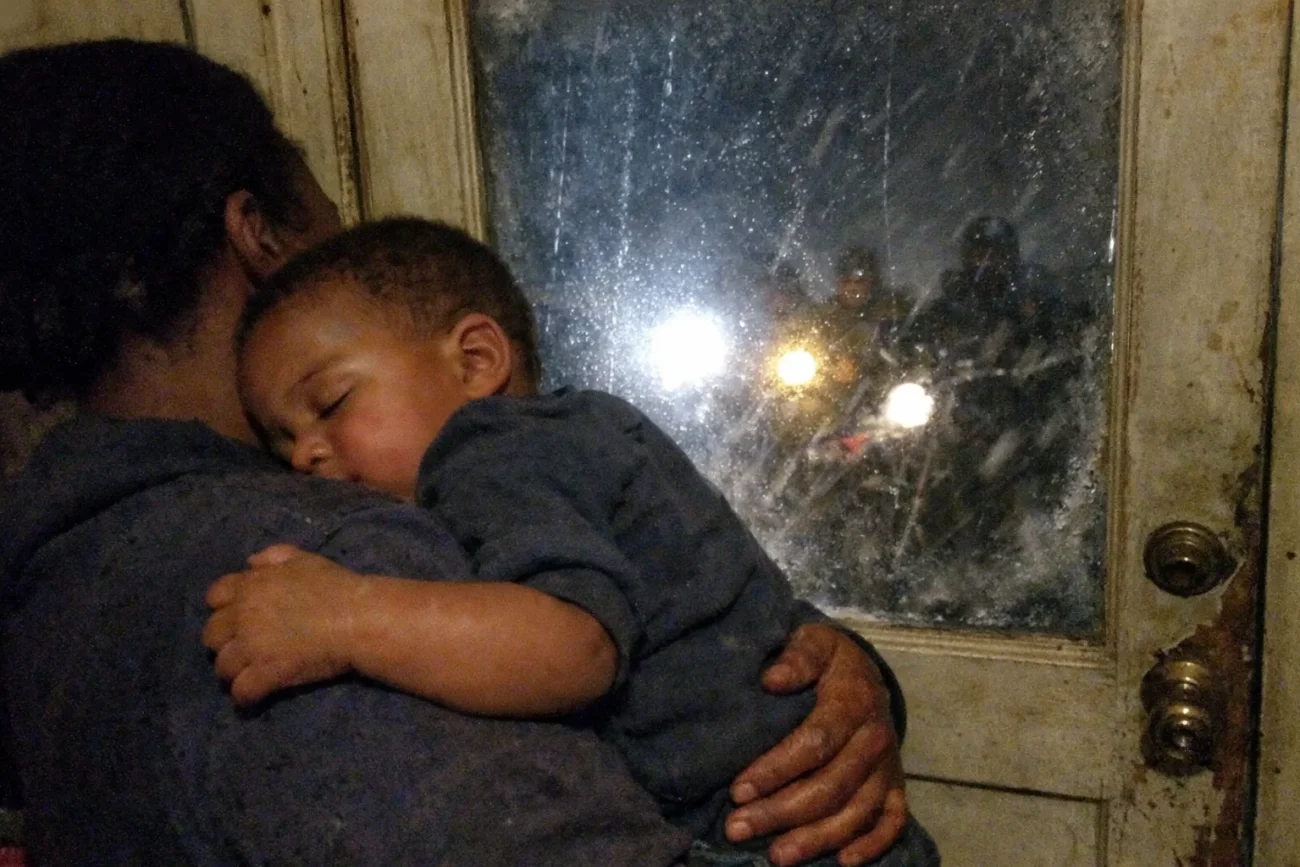
On Christmas night, a sudden blizzard swept through Detroit. Inside a small, run-down diner with no electricity and a broken heater, Keisha Williams tried to keep her two-year-old son, Marcus, from shivering in the cold. A noise outside broke the howling wind: twenty-five members of the Hell’s Angels lined up at the door, pleading for shelter from the storm. Frightened but moved by compassion, Williams let them in. They cooked together and talked through the night. She did not know that three days later her gesture would draw fifteen hundred roaring motorcycles to her doorstep, altering her life and touching an entire community. The account itself signaled there would be more to come the next day.
Hours earlier, at 3:47 a.m., Williams had finally sat down at her kitchen table. Her calloused hands shook as she counted the small pile of crumpled bills: seven dollars and thirty-two cents. That was all she had to feed Marcus in the morning. At 32, she felt worn down by relentless work, her dark skin dulled by fatigue after juggling three jobs. The house creaked in the winter wind, amplifying the loneliness.
Marcus slept in a nest of blankets and couch cushions in the kitchen. The heater in his bedroom had failed two weeks earlier, and she could not afford repairs, so she kept him near the stove for warmth. Unpaid bills stacked up. The house, set apart at the end of Maple Street by a vacant lot, seemed pushed to the margins—much like she felt in her own neighborhood. Some white families in the nicer homes down the street rarely acknowledged her; when they did, it was with wary glances and abruptly halted whispers.
“Why did you have to leave us, Jerome?” she asked the quiet room. Her ex-husband had left eight months before, saying he needed to “find himself,” ultimately moving in with a 23-year-old waitress in Tennessee and ignoring child-support obligations. Divorce papers, stamped in red, sat in a folder on top of the fridge.
Her phone buzzed. A text from her cleaning-company manager read: “Don’t bother coming in tomorrow. We’re letting you go. Your kid was crying too much during your shift yesterday. Customers complained.” It was her third job lost in two months: the laundromat had dismissed her when Marcus fell ill and she brought him along; the diner had let her go after she nodded off during an 18-hour stretch between multiple shifts. Daycare, at $200 a week, was out of reach. Her mother—the only person who fully understood her struggles—had died three years earlier.
Williams opened a wooden cabinet and took out her late mother’s recipe box, the index cards yellowed and neatly annotated. She remembered her mother’s words about a closely guarded fried chicken recipe: one day, when times turned hard, that recipe could save her. With seven dollars left, she decided to try. The next morning, she bought chicken and basic ingredients, set up two folding tables in her living room as a makeshift dining area, and propped a hand-lettered menu in the window: “Mama’s kitchen—authentic soul food made with love.”
The aroma of seasoned fried chicken filled the home as Marcus babbled in his high chair. But passersby looked in, saw her face, and hurried away. Mrs. Henderson, a neighbor three houses down, paused to read the menu. When Williams opened the door and offered a taste, the older woman’s expression hardened. She rebuffed the invitation, criticized Williams’s circumstances as a single mother, and told her not to run a business from the house, calling the neighborhood “decent” and warning her to keep “trouble” to herself. Holding back humiliation and anger, Williams kept her tone polite, but the neighbor stormed off. Williams closed the door and steadied herself, promising Marcus she would find a way, even as she stared at trays of untouched food and felt the isolation deepen.
Over the next three weeks, four customers came. Each praised the chicken as the best they had ever eaten, but four sales could not cover rent or utilities. The unpaid bills rose.
On December 23, under a heavy sky, forecasts warned that Detroit faced its worst snowstorm in two decades. Williams stirred a pot of chicken and dumplings, grateful she had managed to buy supplies in bulk—paid for by those few sales—in hopes of a Christmas rush that never arrived. “Mama cold,” Marcus said, rubbing his hands. She turned up the stove and added another blanket. By night, wind and snow erased the street; even the few cars that normally passed had disappeared.
On Christmas Eve morning, the house felt like a freezer. Her breath fogged, and Marcus shivered despite layers of blankets. A thermostat error flashed; calls to the heating service reached only an automated message: non-emergency repairs would wait until the storm ended, and even emergency calls faced a 72-hour delay. Panic rose as Marcus began a thin, wailing cry. Then the power went out. Williams lit candles and moved into the small kitchen to conserve warmth. The gas stove still worked, so she kept water boiling for steam and cracked the oven to draw heat from the pilot light. She told Marcus they would be all right; at least there was food on the shelves—canned goods, beans, rice flour, and seasonings—enough for several days if rationed carefully.
By the second day, the cold was punishing. She wrapped herself and Marcus in every blanket and coat she could find, rationed the remaining candles, and worried as a slight cough set in. Snow piled against the windows, dimming what little daylight remained.
On the third night, over the roar of the wind, a new sound emerged: the deep, mechanical thunder of multiple Harley-Davidson engines. Headlights cut through the blizzard as bikes approached and then fell silent outside her home. Footsteps crunched through the snow. Voices—low, rough, and urgent—carried to the door.
Three knocks sounded. “Ma’am, we need help. We’re freezing out here.” Williams held Marcus and stayed back, listening to the wind and the muted voices. Through a narrow gap in a snow-streaked window, she saw dark shapes and lights swaying in the storm. The scene matched every warning she had ever heard about motorcycle gangs.
Peering closer, she counted at least six or seven bikes, maybe more. Twenty-five figures in heavy leather jackets stood amid the swirling snow, their faces obscured by helmets and scarves, shoulders dusted white, stamping their feet against the cold. One man, huge even beneath his gear, removed his helmet. His weathered face, framed by a thick, snow-catching beard, looked directly toward the house. “We can see the candlelight,” he called. “We’re not going anywhere in this weather. We can either freeze to death out here, or you can let us wait it out inside. We’ll leave the moment the storm passes.”
Every instinct told Williams to stay hidden. But one rider stumbled, nearly fell, and another steadied him; dark stains on the man’s pants looked like blood. Their voices carried pain and urgency rather than menace. Marcus coughed, and the house felt no safer than the storm. Memories of her mother’s guidance—help those in trouble, regardless of how they look or where they come from, because kindness returns tenfold—rose to the surface.
Another knock came, softer. “Ma’am, we’ve got a man out here who’s hurt pretty bad. He’s been bleeding for hours, and the cold isn’t helping. I’m begging you, just until the storm passes. We’ll sleep on the floor. We won’t touch anything. We just need to get warm.”
Williams approached the door. “Are you really hurt?” she called. “Yes, ma’am. Danny here took a bad spill about ten miles back. We’ve been trying to find shelter ever since.” She asked how many they were. “Twenty-five, ma’am. I know that sounds like a lot, but we stick together. We don’t leave anyone behind.”
The number landed heavily. Twenty-five strangers in a small house with a mother and her toddler was either reckless or the exact choice her mother would have made. Marcus touched her face with cold fingers and babbled softly, as if urging courage. “Maybe sometimes you have to be scared and brave at the same time,” she told him.
She unlatched the deadbolt and opened the door. The large man stood before her, jacket covered in patches and pins, beard streaked with gray. His eyes carried gratitude and exhaustion. “Thank you,” he said. “I’m Mike. We won’t forget this.” Behind him, the other twenty-four men waited in the storm. As Williams looked closer, she saw what Mike saw.
Part II — The Night of Warmth
As Williams looked closer, she saw what Mike saw: the fear and fatigue in every face behind him. These were not predators, but men battered by the storm—eyes red from wind, lips cracked, fingers trembling from frostbite. Their leather jackets, now soaked and stiff, bore the emblem of the Hell’s Angels, a name that carried more weight than any of them seemed able to bear that night.
“Come in,” she said quietly.
One by one, they stepped inside, brushing snow from their boots. The heat from the stove was faint, but enough to sting their frozen skin. Mike carried the injured man—Danny—whose jeans were soaked through, dark with blood near the knee. “He hit a guardrail,” Mike said. “We tried to wrap it, but it’s bad.”
Williams guided them to the kitchen, where she spread towels on the floor. She boiled water, tore an old sheet into strips, and cleaned the wound as best she could. Danny winced but didn’t complain. “You’re an angel, ma’am,” he whispered.
“Not tonight,” she replied, her voice trembling. “Just someone trying to keep a child warm.”
The bikers moved with quiet discipline. Two hauled logs from the porch to feed the fire, three others helped patch a gap under the door with blankets. One man found the breaker box and, after some tinkering, managed to draw power from the generator they carried on one of their bikes. Soon, a weak light flickered through the kitchen.
Marcus, wrapped in layers, stared wide-eyed at the sight of twenty-five leather-clad strangers crowding the small home. One of them, a burly man named Tex, crouched and pulled from his pocket a small toy motorcycle keychain. “For you, little man,” he said softly. Marcus grinned, clutching it with tiny fingers.
The smell of food filled the house again—fried chicken and dumplings, reheated on the stove. Williams hesitated, uncertain if there was enough. “Eat,” Mike said, handing her a plate. “We’ll take what’s left.”
They ate together, sitting on the floor and around the small table, laughing quietly at half-told stories shouted over the storm. Outside, the wind howled like a warning, but inside there was warmth. The men, hardened by years on the road, softened under the glow of candlelight and the kindness of a woman who owed them nothing.
By dawn, the blizzard began to ease. They repaired her front steps, cleared the porch, and left extra firewood beside the door. Before leaving, Mike pressed a small card into her palm—an emblem of their chapter, with a phone number scrawled in pen.
“If you ever need anything,” he said, “you call. You kept us alive tonight.”
She nodded, unsure how to respond, as twenty-five motorcycles rumbled away into the whitening dawn.
Three days later, Williams was stirring a pot of soup when the sound returned—this time deeper, louder, endless. She stepped outside and froze. The street shimmered with chrome and headlights as more than fifteen hundred motorcycles lined Maple Street, their engines roaring in unison.
At the front was Mike. He parked, removed his helmet, and smiled. “We told the brothers your story,” he said. “You helped us when no one else would. We thought it was our turn.”
Behind him, riders began unloading boxes—food, toys, clothes, heaters, and blankets. Some carried envelopes of cash. Others helped fix her porch, rewire the power, and repaint the faded sign in her window: Mama’s Kitchen.
Reporters came later that day. The story spread across Detroit, then across the country—about a woman who opened her door to strangers on Christmas night and a gang of bikers who returned to thank her with an act of overwhelming generosity.
That evening, after the engines faded and the cameras left, Williams stood on her porch, holding Marcus close. The snow glowed pink under the streetlights.
“Mama,” Marcus whispered, “they were angels.”
She smiled, tears freezing on her cheeks. “Yes, baby,” she said softly. “The kind you don’t always see coming.”
Editorial Disclaimer
This article is a work of fiction created for narrative and inspirational purposes.
All names, characters, businesses, places, events, and incidents are either the product of the author’s imagination or used in a fictitious manner.
Any resemblance to actual persons, living or dead, or real events is purely coincidental.
The story aims to highlight universal themes of kindness, resilience, and humanity. It does not depict real individuals, organizations, or verified occurrences.