
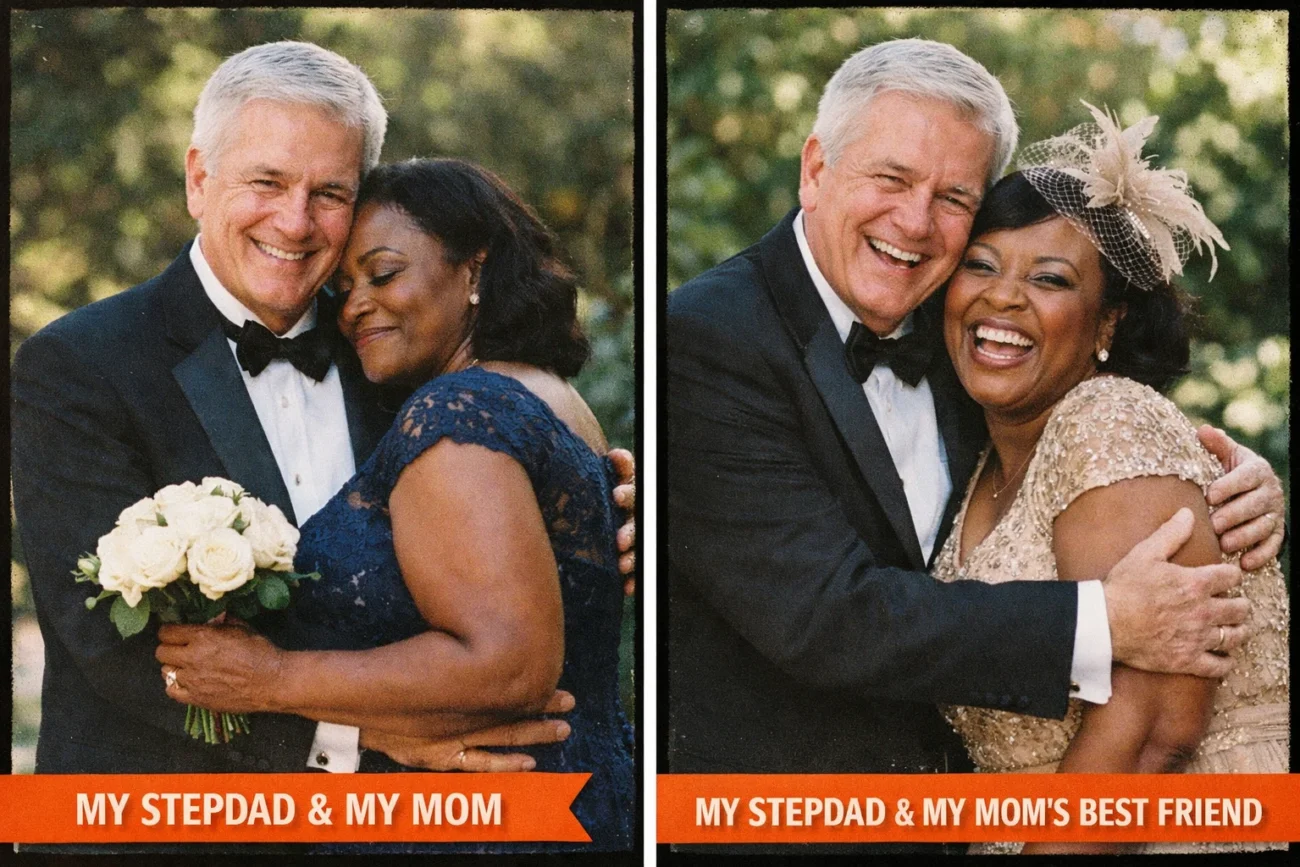
It had barely been four weeks since my mother’s funeral when my stepfather called and told me he had news.
At the time, I was still living inside her absence. The house hadn’t adjusted yet. Neither had I.
Her presence lingered everywhere—quiet but unmistakable. Her reading glasses rested on the coffee table beside a half-finished book. The knitted blanket she loved was folded over the arm of her chair, untouched. The scent of rosemary oil still clung faintly to the hallway, as if the air itself refused to move on.
Cancer had taken her slowly. Eight months of watching someone you love shrink into exhaustion. First her strength, then her hair, then her ability to pretend she wasn’t afraid. On good days, she told me stories from her youth. On bad days, she stared out the window for hours, somewhere far beyond my reach.
She apologized constantly—for being tired, for needing help, for taking up space. I told her she never had to say sorry. She never stopped anyway.
Throughout it all, two people were always there: my stepfather, Paul, and Linda—my mother’s closest friend since college. They coordinated appointments, brought groceries, sat beside her bed.
“We’re all in this together,” Linda used to say, squeezing my shoulder. “She’s not alone.”
But she was. Just not in the way I understood at the time.
Four weeks after the funeral, Paul showed up at my apartment. He didn’t sit down. We stood awkwardly in the kitchen while the coffee machine hummed behind us.
“There’s something you should hear from me first,” he said.
My chest tightened. “What is it?”
He hesitated. “Linda and I are getting married.”
The words felt unreal, like they belonged to another conversation.
“Married?” I asked.
“Yes.”
“To Linda?”
“Yes.”
“My mother died less than a month ago.”
“I know it sounds sudden—”
“Sudden?” I snapped. “It’s grotesque. She was her best friend. You were her husband.”
“Was,” he corrected quietly.
That single word ended the conversation.
I told him to leave. He did.
Thirty-two days after my mother’s death, they were married.
The photos appeared online the same day. Professionally edited. Soft lighting. Smiling faces. Captions about healing and new beginnings. Linda wore a pale champagne dress. The flowers were peonies.
My mother’s favorite.
That’s when I remembered the necklace.
The heavy gold chain with small diamonds—my mother’s most cherished piece. She’d promised it would be mine one day.
I called Paul immediately.
“Where’s my mother’s necklace?”
Silence.
“The gold one,” I pressed. “With the diamond clasp.”
Another pause.
“You sold it,” I said.
“We needed money for the honeymoon,” he replied. “It was just sitting there.”
“It was hers,” I said.
“Does that really matter now?”
I hung up.
Two days later, I ran into Linda at the grocery store.
“Was it worth it?” I asked. “Selling her necklace?”
She laughed.
“Oh, that? We needed travel funds. It was collecting dust.”
“She promised it to me.”
“Honey,” Linda said, checking her watch, “sentiment doesn’t pay for plane tickets. Paul and I leave for Maui in two hours.”
She walked away.
That was when Sara, a family friend who worked at the hospital, approached me quietly.
“I didn’t know if I should say anything,” she said.
My stomach sank.
“They were together before your mother passed,” she continued. “I saw them in the parking lot. I overheard conversations. Paul talking about how exhausted he was. About waiting for things to be ‘over.’ They laughed outside her room once. She had no idea.”
Grief hardened into resolve.
I didn’t confront them. I didn’t post online.
Instead, I called Paul.
“I’m sorry,” I said calmly. “Grief made me react badly.”
He sounded relieved.
“I’d like to give you both a proper wedding gift when you return,” I added.
A week later, I stood at their door with a gift bag.
Inside was a binder.
Printed emails. Messages. Bank transfers. Photos. A pawn shop receipt for my mother’s necklace—signed by Linda.
On top, a card:
“Copies have been shared with the estate attorney, the executor, and your employer. Transparency matters.”
They didn’t know I’d used my mother’s spare key while they were away. Paul’s laptop wasn’t protected. Thirty minutes was all it took.
Linda accused me of breaking in.
“It’s my mother’s house,” I corrected. “She left it to me.”
The estate attorney froze all distributions. The necklace was recovered. Paul’s company launched an internal investigation.
Friends disappeared. Invitations stopped coming.
They lost more than money. They lost the story they’d been telling themselves—that they were decent people caught in unfortunate timing.
I didn’t feel victorious.
I felt finished.
The necklace now rests in my jewelry box. Sometimes I take it out and remember my mother fastening it around my neck, smiling.
“One day, it will be yours,” she used to say.
It is now.
And when I wear it, I remember something important:
Love doesn’t end with death.
But betrayal reveals itself eventually.
⸻
Note:
This story is a work of fiction inspired by real-life themes. Names, characters, and details have been altered for creative purposes. Any resemblance to real persons or events is purely coincidental. The author and publisher assume no responsibility for interpretations or use of this material.