
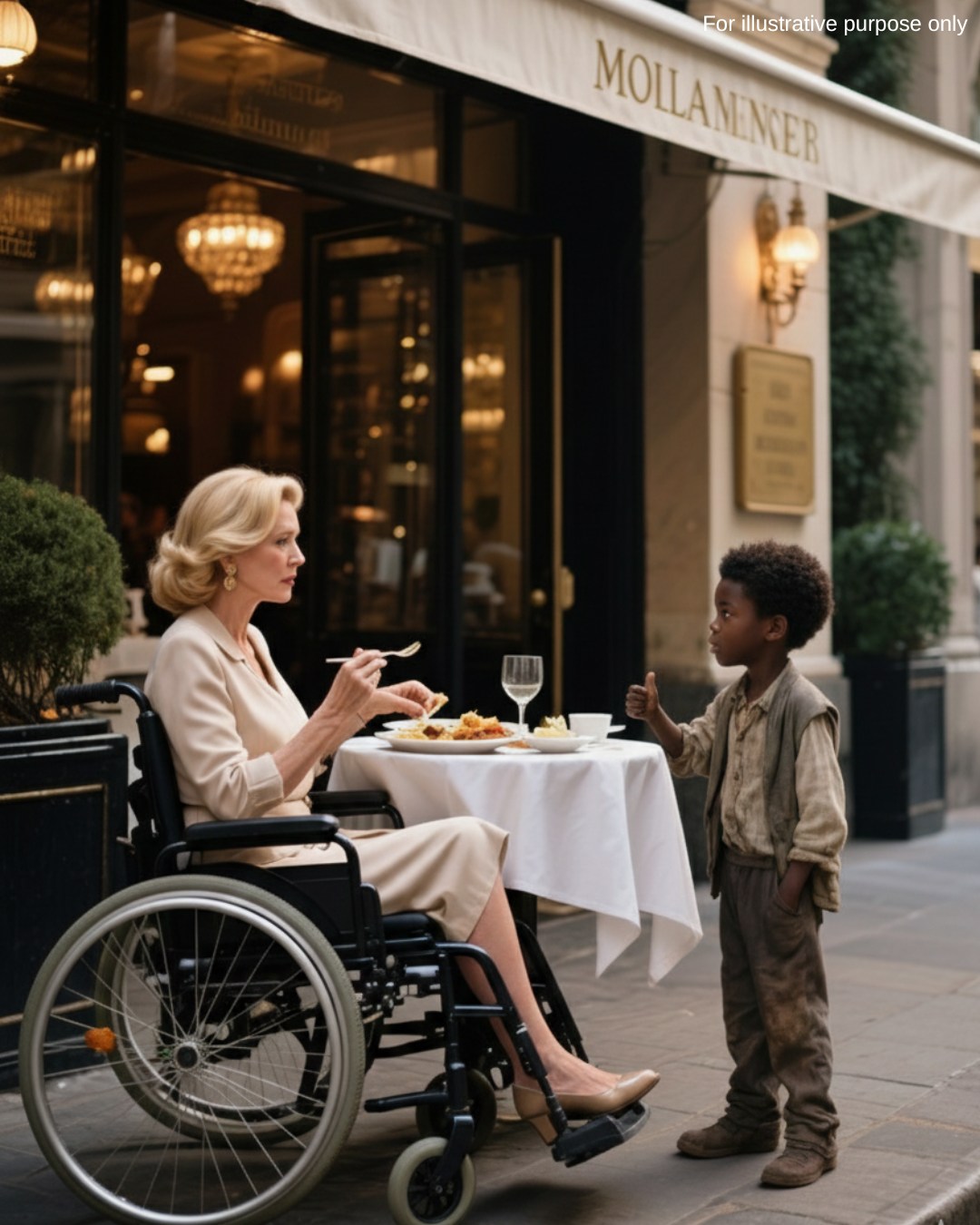
“Do you really expect me to believe some suburban kid’s fantasy?”
Victoria Whitmore’s voice sliced through the quiet like ice. Her sharp blue eyes were locked onto the twelve-year-old boy standing in front of her, his small frame dwarfed by the opulence of her grand home.
Daniel Thompson had just made the boldest request of his life.
For days, he had watched from across the street as trays of untouched food were thrown into the trash while he and his grandmother went to bed hungry. Finally, he’d decided to knock on the mansion’s front door.
“Ma’am, I’m not kidding,” Daniel said, steady and polite.
“I think I can help you walk again. All I’m asking for in return… is the food you’re throwing away.”
Victoria laughed—a cold, cruel sound that echoed across the marble floors.
“I’ve spent $15 million on world-class doctors over eight years,” she scoffed. “And you think a street kid can do what they couldn’t?”
What she didn’t know was that Daniel wasn’t just any kid. He had been watching her closely—not to be rude, but because something about her reminded him of his grandmother’s old symptoms. Her daily routine revealed clues no doctor had noticed.
“She takes pain pills every day at 2 p.m.,” Daniel noted calmly. “Three white, one blue. And she always says her legs feel cold… even when it’s 90 degrees outside.”
Victoria blinked, startled. “How do you know that?”
Because he had paid attention. Because he cared. Because he’d seen those same signs before, in the woman who raised him.
“You don’t need more pills,” Daniel said gently. “You need someone who sees the truth.”
She slammed the door in his face—but not before he noticed something shift in her eyes. Fear.
Back home, Daniel sat beside his grandmother, Ruth, a retired nurse and healer whose wisdom was passed down through generations.
“Grandma, tell me again… pseudoparalysis?” he asked.
She smiled, brushing crumbs from her apron. “It’s when the body shuts down because the mind is trapped,” she explained. “You saw the signs. Her legs moved when no one was watching. She isn’t physically broken—she’s emotionally trapped.”
Daniel nodded. “So, her mind is keeping her frozen.”
“Exactly,” Ruth replied. “It’s not her body that needs healing. It’s her past.”
Meanwhile, Victoria’s neurologist, Dr. Harwell, arrived with fresh test results.
“There’s no damage, Victoria,” he said hesitantly. “Your nervous system is completely intact. It appears your paralysis may be… psychological.”
Eight years. Wheelchair-bound. Endless treatments. And now this child—this poor boy—had spotted in minutes what experts couldn’t.
She stared out the window, across the street, to the flickering light in Daniel’s apartment. A home with nothing… except knowledge and peace. But the shame burned hotter than her curiosity.
“I won’t be humiliated by some child,” she muttered under her breath.
What came next wasn’t healing. It was war.
Victoria called Daniel’s school with fabricated complaints. She threatened their landlord. She even tried to have his grandmother investigated.
“She’s trying to push us out,” Daniel told Ruth quietly.
“She’s afraid,” Ruth replied. “People like her fear the truth more than anything. And they’ll destroy anyone who dares to speak it.”
Ruth knew the fight well. As a young Black woman, she had been dismissed by doctors—until she learned to fight back with observation, facts, and quiet resistance.
But Daniel wouldn’t give up.
He dug deeper into Victoria’s past.
She hadn’t always been rich. She came from immigrant parents, married into the Whitmore fortune—a name built on old Southern wealth and darker legacies. Her husband died mysteriously, just after changing his will in her favor.
Daniel’s own ancestors had once worked for the Whitmores, cleaning their floors and raising their children. Now, fate had put him face-to-face with their heir.
He understood now: this wasn’t just about illness. It was about history, pride, and a deep, buried shame.
But Daniel had a plan.
One morning, he knocked again. This time, Victoria didn’t laugh. She let him in, her expression hard but curious.
“What’s your idea, then?” she challenged.
Daniel walked over to the window, where the sunlight streamed in.
“You think healing means pills and money,” he said softly. “But sometimes it means facing what you’ve buried.”
He placed an old photograph on the table—one he’d found in a public archive. A Black maid, holding a baby. “My great-grandmother. Holding your husband when he was a child.”
Victoria said nothing.
“My family served yours,” Daniel said. “Now I’m offering you the one thing your money can’t buy. Truth.”
It took time. Weeks. Then months.
But slowly, things began to change. Daniel and Ruth worked with her—through stretches, therapy, emotional release, and conversations no one had dared to have with her before.
Victoria’s legs began to move. First a twitch. Then a tremble. Then a step.
And the day she walked again, she cried. Not from joy—but from something deeper.
Gratitude. Humility. Healing.
And it all started with a boy asking for leftovers.
Sometimes, miracles don’t wear white coats. Sometimes, they knock gently, barefoot, with nothing but a heart full of hope and a mind full of truth.
Daniel Thompson never asked for credit.
But Victoria Whitmore would never forget the day a child walked into her mansion—and gave her back her life.
This is a work of fiction. Any resemblance to actual persons, living or dead, or actual events is purely coincidental.