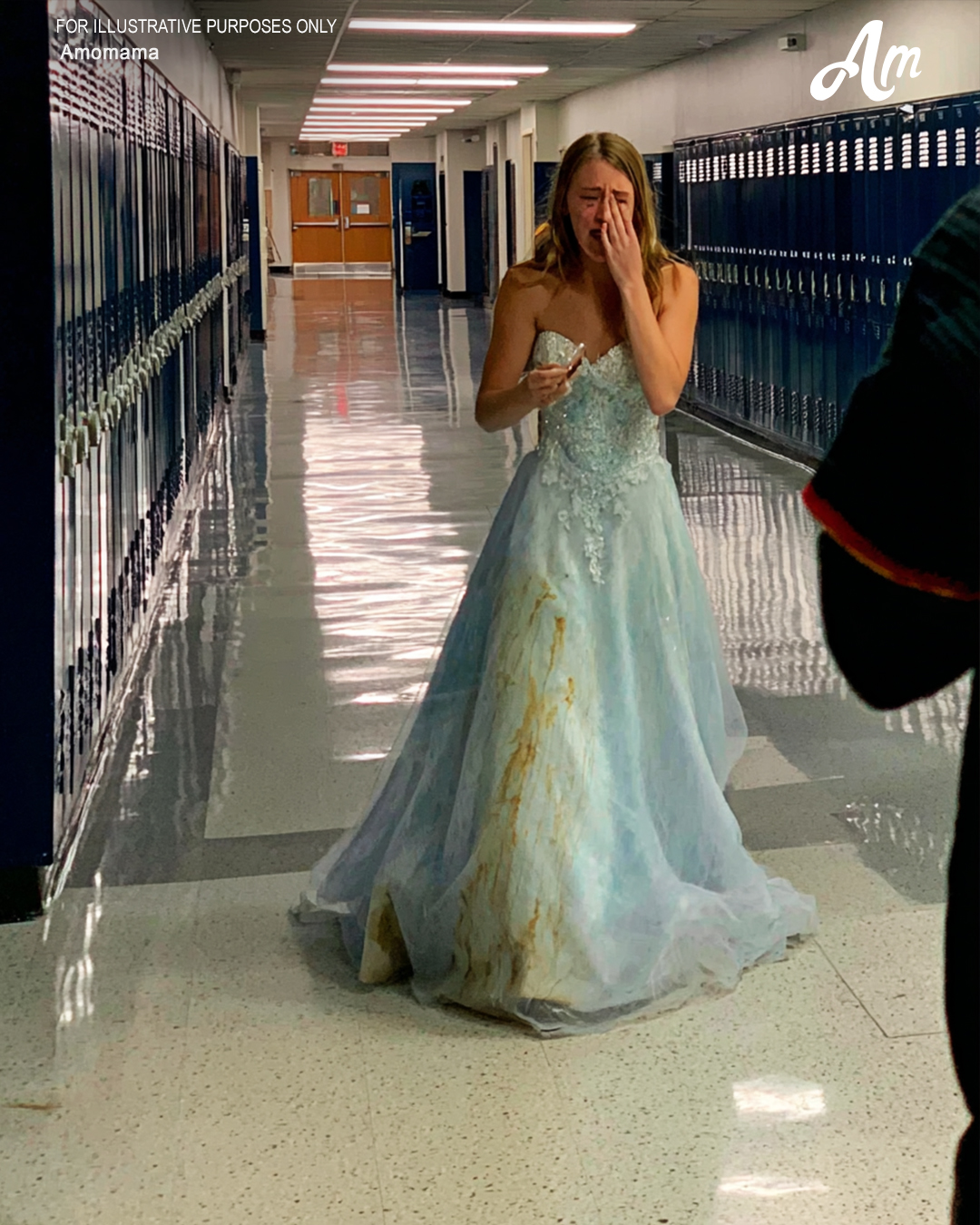

The ballroom of the Ritz Haven Hotel shimmered like a scene pulled from a dream. Crystal chandeliers cast golden light over flowing silk gowns and tailored black tuxedos. Laughter echoed off the marble walls while the orchestra’s music drifted through the air, light and effervescent, like bubbles rising in a glass of champagne. This was New York City’s most anticipated charity gala, an evening where the city’s elite gathered to demonstrate generosity, enjoy rare wine, and be photographed while doing so.
Amid the polished shoes and glittering jewelry, almost no one noticed a small boy crouched near the chocolate fountain, gripping a paper cup of orange juice with nervous hands. His name was Eli Turner. He was four years old and one of a dozen orphans invited from St. Andrew’s Home for Children. His sneakers were worn, his shirt hung loosely on his small frame, and a red napkin was tied proudly around his neck, fluttering behind him like a superhero’s cape. His eyes, wide and curious, sparkled with wonder that outshone even the chandeliers above.
“Miss Carla,” he whispered, tugging gently at his caretaker’s sleeve, “do heroes come to places like this?”
She smiled softly. “Maybe they do, sweetheart. Why do you ask?”
“Because I’m going to be one,” he said with quiet certainty. “I’m going to save people.”
Across the room, Ava Reynolds stood at the center of attention. At thirty years old, she was the billionaire founder of ReyLink Industries, a global technology empire. Cameras surrounded her, and conversations followed her every movement. Her face, flawless beneath the warm lights, appeared regularly on business magazine covers. Many referred to her as the Queen of Silicon Alley.
From the outside, Ava seemed to have everything: power, success, beauty, influence. Yet her life had begun to feel like a glass enclosure—visible to all, yet suffocating. Every smile was calculated, every laugh deliberate. Even the diamonds she wore felt like a burden rather than a reward.
When her assistant reminded her to greet the children from St. Andrew’s, Ava let out a quiet breath. “Of course,” she said, adjusting her bracelet as she walked toward them. She assumed it would be just another staged moment for the cameras.
That was when she noticed him—the small boy with the red napkin cape.
He looked up at her as if she were something magical. “Hi,” he said cheerfully. “You look like a queen.”
Ava laughed, surprised by how natural the sound felt. “And you,” she replied, “look like my royal protector.”
“I’m not a guard,” Eli said seriously. “I’m a superhero. I protect people, even rich ones like you.”
The guests nearby laughed warmly, charmed by his innocence. Ava, however, did not join them. Something stirred within her, something long buried beneath schedules and responsibilities. She lowered herself to his level, her gown pooling gracefully on the floor. “Then thank you,” she said softly, “for keeping me safe, Mr. Superhero.”
Later that evening, the gala transitioned into dancing. Music filled the ballroom, couples glided across the floor, and camera flashes lit the room. Ava stood near the orchestra, smiling politely, the familiar sense of emptiness creeping back in. Suddenly, she felt a gentle pull at her dress.
“Miss Ava?”
She turned to see Eli again. “Yes, hero?”
He looked up, hesitant. “Do superheroes dance?”
She smiled. “Sometimes, after they’ve saved the day.”
“Then… would you dance with me?”
The room grew quiet. CEOs, politicians, actors, and influencers paused to watch as the billionaire in silver stood beside the small orphan boy holding his juice cup at the edge of the dance floor.
Then Ava did the unexpected.
She knelt, took Eli’s hand, and guided him to the center of the ballroom. The orchestra hesitated briefly before beginning a soft waltz. Ava placed his tiny shoes on top of her own and moved gently with the music.
Smiles spread through the crowd. Some guests discreetly wiped away tears. Cameras flashed, but Ava paid them no attention. For the first time in years, she was not acting for an audience. She was simply present.
When the music ended, Ava knelt again and met his gaze. “Eli,” she asked quietly, “where are your parents?”
He looked confused. “I don’t have any.”
The words echoed painfully. Ava’s chest tightened as she lightly touched his cape. “Even so,” she said, her voice unsteady, “you’re an incredible hero.”
Long after the ballroom emptied and the lights dimmed, Ava could not shake the memory of Eli’s smile or the quiet sadness behind it. Days passed, then weeks, but the image remained. One rainy evening, she found herself parked outside St. Andrew’s Orphanage, headlights cutting through the drizzle.
Sister Helena, a nun with kind eyes, answered the door in surprise. “Miss Reynolds? We weren’t expecting you.”
“I met one of your boys at the gala,” Ava said gently. “Eli Turner.”
Sister Helena smiled. “Ah yes, our little superhero.”
They walked through narrow corridors decorated with children’s drawings, laughter echoing faintly in the distance. In a small room, Ava saw Eli asleep, one hand wrapped around a broken toy car. Above his bed hung a crayon drawing of a stick figure in a red cape holding hands with a tall woman in a gown. Beneath it were the words, written unevenly: Me and the Lady from the Party.
Ava felt something inside her break open.
She sat beside him and brushed a curl from his forehead. Eli stirred and opened his eyes. “Miss Ava?” he murmured. “Did I save you again?”
Tears filled her eyes. “Maybe you did,” she whispered. “Maybe you really did.”
From that moment on, Ava visited every week. She brought books and toys, repaired the aging playground, and funded better meals and classes. But her favorite moments were when Eli ran to the gate the instant he spotted her car, his cape fluttering as he shouted, “Miss Ava’s here!”
Her laughter returned, genuine and unguarded. The little boy who had nothing gave her back everything she had forgotten: joy, purpose, and heart.
Months later, tragedy threatened that joy. Due to city budget cuts, the orphanage was scheduled to close. The children would be separated and relocated across the state. Sister Helena wept as she shared the news.
Ava listened in silence. Then she stood and said calmly, “Not while I’m alive.”
Within weeks, she established The Reynolds Foundation for Children. She purchased the orphanage, oversaw its renovation, and secured permanent funding. When the newly restored St. Andrew’s Home reopened, reporters crowded the courtyard. Ava addressed them not as a billionaire, but as someone who had rediscovered her humanity.
Midway through her speech, Eli broke free from the crowd and ran to her side, his cape flying. “I told you I’d save people!” he declared proudly.
Laughter spread through the audience. Ava knelt and held his face gently. “You already have,” she whispered.
Cameras captured the moment: a billionaire kneeling before a small boy in a paper cape.
And for once, the wealthiest woman in the room was not the center of attention.
The true star was the little boy with the cape.
Note: This story is a work of fiction. Names, characters, locations, and events are imagined or adapted for narrative purposes. Any resemblance to real persons or situations is coincidental. The content is intended for editorial use and is compatible with Google AdSense policies. All references to images are for illustrative purposes only.