
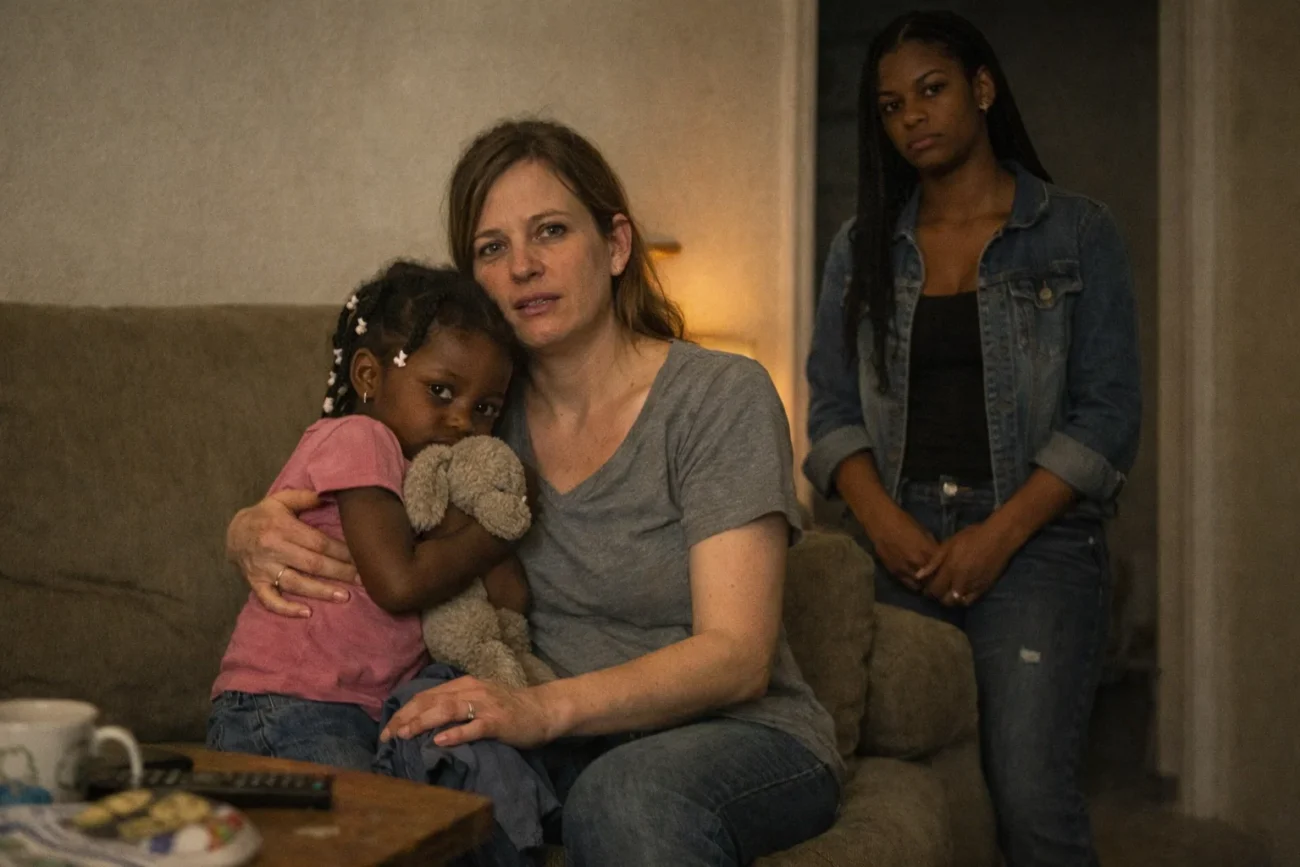
For Anna, the fear of abandonment was not a metaphor; it was a foundational memory etched into the walls of the orphanage where she grew up. After thirteen years of pouring her soul into raising Miranda—the daughter of her late best friend—that old trauma resurfaced in a single, terrifying moment. On Miranda’s eighteenth birthday, a day that should have been a celebration of adulthood, the young woman looked her mother in the eye and delivered a cold, life-altering ultimatum that left Anna questioning everything they had built together.
A pact forged in the shadows of the system
The story began long before Miranda was born, in a shared room with eight narrow beds. Anna and Lila were not just friends; they were sisters by circumstance, surviving an upbringing that offered little in the way of permanent affection. When they aged out of the foster system at eighteen, they stepped into a world that promised them nothing. Together, they worked grueling shifts—Lila at a call center and Anna at an all-night diner—sharing a dilapidated studio apartment that felt like a palace only because no one could evict them from it.
When Lila found herself pregnant and abandoned by the child’s father, the pact they made as children held firm. Anna became the shadow-parent, attending every ultrasound and holding Lila’s hand through a grueling delivery. For five years, they lived as a self-made family of three. Miranda grew up knowing “Aunt Anna” as the person who worked extra shifts to buy her birthday shoes and the one whose lap was always available for movie nights. They had finally created the family they used to dream about in the quiet hours of the orphanage.
The accident that demanded a permanent choice
The fragility of their happiness was exposed on a Tuesday afternoon when a delivery truck ran a red light, taking Lila’s life instantly. At twenty-three, Anna found herself standing in a kitchen with a social worker who viewed her as a legal stranger to the five-year-old girl sobbing in the next room. The system Lila and Anna had fought so hard to escape was reaching for Miranda.
Without a second thought, Anna challenged the bureaucratic machinery. She committed to six months of invasive background checks, parenting classes, and home visits to prove she was more than just a godmother. When the adoption was finalized, Miranda asked a single, heartbreaking question: “Forever?” Anna’s “Yes” was not just a promise to a child, but a vow to her fallen friend. She would spend the next decade sacrificing her own romantic life, career promotions, and personal dreams to ensure Miranda never felt the “temporary” status that had haunted their own childhoods.
The hidden cost of motherhood
The years that followed were a blur of theater rehearsals and teenage milestones. Anna watched from the front row as Miranda sang “Tomorrow” in her middle school play, crying because the lyrics felt like their shared anthem. She coached Miranda through heartbreak, speeding tickets, and the anxiety of growing up. To provide for Miranda, Anna stayed at the diner, passing up management roles that would have required night shifts, and funneled every spare cent into braces, coffee-shop runs, and theater fees.
By the time Miranda turned seventeen, the bond seemed unbreakable. She was a brilliant, theatrical, and compassionate young woman who called Anna “Mom” with a natural ease that felt like a daily gift. Anna believed they had navigated the hardest parts of their journey, unaware that Miranda had been quietly observing the weight of the sacrifices Anna had made to keep her safe and “chosen” every single day.
The 18th birthday confrontation
The tension broke on a Saturday night after Miranda’s eighteenth birthday party. As the last guests departed, Miranda cornered Anna in her bedroom. The warmth of the party had evaporated, replaced by a clinical, almost feverish intensity in the young woman’s eyes. She spoke about her legal adulthood and her newfound access to the insurance payout and savings Lila had left behind—money Anna had meticulously guarded in a trust for thirteen years.
Then came the sentence that felt like a physical blow: “You need to pack your things.” For Anna, the world tilted. The orphanage-bred fear of being “voted off the island” surged back. She assumed she was being evicted from the life she had sacrificed everything to build, replaced by the very daughter she had saved. The silence in the room was suffocating until Miranda handed over a trembling, hand-written letter.
The reveal: An adventure long overdue
The letter was not an eviction notice, but a manifesto of gratitude. Miranda had spent months planning a two-month expedition through Mexico and Brazil—the very trip Anna had mentioned wanting to take before her life was consumed by the responsibilities of motherhood. Miranda had used her inheritance not to distance herself, but to “choose Anna back.” She had secretly learned Spanish and Portuguese on a language app while Anna thought she was watching television, all to ensure they could navigate the continent together.
The “pack your things” command was an invitation to a new chapter where Anna was no longer just the provider, but a woman being honored by the child she had raised. Nine days later, they traded the familiar smells of the diner and the apartment for the cenotes of Mexico and the sunrise over Rio de Janeiro. Under the bright stars of a Brazilian coastal town, Miranda asked if her biological mother would be proud. Anna, looking at the resilient, selfless woman her daughter had become, knew the answer was a resounding yes.
Building a family by choice
The journey through South America was more than a vacation; it was a recalibration of their relationship. Anna realized that while she had spent thirteen years guarding her heart against the “inevitable” abandonment she expected from the world, she had accidentally raised a person who understood the true meaning of loyalty. Family, Anna concluded, isn’t defined by the blood that flows through your veins, but by the conscious decision to stay when the world gives you every reason to leave.
Today, Anna no longer looks for the exit signs in her relationships. She understands that the best families are not the ones we are born into by chance, but the ones we build with our own hands, one sacrifice and one choice at a time. Miranda didn’t just give her a trip to South America; she gave her the freedom to stop being afraid.