
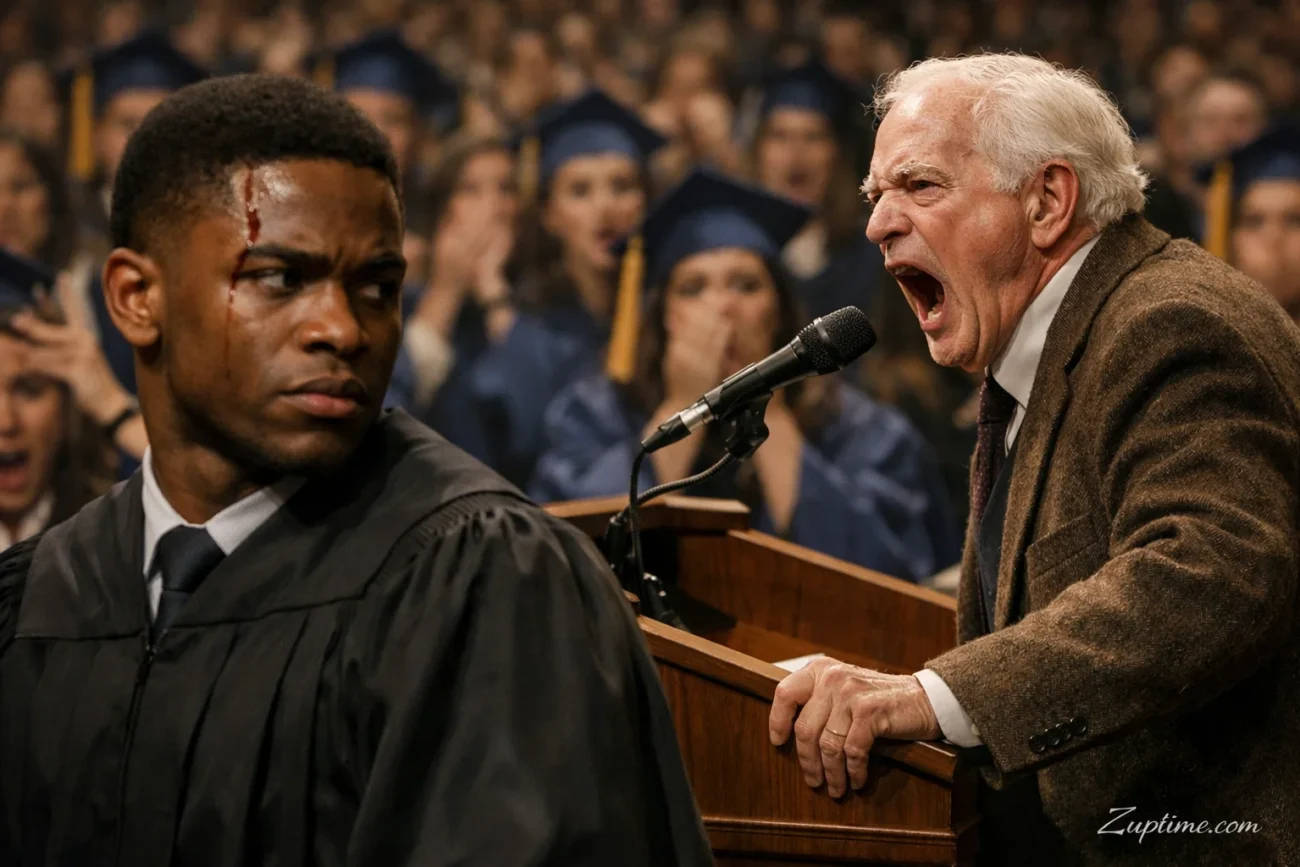
My parents had a tradition they loved to show off.
Every Christmas, after dinner and dessert, my father would pull out a neat stack of envelopes and hand one to each grandchild. He called them “college contributions,” saying the words slowly, proudly, like he was announcing a charitable grant. The room always reacted the same way—excited squeals, hugs, appreciative murmurs. My mother would press a napkin to her eyes, as if generosity itself had moved her to tears.
The year my son was twelve, I waited for his envelope.
Jordan sat beside me, back straight, hands folded carefully in his lap. He had mastered the art of taking up as little space as possible. Too old to believe in fairy tales, still young enough to believe family meant safety.
My father reached the last envelope and stopped.
He looked directly at me, then placed the stack on the table.
“We’re not giving one to him,” he said, loud enough that no one could pretend they didn’t hear.
The room froze.
My sister-in-law suddenly became fascinated with her plate. My brother coughed, the kind of cough people use when they want to disappear. My mother smiled thinly, the way people do when they think cruelty is discipline.
I blinked. “Dad… what?”
“He’s from a broken home,” my father said flatly. “You made choices. We’re not paying for the consequences.”
Jordan didn’t react outwardly. But I saw his throat tighten as he swallowed. That tiny movement hurt more than the words themselves.
I wanted to scream. To overturn the table. To expose the ugliness for what it was.
Instead, I smiled—the controlled, careful smile you wear when you’re standing on shattered glass and don’t want anyone to notice the blood.
“Okay,” I said quietly. “I understand.”
That night in the car, Jordan stared out the window and asked, “Is it because my dad left?”
I kept my eyes on the road. “No,” I said. “It’s because your grandfather is wrong. And because some adults use money to feel powerful.”
He nodded once. Then he said, “I won’t need it.”
At the time, I didn’t understand what he meant.
From that day on, I stopped expecting anything from my parents. I worked extra shifts at the hospital. I sold jewelry I’d saved for years. I learned the scholarship system inside and out. Jordan studied with quiet determination—not fear, but pride. He joined debate, volunteered, tutored kids who had even less than he did. He understood scarcity—both financial and emotional—and it made him disciplined, not bitter.
Every Christmas, the envelopes continued. Jordan endured it politely. He never asked. My father called it “teaching responsibility.” My mother called silence “keeping the peace.”
Years passed.
Jordan was accepted into a top university with a scholarship package so generous my hands shook when I read it. Tuition support. Leadership funding. Work-study. We still had to stretch—but we were never begging.
Jordan never told his grandparents the details.
Then came graduation.
My parents insisted on attending. “We should see how he turned out,” my father said, as if Jordan were an experiment he’d declined to fund but still wanted credit for observing.
The auditorium was packed. Caps and gowns filled the rows. Names were called. Applause echoed.
When the dean announced the student speaker, my heart stopped.
“Valedictorian,” the dean said. “Jordan Hayes.”
My father stiffened. My mother’s mouth fell open.
Jordan walked onto the stage calmly and adjusted the microphone. He scanned the crowd, then looked directly at our row.
When he began speaking, his voice carried—clear, steady, practiced.
He opened with gratitude and humor. The audience laughed when expected. Professors smiled. Parents wiped their eyes. But beneath it all, I felt something building.
He spoke about work. About exhaustion. About students who balanced jobs, family responsibilities, and coursework. “I learned early,” he said, “that talent alone isn’t enough. Someone has to believe you’re worth investing in.”
I knew exactly who he was speaking to.
My father sat rigid, chin raised, as if daring Jordan to cross a line.
Then Jordan said, “Some people believe that a ‘broken home’ produces a broken child.”
A ripple passed through the crowd. My mother’s hands tightened around her program.
Jordan paused, letting the silence settle. “My father left when I was young,” he continued. “For a long time, I thought that meant I would always start behind.”
Then he smiled. “But my mother taught me that being left behind and staying behind are two very different things.”
The room murmured approval. My vision blurred.
Jordan took a breath. “When I was twelve, I sat at a family table and watched every grandchild receive a college fund envelope—except me.”
I stopped breathing.
The audience didn’t know our story. Now they did.
Jordan’s voice remained calm. “I heard someone say, ‘Why waste it on him? He’s from a broken home.’”
The silence that followed wasn’t theatrical. It was moral. The kind that happens when people recognize cruelty and don’t want to be part of it.
My father’s color drained. His confident posture collapsed into something fragile.
Jordan didn’t sound angry. He sounded finished with the pain.
“So I made a plan,” he said. “I worked. I applied for scholarships. I sought mentors. I accepted help from people who didn’t share my last name.”
Applause started softly, then spread.
“I’m not sharing this for sympathy,” Jordan continued. “I’m sharing it because you never know which comment becomes a child’s fuel—or their chain.”
He looked directly at my father.
“My grandfather thought he was teaching me a lesson,” Jordan said. “He was.”
My father shifted, uncertain, exposed.
“The lesson was simple,” Jordan finished. “If someone refuses to invest in you, don’t spend your life begging them to. Build anyway.”
The applause became a standing ovation.
And in the middle of it, my father stood.
Not proudly. Abruptly. Like the words had physically pulled him up. He looked stunned, unmasked. My mother stayed seated, tears sliding down her face.
Jordan stepped away from the microphone, nodded once, and walked off the stage with composure.
Outside, graduates celebrated in the sun. Professors congratulated him. Friends called his name.
Jordan found me near a fountain. “You okay?” he asked—because he always checked on others first.
I laughed through tears. “I’ve never been prouder.”
“I didn’t do it to hurt you,” he said quietly.
“I know,” I replied. “You did it to free yourself.”
My father approached slowly, like a man facing judgment.
“That… was a speech,” he said.
“Yes, sir,” Jordan replied.
“I didn’t think you’d make it like this.”
“You didn’t think I was worth the money,” Jordan said evenly. “That’s fine. I was worth the work.”
My mother whispered, “We were wrong.”
Jordan didn’t punish them. He didn’t comfort them either.
“I hope you remember this,” he said, “before you ever decide a child’s future based on their parents’ mistakes.”
Then he turned to me. “Let’s take a photo.”
On the drive home, he stared out the window.
“I used to think I had to prove something to Grandpa,” he said.
“And now?” I asked.
He smiled. “Now I know I only needed to prove it to myself.”