
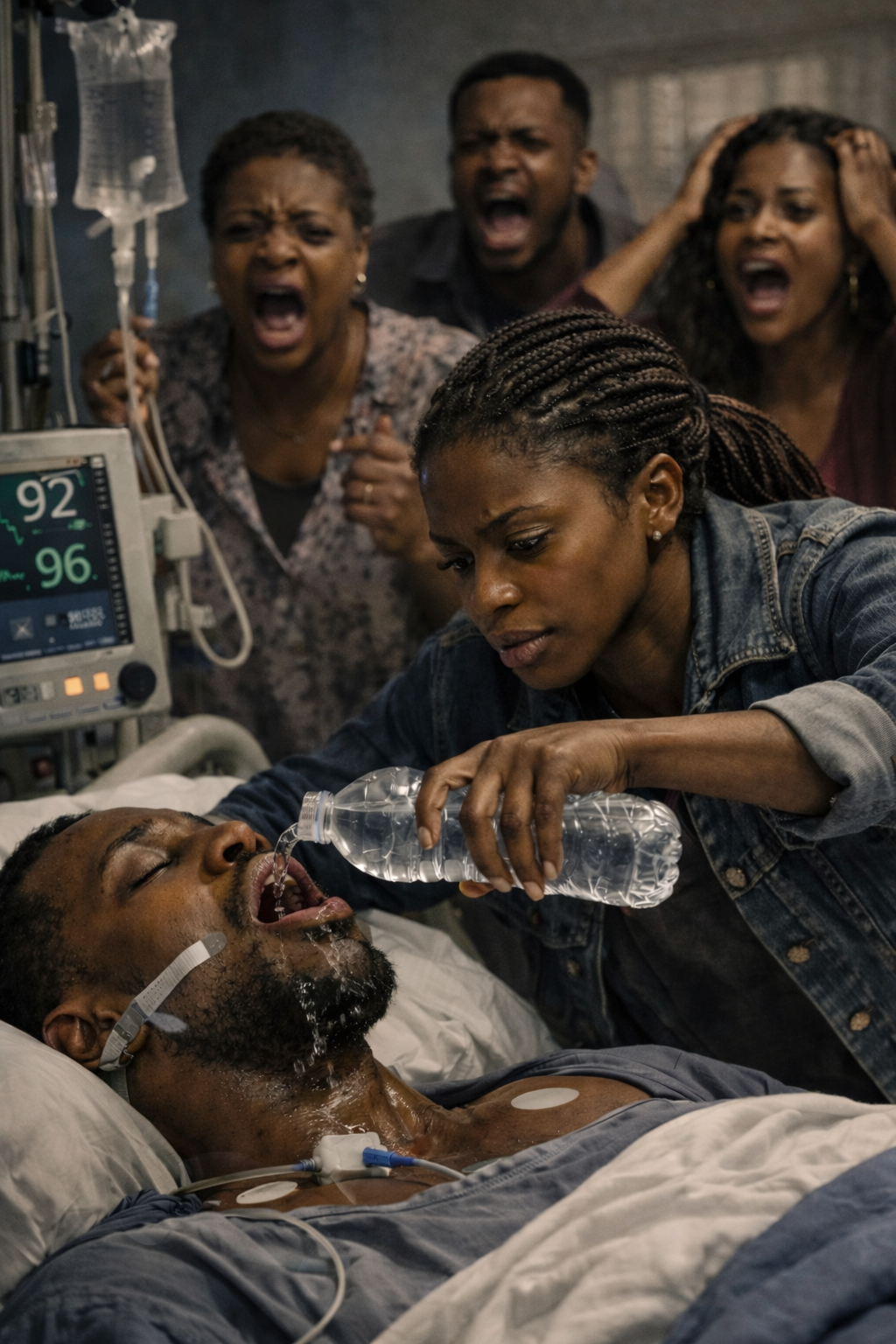
A Plastic Bottle and the Truth That Changed Everything
The private wing of St. Bartholomew smelled of antiseptic and wealth—cleaned so thoroughly it felt sterile, surreal. Machines hummed softly. At the foot of the bed, Dr. Samuel Adabola delivered the verdict:
— “Two days. Maybe less.”
Lawyers quietly opened folders. Funeral plans began—flowers chosen, dates penciled in, a priest’s number saved. Quacy Aia, a powerful CEO, lay unconscious, kept alive by machines. His mother sat beside him, clutching a scarf in silent prayer. His half-brother, Yaw, observed calmly, already assuming control.
And then the door opened.
A teenage girl entered barefoot, soaked by the rain. She carried a scratched plastic bottle. Security rushed in, alarmed by her presence, by her poverty.
But before they could remove her, she said:
— “This water… is why he’s dying.”
The room froze. She wasn’t begging. She was telling the truth.
Amara had sold water outside the hospital for years. She had no ID, no age papers, no education. But she had kept that one bottle—the one that looked innocent, but wasn’t. The water inside had once made her mother collapse. She’d kept it ever since.
Dr. Adabola tested it.
The results were clear: deliberate contamination. The same compound matching Quacy’s unexplained symptoms.
Yaw, the brother, tried to suppress the discovery. Amara was publicly shamed, arrested, and painted as a threat to a dying executive’s care.
But behind the scenes, the doctor and a brave nurse pushed forward. They began the antidote protocol.
Quacy’s condition stabilized.
When he awoke and learned the truth, he acted swiftly—firing those responsible, ordering full audits, creating reforms. He invited Amara to join a new foundation dedicated to clean water access and accountability.
She made one request:
— “I want to go to school. Not as a story. As a student.”
And so change began. Not because of money. But because of a barefoot girl with a plastic bottle—and the courage to speak the truth.
⸻
Important Note:
This story is a work of fiction. The characters, events, and institutions are entirely imagined and are not based on real people or incidents. Its purpose is to inspire reflection on injustice, truth, and the power of individual action in the face of systemic silence.