
I never thought the most important day of my life would begin with a scream.
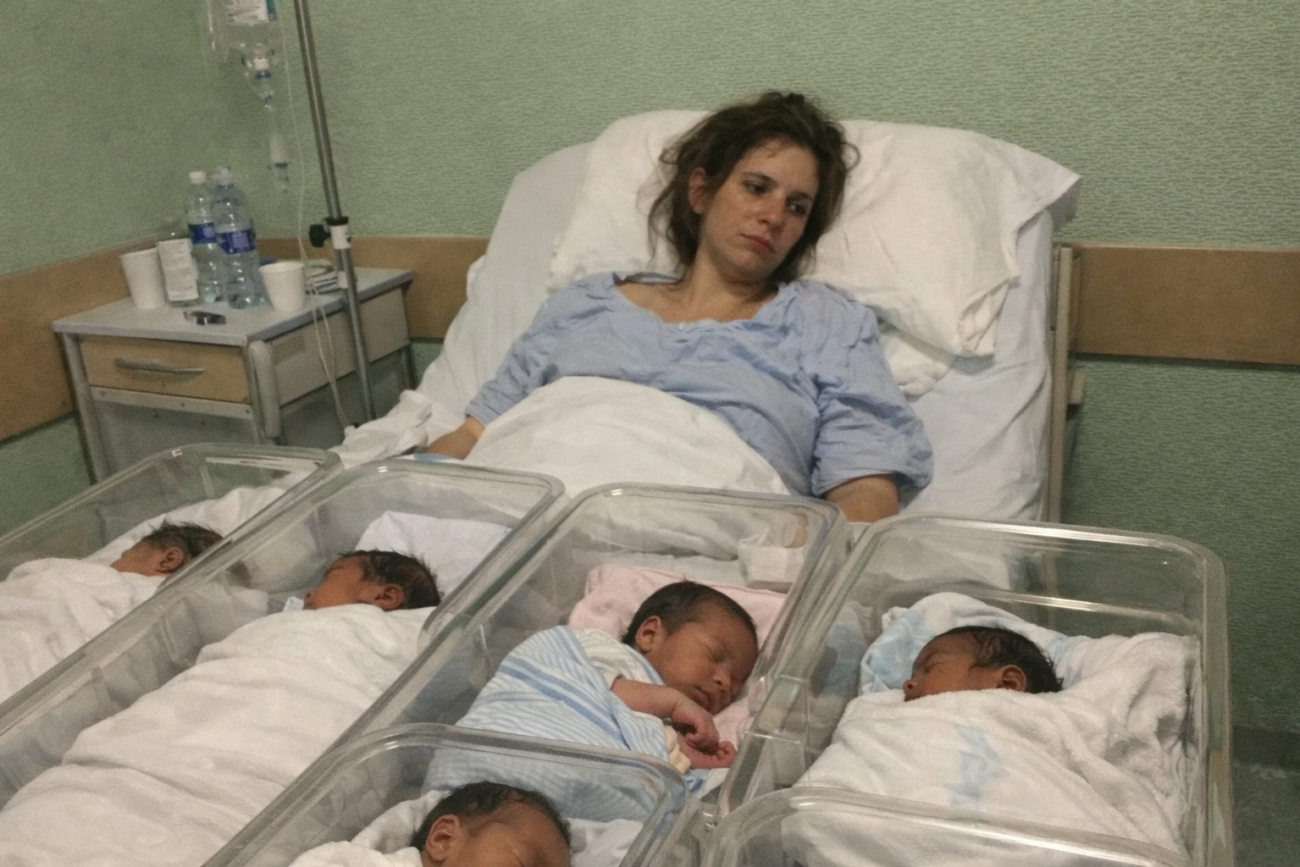
My name is María Fernández. Thirty years ago, I gave birth to five babies in a public hospital in Seville. The labor was long and brutal. When I finally opened my eyes, exhausted and dazed, I saw five tiny cribs lined up beside my bed. They were so small. So perfect. And every single one of them was Black.
Before I could process what I was seeing or say a word, my husband, Javier Morales, stepped into the room. He looked at the babies, one by one. His expression darkened. His body stiffened. I remember how silent the room became, like the world had stopped breathing.
“They’re not mine,” he snapped. “You lied to me.”
The nurses tried to calm him down, to explain that no official records had been finalized, that things like this needed time to understand. But he wouldn’t hear it. His voice grew louder. His words cut deeper.
“I won’t live with this humiliation,” he said.
And just like that, he walked out of the hospital. He never asked for answers. He never looked back.
I was left alone with five newborns in my arms and the sting of a thousand eyes. There were no tears—just numbness. I signed every document by myself. I named my children Daniel, Samuel, Lucía, Andrés, and Raquel. We left the hospital in a borrowed stroller and secondhand blankets. But I carried much more: five lives, a broken heart, and a question that would haunt me for years.
That night, I watched them sleep. And I made a quiet promise—not to get revenge, but to one day find the truth, for their sake.
Raising five children alone wasn’t a choice. It was survival. I cleaned houses during the day and sewed at night. We lived simply, sometimes scraping by on rice and bread. But love was never missing. My children always knew they were safe, wanted, and seen.
As they grew, the questions came. “Why do we look different, Mamá?” “Where is our father?” I told them the truth: that their father left the moment he saw them, without asking or listening. And that I, too, didn’t have answers—only love and determination.
When they turned eighteen, we took a family DNA test. The results showed what we already knew: they were all biologically mine. But it still didn’t explain everything. A geneticist encouraged deeper testing. And that’s when we finally learned the truth.
I carry a rare genetic condition, passed down silently in my family, that can cause children to inherit African features even if both parents appear white. It’s documented. Real. Scientific. There had never been betrayal—just biology.
I tried contacting Javier to tell him. He never answered.
Years passed. My children became adults, chasing careers, dreams, and lives of their own. I thought that chapter of our story had ended. But then one day, out of nowhere, Javier came back.
He looked older—thinner, grayer. His expensive clothes couldn’t hide his frailty. He was sick and needed a transplant. A private investigator had found us.
He asked to meet. We agreed—not for his sake, but for closure.
He sat across from the five children he had abandoned. Still unsure. Still proud. Then Daniel placed the test results on the table—DNA reports, medical records, everything.
Javier read them in silence. His face drained of color. His hands trembled.
“So… they were mine?” he whispered.
No one spoke. Not out of anger, but because there was nothing left to say.
Then Lucía spoke. Calm. Clear. “We didn’t need your apology to survive. We already did that.”
Javier started to cry. He blamed fear, society, pressure. But none of that mattered anymore. Andrés leaned forward and said gently, “You came looking for help, not to help us. That says enough.”
I watched them—my children—and felt something I hadn’t felt in years: peace. I wasn’t angry. I had no space left for that. Only a distant kind of sadness for everything he had missed.
When he turned to me, eyes searching for forgiveness, I said, “I didn’t hate you. But I stopped keeping a place for you.”
And he left, smaller than when he’d arrived.
We didn’t fall apart. We didn’t feel broken. That meeting didn’t reopen wounds—it closed them. My children stood taller. Stronger. Complete.
Today, they are thriving adults, proud of who they are and where they come from. They grew up without a father, but with truth, resilience, and love.
And I learned something that I hope every parent and every abandoned child remembers:
Dignity is not something you wait for someone else to give you.
It is something you build—day by day, choice by choice.
This is not a story about revenge.
It’s a story about consequences.
Because sometimes, one moment of fear—one decision made too quickly—can echo through an entire lifetime.
And sometimes, love doesn’t roar. It whispers, “We made it anyway.”