
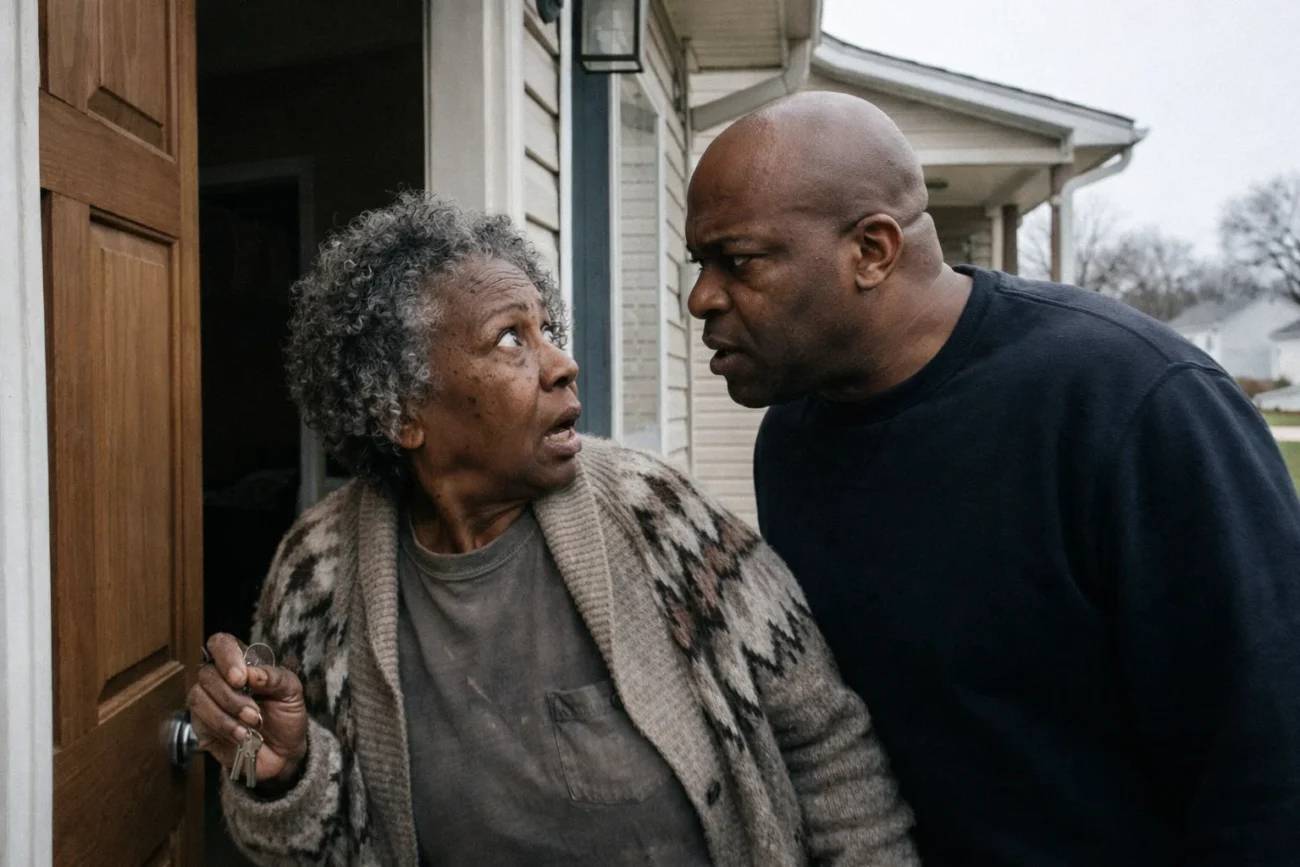
The notification arrived exactly when it always did: nine o’clock in the morning, on the first day of the month.
I no longer needed to look at my phone to know what it said. I already knew.
Another three hundred dollars had been transferred successfully from my bank account.
Recipient: Mrs. Clara Rodriguez, my former mother-in-law.
Or, more precisely, the mother of the woman who had once been my entire world, my purpose, and eventually the deepest source of pain I had ever known.
Five years, three months, and two days had passed since Marina vanished from my life.
I never liked referring to what happened to her as “death,” even though documents, authorities, and official records insisted that was the correct term. For me, Marina had not died in any ordinary sense. She had disappeared, leaving behind half an empty bed and a silence so heavy it filled every room of the home we had built together with love and expectation.
How I Lost the Woman I Believed I Would Grow Old With
They told me it was a car accident.
Marina had been driving to visit her family in a small coastal village, about six hours away from our home in suburban Arizona. The police report was painfully brief, reducing her entire life to a reference number and a location on a highway map.
Her coffin arrived sealed. I was told the impact had been too severe and that it was better I did not see her. The funeral passed as if I were watching it from behind thick glass, detached and unreal. People embraced me, spoke words of comfort, but I felt nothing.
The strongest memory I carried from that day was of Mrs. Clara Rodriguez. She was frail, shaking uncontrollably, clinging to me as if I were the last thing keeping her upright. She had always been a small woman, but grief made her seem even more fragile.
In the middle of that shared devastation, I made her a promise.
Marina had always worried about her mother. Mrs. Rodriguez was a widow living on a modest pension, her health declining for years. Once, Marina had said to me, only half joking but with unmistakable seriousness, “If anything ever happens to me, promise you will not let my mother struggle.”
At the time, I dismissed the idea. Marina was young, healthy, and our future felt endless.
Standing by her grave, with the earth still fresh, I honored that promise.
“I will take care of you,” I told Mrs. Rodriguez. “Every month. For food, medicine, whatever you need. It is what Marina wanted.”
She thanked me through tears and returned to her village alone.
From that moment on, every single month, without exception, three hundred dollars left my account and went to her. It was not a large sum, but to me it was sacred. That payment felt like the last connection I had to my wife, proof that I was still keeping my role as her husband alive in some small way.
When People Told Me to Let Go
After the first year, my friends began urging me to stop.
“You cannot keep doing this forever,” my friend Jorge told me one night. “You are not responsible anymore.”
“It is not about responsibility,” I replied. “It is about keeping a promise.”
They said Marina was gone and that I needed to live for myself. But I could not. That monthly transfer was the final thread tying me to the life I had lost.
I did not understand then that grief, when left untouched for too long, eventually cracks open and lets the truth spill out.
Everything changed on an ordinary Tuesday afternoon.
The bank contacted me, not with confirmation, but with a problem. Mrs. Rodriguez’s local branch had closed, and they needed updated information.
I tried calling her landline. It was disconnected. I tried the mobile phone I had purchased for her years earlier. Voicemail. Full.
A cold unease settled in my chest. I realized I had not actually spoken to her in months. Only short messages appeared occasionally.
“Received. Thank you.”
“God bless you.”
I had never questioned them.
The Trip That Changed Everything
I checked my unused vacation days and saw that I had weeks available. Without thinking too much, I decided to drive to the village. I told myself it was practical: fix the banking issue, check on her, maybe revisit Marina’s childhood places.
I did not know I was driving straight toward the truth.
The journey was long and quiet. Memories filled the silence: Marina’s laughter, the way she listened to music, the faint scent of vanilla in her hair. I cried alone in the car, without restraint.
I arrived at the village at sunset. It looked frozen in time: narrow streets, colorful houses, and the subtle decay of neglect beneath the charm. I found the address easily.
And then I stopped.
The house looked nothing like I remembered. Fresh yellow paint covered the walls. The garden was immaculate. A new white fence surrounded the yard. A nearly new sedan sat in the driveway.
I told myself there must be an explanation. But it did not make sense.
I rang the doorbell.
Children’s laughter came from inside.
And then I heard a woman’s voice.
A voice I would recognize anywhere.
The door opened.
A small boy stood there, holding a toy dinosaur. Before I could speak, a voice called out from inside.
And then she appeared.
Seeing My Dead Wife Alive
Marina stood in front of me.
Alive.
Her hair was shorter. She looked healthier. She wore a simple dress and an apron. But it was unmistakably her.
She froze when she saw me.
“Roberto?” she whispered.
The bags fell from my hands.
Then Mrs. Rodriguez appeared behind her, looking well, stable, and far from struggling.
Nothing fit.
“I buried you,” I said.
Marina cried. A man stepped forward, unfamiliar.
“Who is this?” he asked.
“My ex-husband,” Marina replied.
The word hurt more than the funeral.
When he asked if I was “the one with the money,” everything became clear.
The Truth
There had been an accident. But Marina had not been the victim. She had paid to falsify records. The body in the coffin was someone else.
She had escaped.
The money I sent every month funded her new life: the house, the car, her partner, and their child.
My grief had paid for their comfort.
What I Did Next
I canceled the transfer.
I told them I would not report them, not out of forgiveness, but because I wanted no further connection.
“You took five years of my life,” I said.
Then I left.
Freedom
As I drove away, something lifted. For the first time in years, I was free from grief. Anger replaced it, and anger was lighter.
I went home and erased every trace of Marina from my life.
I reconnected with friends. I went out. I lived.
Over time, I rebuilt everything.
What I Learned
Truth hurts more than loss, but it also frees you.
The woman I loved never truly existed. And once I understood that, I let her go.
Today
It has been three years. I am remarried. I am happy. The money I once sent now goes to savings or charity.
Marina is gone from my life entirely.
And this time, I did not mourn.
I was finally free.