
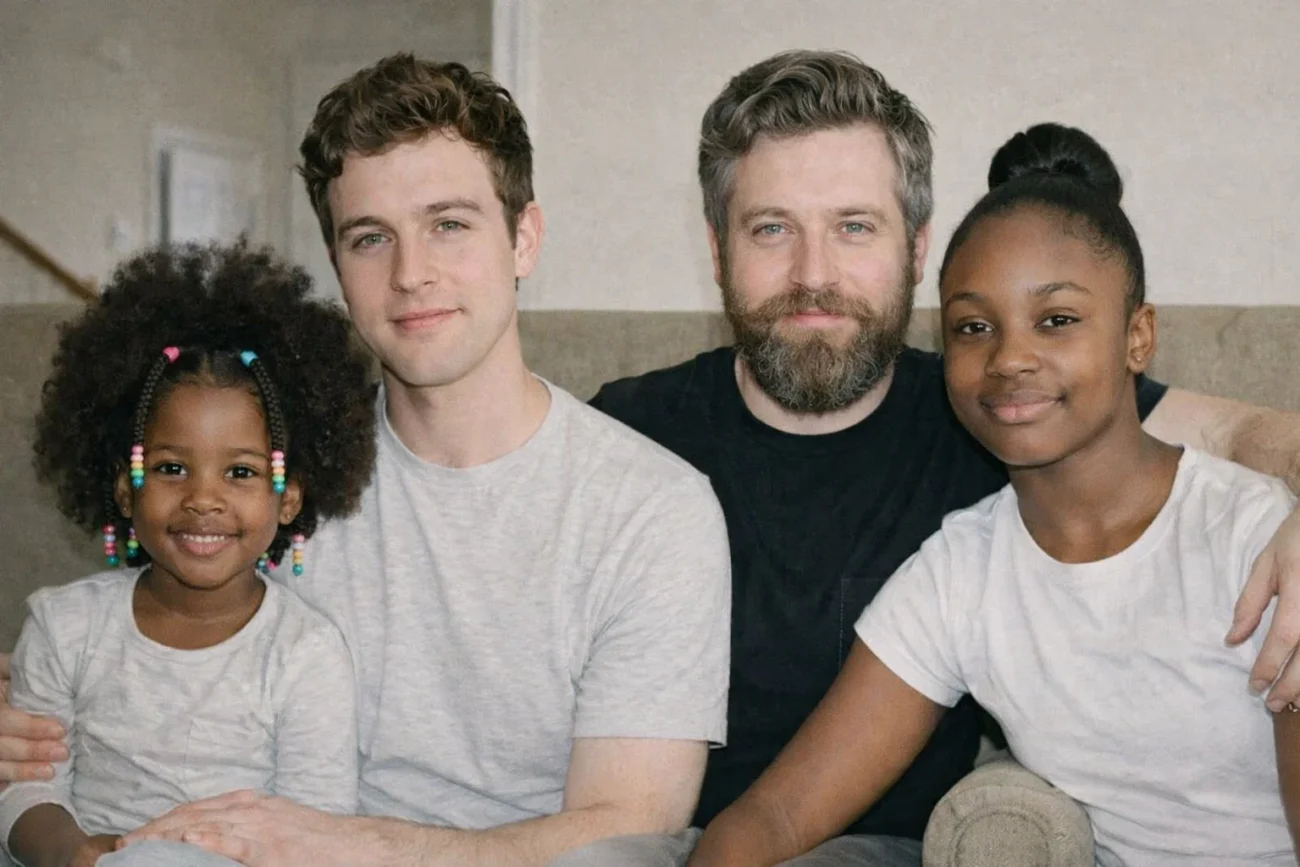
A Cobbler’s Promise: The Thanksgiving That Changed Everything
For most of my life, I have measured time through worn soles and cracked heels. I am a cobbler—one of the few left in an age of throwaway shoes and mass production. My repair shop, Sole & Heel, stands at the intersection of Fourth and Main in a small Ohio town, where aging factories border endless cornfields. The air inside carries the scent of beeswax, leather adhesive, and dust collected from countless journeys taken by people I have known all my life.
A decade ago, that shop defined my entire existence. Life was steady, quiet, and painfully solitary.
Then Laura walked through the door.
It was a rainy Tuesday in April. She struggled with a broken umbrella and clutched a pair of high heels, one snapped clean through. She smelled of rain and lavender detergent. She was frantic, running late for a job interview at the public library, and her eyes—warm, amber-colored—were full of desperation.
“Can you fix these?” she asked, breathless. “I can’t go to an interview barefoot.”
I repaired them in ten minutes and refused payment. She made it to the interview—and got the job.
Two weeks later, she returned with a coffee as thanks, accompanied by a small girl who hid behind her legs. Her name was Grace. She was four years old, dressed in jeans with a tutu layered over them, clutching a stuffed rabbit by one ear.
“Say thank you to the man who saved Mommy’s job,” Laura encouraged.
Grace peeked out shyly, her large dark eyes so unlike her mother’s. She didn’t speak—she only waved.
That small gesture altered the course of my life.
Laura and I fell in love quickly and completely. She brought color and chaos into my ordered world. But her life carried a shadow—the absence of Grace’s father.
His name was Chase Miller.
I knew the name long before I knew the man. Everyone did. Chase was the town’s golden boy, a baseball prodigy drafted straight out of high school, later a major league star. His face appeared on billboards and cereal boxes. He was celebrated everywhere.
Except in Laura’s life.
When Laura became pregnant at twenty-two, Chase was beginning his rookie season. He did not simply leave—he erased himself. A lawyer offered money for an abortion. When Laura refused, all contact stopped. Chase changed numbers, blocked communication, and pretended neither Laura nor the unborn child existed.
Laura raised Grace alone on a librarian’s salary and determination. She never sought child support, refusing to allow his influence near her daughter.
“He chose fame,” she once told me as we sat on the porch watching fireflies. “Grace isn’t baggage. She’s the reward. He just couldn’t see it.”
I filled the space he abandoned. I built Grace a crooked treehouse, taught her to ride a bike, learned to braid hair with awkward fingers and online tutorials. When she was six, she began calling me her “forever dad.”
It was the greatest title I had ever earned.
I planned to propose to Laura. The ring—a sapphire, because she disliked diamonds—was hidden in my shop safe.
Then she got sick.
Stage 4 lung cancer. A cruel genetic anomaly in a woman who had never smoked.
She declined rapidly. Within six months, she was bedridden in our living room.
The night she died, Grace was staying with a neighbor. I held Laura’s hand as her breath grew shallow.
“Chase,” she whispered.
My heart clenched. “Do you want me to call him?”
“No,” she said firmly. “Never him. You are her father. Promise me.”
“I promise.”
“Protect her,” she said. “He’s empty inside. Don’t let him break her.”
Six months later, I legally adopted Grace. The judge finalized it with a gavel strike. We celebrated with ice cream. From that day on, it was just the two of us.
I never expected Chase to return.
⸻
The Calm Before Everything Shattered
Ten years passed.
Grace grew into a gifted, artistic fourteen-year-old. She shared Laura’s smile and my stubbornness. She spent weekends in the shop, polishing boots and listening to jazz records. We were inseparable.
Chase was never discussed. To Grace, he was only biology—a name on a baseball card in a drawer.
Then came Thanksgiving.
It was our sacred day. I closed the shop completely. I brined the turkey at dawn; Grace baked pies. We watched the parade and ate until we could barely move.
That morning, the kitchen smelled of turkey, sage, and cinnamon. I was mashing potatoes when Grace entered the room. Her steps were heavy, unfamiliar.
When she didn’t answer my request for nutmeg, I turned.
She stood frozen in the doorway, pale and shaking, eyes swollen from crying.
“Dad,” she said quietly. “I won’t be here for Thanksgiving dinner.”
My chest tightened.
She swallowed hard. “I’m going to see my real father. You know him.”
The words knocked the air from my lungs.
“Chase Miller,” she said.
She explained everything—how he had contacted her through Instagram, threatened to destroy my business, promised wealth and fame if she appeared with him at a charity event to rehabilitate his image.
He wanted her as proof of redemption.
She went because she was trying to protect me.
I held her hands and told her the truth: no shop was worth losing her. She showed me the messages.
They were explicit, threatening, manipulative.
That was when I made a call.
Elias Thorne—a longtime customer and investigative journalist.
By the time Chase arrived at my door, I was ready.
⸻
A Father Draws the Line
Chase showed up demanding Grace, wearing designer clothes and arrogance. He threatened me openly.
I showed him the printed messages.
Then I told him they had been sent to a journalist, the league, and his sponsors.
His confidence collapsed.
He lunged at me. I stopped him.
He left in disgrace.
⸻
What Followed
The story ran the next morning.
Sponsors withdrew. The team distanced itself. His comeback ended before it began.
My shop was flooded with support. The landlord confirmed my lease was secure.
Grace needed time to heal. Losing the fantasy of a father is its own grief.
One night, while working in the shop, she asked if I would walk her down the aisle someday.
I said yes.
She leaned against me and said the words that mattered most:
“You’re my real father.”
And at last, my heart was whole.
⸻
Note:
This story is a narrative work of fiction presented for entertainment and reflection. Any resemblance to real persons or events is coincidental.