
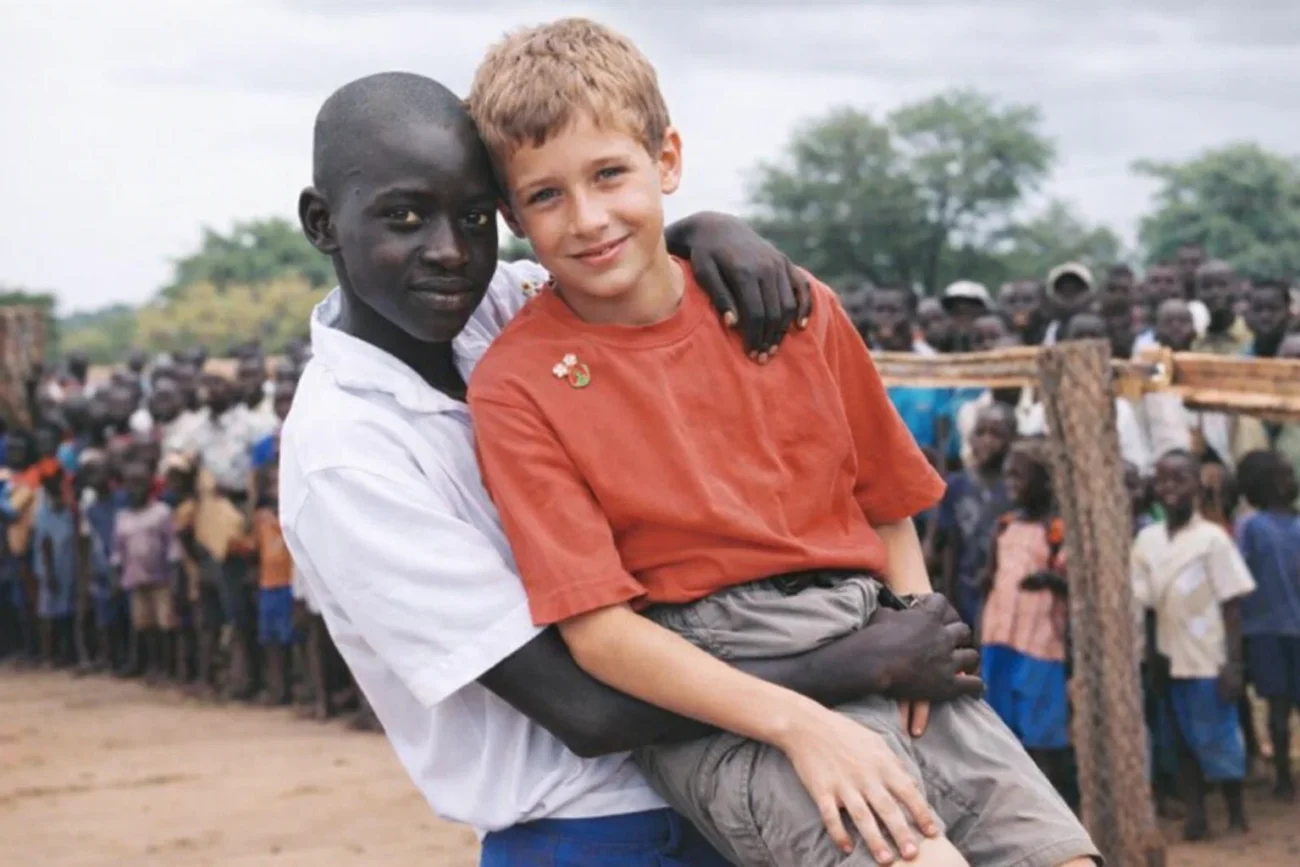
In May 1991, a boy named Ryan Hreljac was born in Canada. By every reasonable expectation, his life should have followed a familiar path—schooldays, friendships, household chores, and the ordinary discoveries of a suburban childhood. Instead, at just six years old, a single moment in a classroom redirected his life in a way few could have predicted.
One day at school, Ryan’s teacher spoke about life in parts of Africa where clean drinking water was unavailable. She explained that many children walked long distances every day to collect a small amount of water, often from polluted sources. Some became seriously ill, and others died from diseases that could have been prevented with access to clean water.
The idea struck Ryan with sudden force. He could not understand how children just like him—children who played, studied, and dreamed—could live without something as basic as safe water.
With the direct honesty of a child, Ryan raised his hand and asked a simple question:
“How much would it cost to give them clean water?”
His teacher explained that organizations such as WaterCan helped build wells, and that one well could cost around 70 dollars.
That evening, Ryan went straight to his mother, Susan, and announced his plan. He told her he needed 70 dollars so he could build a well for children in Africa.
Susan did not laugh or dismiss his request as unrealistic. Instead, she offered him a way to earn the money. Ryan began doing household chores—vacuuming, cleaning windows, dusting, pulling weeds—earning a few dollars at a time. Week after week, he worked steadily, saving every cent until he finally reached his goal.
Proud and determined, Ryan took his hard-earned money to the WaterCan office. There, however, he learned that while 70 dollars could help with supplies, the true cost of drilling a well was closer to 2,000 dollars.
Susan gently explained that this was more money than their family could afford. Ryan did not argue or become discouraged. He simply said he would come back and raise the rest.
And he did exactly that.
Over the following months, Ryan expanded his efforts. He took on additional chores, went door to door in his neighborhood, and shared his goal with anyone willing to listen. His sincerity inspired others. Neighbors contributed. Friends helped. His school joined the effort. Slowly, one small donation at a time, Ryan reached the full amount needed.
By January 1999, the funds were complete, and a well was successfully drilled in northern Uganda. For the first time, an entire village could access clean water without fear of disease.
Yet this achievement was only the beginning.
Through written correspondence, Ryan’s school connected with a nearby school in Uganda. It was there that Ryan learned about Akana, a boy his own age who faced immense challenges simply to attend school each day. Deeply affected, Ryan asked his parents if he could travel to Uganda to meet the people whose lives had been changed by the well.
In 2000, Ryan arrived in the village. What he witnessed was unforgettable.
Hundreds of people lined the road, forming a passageway, singing, clapping, and calling his name. Overwhelmed, Ryan asked his guide whether they truly knew who he was.
The guide answered that people within a hundred kilometers knew his name.
The child who once earned money by vacuuming his living room now stood halfway across the world, welcomed as a hero by an entire community.
Ryan could have ended his efforts there. One well would have been enough for most people. Instead, he chose to continue. He helped establish Ryan’s Well Foundation, which grew far beyond its original purpose. Over time, the foundation funded more than 400 wells across Africa, providing clean water to over half a million people.
The organization’s work expanded further, focusing not only on drilling wells but also on education and sustainability. Communities were taught how to maintain water systems, manage resources responsibly, and ensure long-term access for future generations.
Today, Ryan is 33 years old. He is no longer the six-year-old boy who first raised his hand in a classroom, but a man whose persistence demonstrated how one idea can create lasting change. While many people focus on things that fade quickly, his story stands as a reminder of what endures—compassion put into action.
Great change does not always begin on large stages or in places of power. Sometimes it begins quietly, with a child holding a broom, saving coins one by one, and refusing to give up until strangers across the world can drink clean water and survive.
Ryan’s life offers a powerful lesson: heroes are not defined by age, wealth, or status, but by their willingness to care and to act.
Because of one child’s determination, hundreds of thousands found water. And through that water, many found hope.