
When Michael Carter slipped into one of his own diners dressed like any other early-morning customer, he expected nothing more than to spot a few routine problems—perhaps a slow service window or a minor complaint or two. What he encountered instead unsettled him almost immediately. The familiar warmth that had once defined the place was gone. The dining room felt rushed, distant, stripped of the sense of belonging he had spent decades building.
Carter’s Diner was more than a business to him. It had been born from years of hard work alongside his mother, where he learned every role firsthand—from scrubbing dishes to cooking breakfasts during the busiest hours. That dedication had paid off, growing into a chain of seven successful locations. Yet, sitting quietly at the counter, unnoticed by the staff, Michael sensed something was deeply wrong. Customers were being brushed aside, interactions were mechanical, and the atmosphere felt tense rather than welcoming. In that moment, he knew coming undercover had been the right call.
For weeks, Michael had been troubled by numbers that didn’t make sense. Online reviews were strong, yet profits were slipping, and employee turnover was climbing. Managers blamed inflation and competition, but those explanations rang hollow—especially since the other locations were performing well. Determined to understand the truth, Michael chose to see operations from the inside. Dressed in faded jeans and a worn flannel shirt, he blended in easily and began to observe.
That was when he noticed Henry.
Henry was an older dishwasher who moved at a slower pace but worked with quiet dedication. Unlike many others, he greeted customers with genuine warmth, offering smiles and kind words that stood out in a room otherwise filled with indifference. Despite this, younger employees treated him with visible disrespect, exchanging smirks and whispered remarks whenever his back was turned.
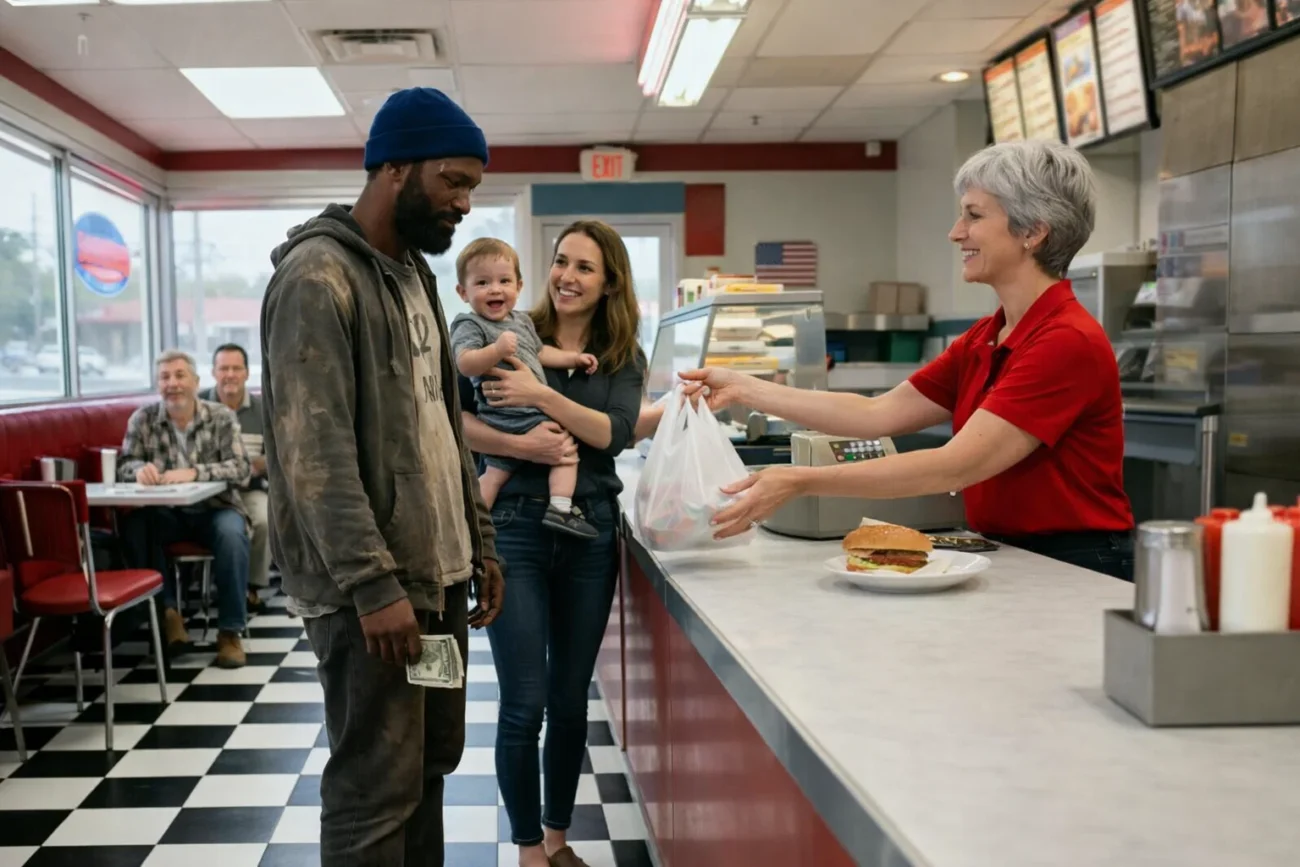
As the morning unfolded, Michael witnessed an incident that shook him. A young mother stood at the register, clearly distressed as she realized she couldn’t afford her meal. Before management or staff intervened, Henry stepped in without hesitation and paid for her food using his own money. There was no show, no expectation of praise—just compassion.
Instead of gratitude, the response from the cashiers, Megan and Troy, was cruel. They mocked Henry openly, making jokes about his age, his car, and suggesting he should have retired long ago instead of trying to be a “hero.” What disturbed Michael even more was what followed. Their comments hinted at something darker: cash discrepancies were being deliberately manipulated, with plans already in place to blame Henry for money he had never taken.
That moment erased any doubt Michael had.
The following day, he returned—this time prepared. He brought security footage, transaction records, and statements from witnesses. When Megan and Troy attempted to accuse Henry of stealing, Michael revealed who he really was. The disguise came off, and so did the lies. The diner fell silent as the truth surfaced. Law enforcement was called to address the misconduct, and the situation was handled accordingly.
Then Michael turned his attention to Henry.
In front of the staff and customers, Michael announced that Henry’s debts would be fully paid, that he would be given a new place to live, and that he was being promoted to Floor Manager. The applause that followed was spontaneous and heartfelt. Michael explained that Henry embodied everything Carter’s Diner was meant to represent—integrity, kindness, and respect.
In the months that followed, the diner didn’t just recover—it flourished. Profits rebounded, staff morale improved, and customers returned in greater numbers. There were no new menus or flashy promotions. The change came from restoring the core values that had been lost.
Michael was reminded of a lesson he had learned long ago: the soul of a diner isn’t found in its food or its brand. It lives in the people who treat others with decency, even when no one is watching.
Disclaimer: This narrative is a fictional story created for illustrative purposes. Any resemblance to real individuals, businesses, or events is purely coincidental.