
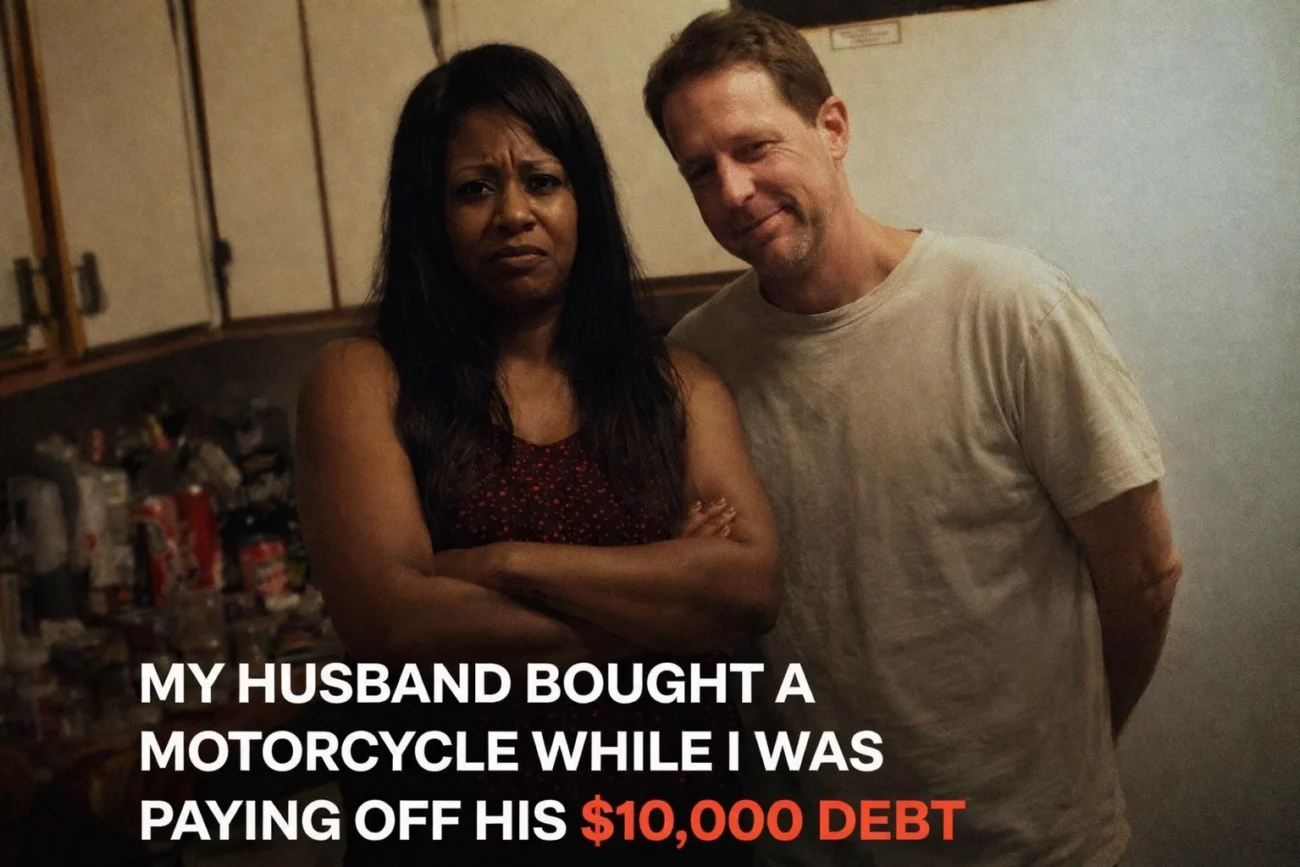
Claire had given more than she ever thought possible to keep her marriage from collapsing under the weight of her husband’s deceptions. She paid what he owed, shielded him from consequences, and carried their shared life almost entirely on her own. That fragile balance shattered the moment she discovered a single receipt hidden in his jacket.
At forty years old, Claire could look back and see a pattern she had tried hard not to name. Throughout their marriage, she had been the constant—the one ensuring stability while her husband, Evan, drifted from one short-lived job to another. Each new position came with promises, explanations, and optimism that never quite materialized into real security.
She wanted to trust him. She truly did.
Claire covered the mortgage, utilities, groceries, insurance—everything essential. When friends asked how they managed, she smiled and spoke of partnership, though privately she knew the truth: she was holding everything together alone.
Evan often reassured her. He spoke confidently about upcoming interviews and opportunities, laptop open as if he were making progress. Claire would nod, then return to long hours at the office, convincing herself that support was what marriage required. In hindsight, she realized how many warnings she had ignored.
The illusion collapsed one year earlier.
While organizing their home office, Claire uncovered a stack of envelopes concealed behind old books. One by one, she opened them, her hands shaking. Credit card statements, loan agreements, overdue notices—all addressed to Evan, all hidden in their home.
The total debt amounted to twenty-five thousand dollars.
She sat on the floor, papers scattered around her, struggling to breathe as the reality settled in. What hurt most was not just the amount, but the dates. The debts stretched back months, some more than a year. He had been hiding this while she worked herself to exhaustion to keep them afloat.
That evening, Evan walked into the kitchen to find Claire waiting, the documents laid out before her. When she asked what they were, his composure crumbled. He apologized through tears, insisting he never knew how to tell her.
She confronted him with the truth: the job he claimed to have for the past six months had never existed. Each day, he left the house pretending to work, spending hours in cafés while borrowing more money to maintain the façade.
Claire wanted to leave immediately. She felt finished, betrayed beyond repair. But Evan begged—literally, on his knees—pleading for another chance. He promised change, real work, responsibility.
Against her better judgment, she stayed.
Within a week, Evan found a job as a grocery store cashier. Claire hoped this marked a turning point. Over the following year, she sacrificed relentlessly. She took on extra work, cut all unnecessary expenses, and poured every spare dollar into paying off his debt. No trips, no dinners out, no new clothes. By the time nearly twenty thousand dollars had been repaid, she was drained but hopeful.
She believed they were improving—until the afternoon she did laundry.
Checking the pockets of Evan’s work jacket, she found a receipt that made her hands go numb. It was from a motorcycle dealership.
The purchase had been made three days earlier.
The cost: four thousand dollars.
Payment: cash.
While Claire denied herself even small comforts to repair his financial damage, Evan had bought himself a motorcycle.
She didn’t confront him immediately. She folded the receipt, placed it in her pocket, and finished the laundry in silence, her thoughts shifting from shock to resolve.
At dinner that evening, Evan spoke casually about his day. Claire listened, then placed the receipt on the table. His expression changed instantly. He claimed he had saved the money from his paychecks, that the purchase was a symbol of progress.
Claire responded calmly. She told him that for the next six months, she would no longer carry the household. Every expense—rent, food, utilities, insurance—would be his responsibility alone.
When he protested that his income wasn’t enough, she told him to sell the motorcycle, take another job, or find a way. If he failed to manage even one week, she would leave without looking back.
From that moment on, Claire paid for nothing.
Two days later, the motorcycle was gone. Evan had sold it. Soon after, he took a second job stocking shelves overnight at a warehouse. His days became exhausting cycles of work and sleep. Claire watched him struggle, resisting the urge to step in.
One night, he admitted he didn’t know how she had done it for so long. Her answer was simple: she had no choice.
Over time, Evan adapted. Bills were paid on schedule. Meals were planned carefully. Money was tracked. Sacrifice became real to him for the first time.
Five months into the arrangement, Evan came home with unexpected news: he had been promoted to assistant manager. The position came with a stable salary and benefits, allowing him to quit the warehouse job.
By the sixth month, Evan was not only covering expenses but saving money. He carried himself differently—more confident, more grounded.
One evening, he asked Claire to dinner. At a modest Italian restaurant, he thanked her for not leaving, but more importantly, for forcing him to stand on his own. He admitted that her constant rescue had allowed him to avoid growing up, and that the ultimatum had changed his life.
Then, in front of other diners, he knelt—not to propose, but to give her a small red box. Inside were car keys. He had bought her a car with his own earnings.
Claire cried openly. She understood then that their future was secure not because of the gift or the promotion, but because Evan had finally learned responsibility.
Sometimes, the most compassionate act is to stop saving someone and allow them to face the consequences. And sometimes, that space becomes the ground where real change begins.
Disclaimer:
This story is a fictional narrative created for illustrative and inspirational purposes. Names, characters, events, and circumstances are imaginary. Any resemblance to real persons or situations is coincidental.