
I thought I was stepping into a family that had already lived through its worst pain.
I was wrong.
It only took one quiet sentence from Daniel’s oldest daughter to make me realize something in that house wasn’t right.
Daniel told me about his past early on—second date early.
“I have two daughters,” he said. “Grace is six. Emily is four. Their mother passed away three years ago.”
He said it like someone who had repeated it many times, but the weight was still there.
“Thank you for telling me,” I said.
He gave a tired half-smile. “Most people don’t stick around after that.”
“I’m not most people.”
And I meant it.
His daughters made it easy to stay.
Grace was sharp, curious, always asking questions like the world owed her answers. Emily was quieter at first, hiding behind his leg—until one day she climbed into my lap with a book like she’d always belonged there.
I didn’t try to replace their mother. I just showed up.
Grilled cheese sandwiches. Bedtime stories. Fevers, messes, laughter.
After a year, Daniel and I got married.
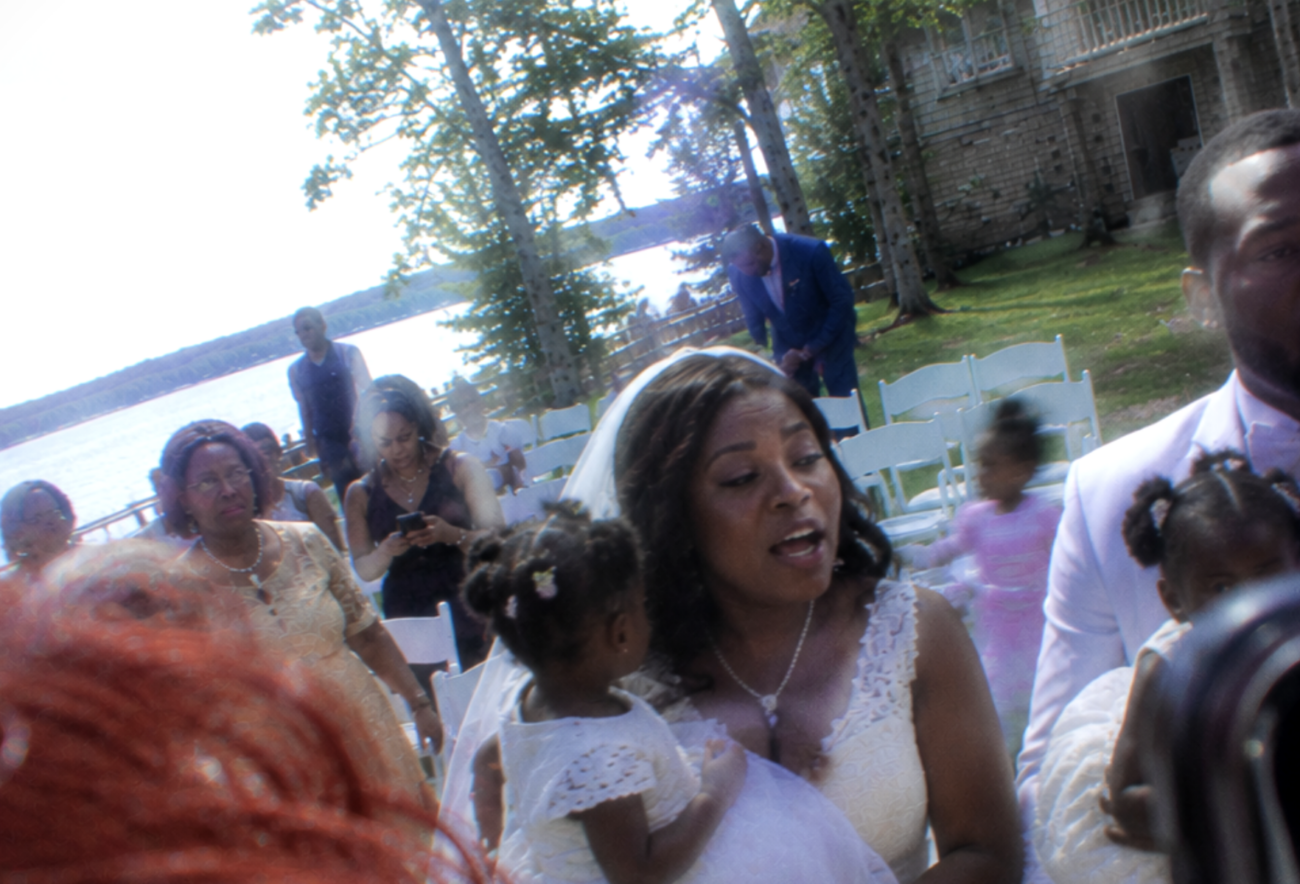
Small ceremony. Lakeside. Grace asking about cake every ten minutes. Emily asleep before sunset. Daniel smiling, but cautiously—like happiness was something fragile.
Then I moved into his house.
It was warm. Lived-in. Toys scattered everywhere. Photos covering the walls.
And one door that was always locked.
The basement.
“Why is that always locked?” I asked one evening.
“Storage,” Daniel said without looking up. “Old tools, boxes. Not safe for the girls.”
It sounded reasonable.
So I let it go.
But the girls didn’t.
Sometimes Grace would glance at that door when she thought no one noticed. Emily would linger near it, then quickly walk away.
One day I found Grace sitting on the floor, staring at the handle.
“What are you doing?”
“Nothing,” she said, and ran off.
Strange. But not enough to push.
Not yet.
Everything changed on a quiet afternoon.
The girls had mild colds, so we stayed home. Within hours, they were running around like nothing was wrong.
By noon, they were playing hide-and-seek.
I was in the kitchen when Grace came up to me, serious in a way that didn’t belong to a child.
“Do you want to meet my mom?”
I froze.
“What do you mean?”
“She’s downstairs,” Emily added from behind her.
My chest tightened.
“Where downstairs?”
Grace grabbed my hand. “The basement.”
Every alarm in my body went off.
The locked door. The secrecy. The way Daniel avoided it.
“Does Daddy take you down there?” I asked.
“Sometimes,” Grace said. “When he misses her.”
That didn’t help.
The door was locked.
I should have waited.
I didn’t.
I pulled out two hairpins and worked the lock with shaking hands.
Click.
The door opened.
The smell hit first—damp, stale.
I stepped inside.
And then everything I feared… shifted.
It wasn’t horror.
It was something else.
The basement wasn’t empty.
It was preserved.
A couch with a folded blanket. Shelves of photo albums. Framed pictures of Daniel’s wife everywhere. Children’s drawings. A cardigan draped over a chair. Rain boots by the wall. A small table with a toy tea set.
An old TV. Stacks of labeled DVDs.
This wasn’t storage.
It was a memory frozen in place.
“This is where Mom lives,” Grace said softly.
My heart broke a little.
“What do you mean?”
“Daddy brings us here,” she said. “We watch her. We talk to her.”
Emily nodded. “Mommy’s on the TV.”
I looked at the DVDs.
Zoo trip. Birthday. Family moments.
And on the table, a notebook.
I didn’t mean to read it, but one line caught my eye.
I wish you were still here.
Then I heard the front door upstairs.
Daniel was home.
“Daddy!” Grace called. “I showed her Mommy!”
Silence.
Then fast footsteps.
Daniel appeared at the basement door—and went pale.
“What did you do?” he snapped.
Grace flinched.
I stepped forward. “Don’t talk to me like that.”
He looked around the room, then at the girls—and the anger drained out of him.
We sent the kids upstairs.
Then I turned to him.
“Explain.”
He sat on the stairs, staring at the floor.
“After she died… I couldn’t throw anything away,” he said. “The girls asked about her. So we came down here. Looked at pictures. Watched videos.”
“You let them believe she lives here.”
“I didn’t correct it properly,” he admitted.
“That’s not a small thing.”
“I know.”
I looked around the room again.
“Why keep it like this?”
“Because down here,” he said quietly, “she still felt part of the house.”
Then I asked the question that mattered.
“Why marry me if you were still living like this?”
He hesitated.
“Because I love you.”
“Do you?”
A long pause.
“Both,” he said finally. “I love you… and I needed help holding everything together.”
It hurt.
But it was honest.
“You asked me to build a life with you while hiding this,” I said.
“I was ashamed.”
“You should have been truthful.”
“I know.”
I softened—but only slightly.
“You don’t have to erase her,” I said. “But you can’t keep pretending she’s still here.”
He covered his face.
“I don’t know how to let go.”
“You don’t have to let go,” I said. “You just have to face reality.”
Then I added, “We fix the leak. And you go to therapy.”
He let out a breath. “Fair.”
The next day, he sat the girls down.
“Mommy doesn’t live in the basement,” he told them gently.
Grace frowned. “But we see her.”
“You see memories,” he said. “Pictures. Videos. But Mommy isn’t here anymore.”
Emily’s voice trembled. “Then where is she?”
“In your hearts,” he said. “In your stories.”
Grace thought for a moment.
“Can we still watch her sometimes?”
“Yes,” he said, voice breaking.
A week later, the pipe was fixed.
A therapist’s number sat on the fridge.
The basement door stayed unlocked.
No more pretending.
I’m still here.
For now.
Not because everything is perfect.
But because, for the first time—
everything is honest.