
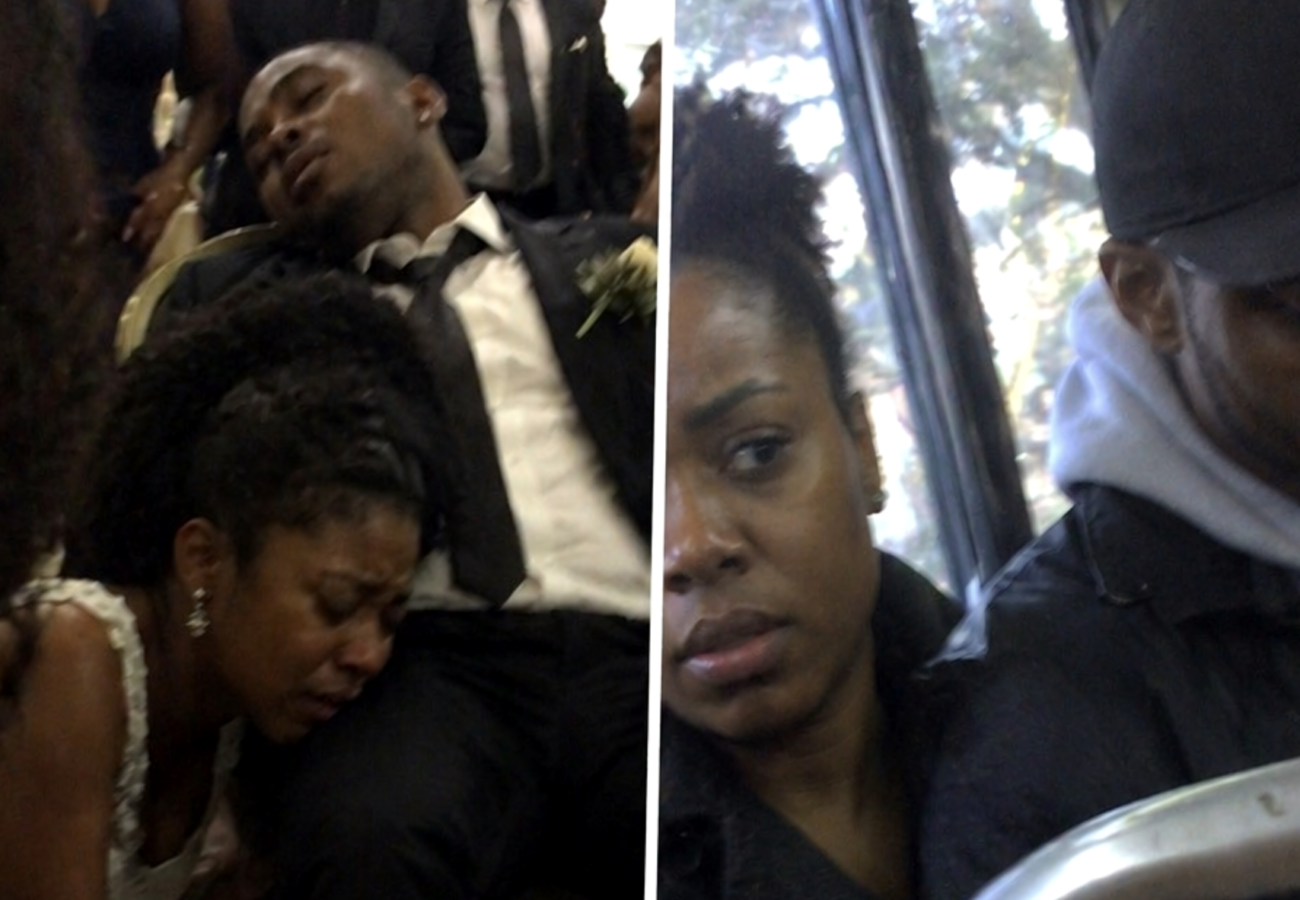
I thought I had already lived through the worst moment of my life.
My husband died on our wedding day. That’s what everyone believed. That’s what I believed.
I watched him collapse in front of me, right there between laughter and music. One second he was smiling, the next he was on the floor, motionless. The room turned to chaos—voices shouting, people rushing, someone calling for help.
I held his face in my hands, begging him to open his eyes.
He never did.
The paramedics tried. I remember the words, the tension, the silence that followed. Cardiac arrest. That was the explanation. Sudden. Tragic. Final.
Four days later, I stood at his funeral.
I organized everything myself. There was barely anyone from his side—just a distant cousin who avoided eye contact and left too quickly. No parents. No explanations. Just that same vague phrase I’d heard before:
“They’re complicated.”
I buried my husband without ever really understanding who he was.
After that, the house felt unbearable. Every corner reminded me of him. I couldn’t sleep, couldn’t breathe, couldn’t stay.
So I left.
No plan. Just distance.
I bought a bus ticket to somewhere I had never been. It didn’t matter where—I just needed to get away from the silence, from the memories, from the version of my life that no longer existed.
For the first time in days, sitting by the window, I felt something close to relief.
Until the bus stopped.
Someone took the empty seat next to me.
At first, it was just a scent—familiar, impossible.
Then I turned.
It was him.
Alive.
Before I could react, he leaned in, his voice low and urgent.
“Don’t scream. Please. Just listen.”
My whole body went cold.
“You died,” I whispered. “I buried you.”
“I know,” he said. “I had to.”
Nothing about that sentence made sense.
He started talking quickly, like he’d rehearsed it.
About his family. About money. About a deal he made behind my back. They had offered him everything—wealth, security, a future without limits—if he came back to them.
He accepted.
But not in the way they expected.
He took the money… and ran.
Faking his death was part of the plan.
I sat there, listening, trying to process the words while something inside me slowly broke apart.
“You let me think you were dead,” I said.
“I did it for us,” he insisted. “So we could be free.”
Free.
That word felt wrong.
There was no freedom in what he had done. Only lies.
Only manipulation.
He spoke about a new life, a new beginning, a future where we would never struggle again. He talked like everything could still be fixed, like I would simply understand.
But all I could see was the funeral.
The coffin.
The grief.
Me, standing alone in a wedding dress that had turned into mourning clothes in a matter of hours.
“You didn’t do this for us,” I said quietly. “You did it for yourself.”
He didn’t deny it. Not really.
That was the moment something shifted inside me.
I reached into my bag, turned on my phone without him noticing, and let him keep talking. Explaining. Justifying. Confessing.
By the time he realized what was happening, it was too late.
Other passengers had started listening too. Faces turned toward us, expressions shifting from confusion to shock.
The bus slowed.
I stood up.
He stood too, panic finally breaking through his confidence.
“Come with me,” he said. “We can still fix this.”
I looked at him—really looked.
The man I had loved.
The man I thought I lost.
The man who had chosen money over truth, control over trust.
“No,” I said. “I’m done.”
The doors opened.
I stepped off the bus.
Across the street, there was a police station.
My hands were shaking, my heart racing, but for the first time since the wedding, I felt clear.
I walked inside.
And as I played the recording of his voice—his own words exposing everything—I realized something simple and painful:
The man I married really had died that day.
Just not in the way anyone thought.