
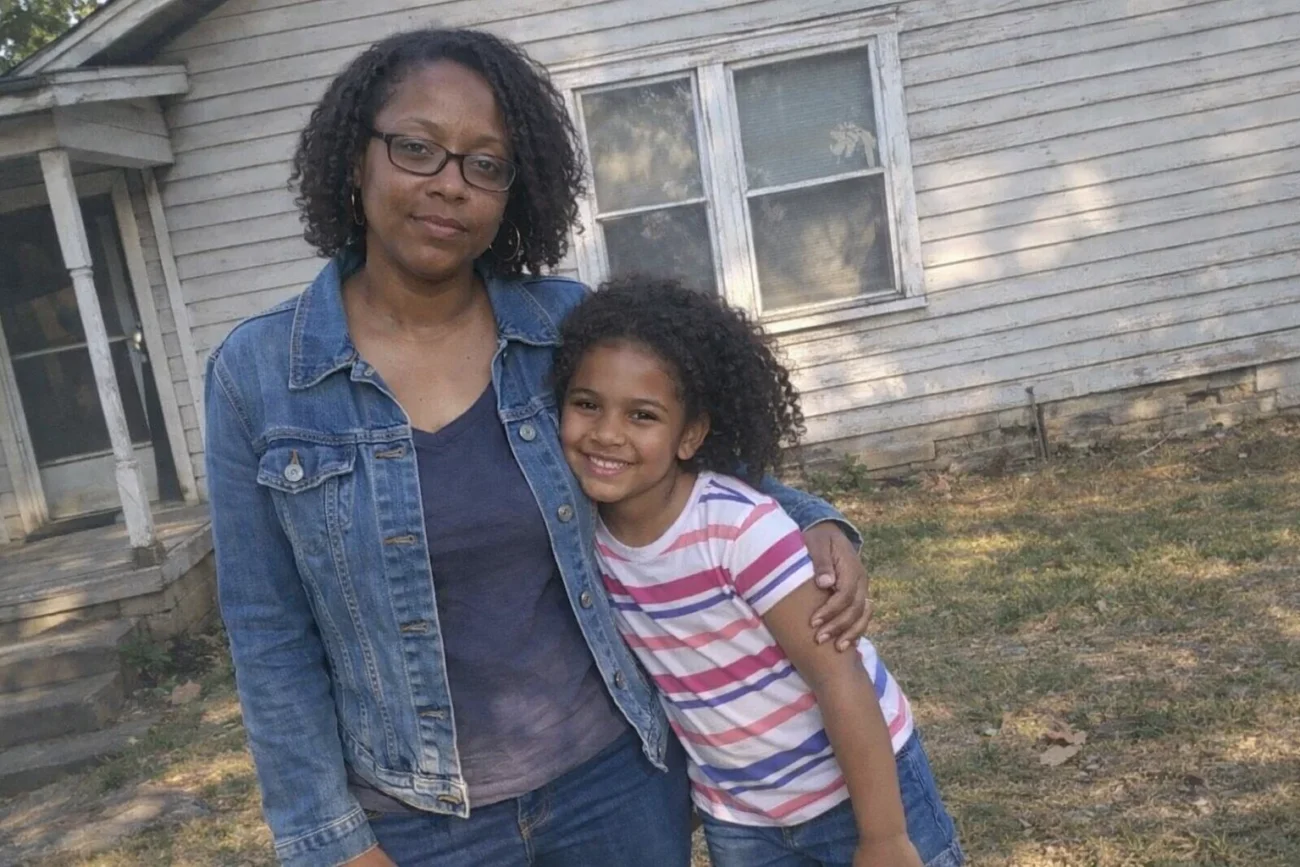
I loved my mother deeply. I truly did. But growing up, something about our relationship always felt distant.
I never had a father. I had never even seen him. Whenever Father’s Day came around at school, I would feel awkward and unsure what to say.
My mother, Margaret, would simply smile and tell me, “It’s always been you and me, Claire. That’s more than enough.”
I wanted to believe that.
Margaret wasn’t cruel or unkind. She made sure I had everything I needed. But she was never affectionate. She didn’t hug me when I cried. Instead, she would pat my shoulder like she wasn’t sure what to do with my feelings.
When I was seven, I sometimes stood in the doorway of her bedroom at night.
“Mom?” I would whisper.
“Yes?”
“Can I sleep here tonight?”
She would pause for a moment, then gently say, “You’re a big girl, Claire. You’ll be fine in your own room.”
So I would nod and go back to bed, pretending it didn’t hurt.
She rarely came to my school plays. When I asked why, she blamed migraines or work.
We never had long talks about life or relationships the way other mothers and daughters seemed to.
But when I graduated from college, she was there. Sitting stiffly in the bleachers, clapping politely.
After the ceremony, I hugged her.
“I’m proud of you,” she said.
The words sounded practiced, but I held onto them anyway.
After graduation, I moved to another city for work and built my own life. I rented a small apartment, worked at a marketing firm, and filled my weekends with friends who felt more like family than anyone else had ever been.
I still called my mother sometimes.
“How are you feeling?” I would ask.
“I’m fine,” she would reply.
“How’s the house?”
“It’s the same.”
Our conversations rarely lasted more than a few minutes.
Eventually, I stopped asking why she seemed so distant. I told myself that maybe this was just who she was.
Then one evening, everything changed.
I had just arrived home from work when my phone rang.
“Is this Margaret’s daughter, Claire?” a man asked.
“Yes.”
“This is Harold, your mother’s attorney. I’m very sorry to inform you that your mother passed away this afternoon after a long illness.”
For a moment I couldn’t even speak.
“What do you mean a long illness?” I asked. “She was fine.”
There was a pause on the line.
“She had been undergoing treatment for over a year.”
Over a year.
And she had never told me.
The next morning I flew back for the funeral.
The service was small. A few neighbors, some distant relatives, and Elena — my mother’s housekeeper.
Elena had worked for my mother for years. When I was a child she came a few days a week. Later she was there almost every day, cooking, cleaning, and helping with the house.
After the funeral, we gathered in Harold’s office for the reading of the will.
My chest felt tight as he began.
“The estate,” he said carefully, “is to be transferred in full to Ms. Elena.”
For a second I thought I had misheard.
“Elena?” I asked.
Harold nodded.
I felt the air leave my lungs.
“I’m her daughter,” I said. “There has to be a mistake.”
But there wasn’t.
When I asked if anything had been left to me, Harold simply shook his head.
Outside the office, I confronted Elena.
She avoided my eyes at first, then finally looked up.
“I deserve it,” she said quietly. “I took care of the house for years.”
I didn’t know what to say.
She did, however, allow me to collect my mother’s belongings.
So I drove to the house where I had grown up.
From the outside it looked exactly the same.
But inside, everything felt smaller.
I moved through the rooms slowly, packing my mother’s clothes into boxes. Elena stayed in the kitchen, giving me space.
My head was full of questions.
Why had my mother hidden her illness?
Why had she left everything to someone else?
When I entered her bedroom, I hesitated for a moment before stripping the sheets from the bed.
As I lifted the mattress slightly to straighten the bedding, I noticed something sticking out.
An envelope.
My name was written across the front in my mother’s handwriting.
My hands began to shake as I opened it.
Inside was a letter.
“My dear,” it began. “I know you must have many questions. There is a secret I tried to protect you from for as long as I could.”
I sat down on the edge of the bed and kept reading.
The letter explained that years before I was born, my mother had been desperate to have a child. Doctors had told her she would never be able to conceive.
At that same time, Elena — who was only seventeen then — had started working for her.
Elena became pregnant at eighteen. The father didn’t want the baby and pressured her to end the pregnancy.
Margaret discovered the truth when she noticed Elena’s morning sickness.
And in that fragile moment, my mother made an offer.
She asked Elena to let her raise the baby as her own.
“I promised you would have every opportunity,” my mother wrote. “And Elena agreed on one condition — that her identity would remain secret.”
My heart pounded.
There was another document in the envelope.
My original birth certificate.
Under “Mother” was Elena’s name.
Suddenly, everything made sense.
The distance. The careful way Margaret had treated me. The way Elena sometimes watched me when she thought I wasn’t looking.
The letter continued.
“I left the house to Elena because, legally, she is your mother. She sacrificed everything so you could have a stable life. I hope one day you will understand.”
My mind raced.
If Elena was my biological mother… why had she stood in the lawyer’s office and said nothing?
I carried the envelope into the kitchen.
“Elena,” I said quietly. “We need to talk.”
She turned toward me.
When she saw the letter in my hand, her face went pale.
“You read it,” she whispered.
“Yes,” I said. “Is it true? Are you my real mother?”
Her eyes filled with tears.
“Yes.”
The room felt suddenly too small.
“All these years,” I said, “you were right here. Why didn’t you tell me?”
“It wasn’t that simple,” she replied. “Margaret wanted you so badly. I was young and scared. The man who got me pregnant wanted nothing to do with you.”
“Who was he?”
She hesitated before answering.
“He’s the gardener at the Whitman estate next door. His name is Manuel.”
The name stirred a memory of a tall man trimming hedges while I rode my bike past as a child.
“Elena,” I said slowly, “why take the house and leave me with nothing?”
Her expression shifted.
“Because of him,” she said.
Manuel had recently realized the truth and began threatening her. He demanded money and said he would expose everything if she didn’t secure the house.
“I thought if I gave him the house quietly, you would stay out of it,” she said.
My stomach twisted.
At that moment her phone rang.
She looked down at the screen and whispered, “It’s him.”
“Answer it,” I said.
She turned on speaker.
“What’s taking so long?” Manuel’s voice said. “When are you transferring the title?”
I took the phone.
“This is Claire,” I said calmly. “And if you try to blackmail Elena again, I will report you to the police.”
There was a long silence.
Then the line went dead.
After that, Manuel disappeared from the neighborhood.
In the quiet days that followed, Elena and I sat at the kitchen table trying to process everything.
“I thought you’d hate me,” she admitted.
“I don’t hate you,” I said. “I’m just trying to understand.”
For the first time in my life, the pieces of my story finally made sense.
Margaret had loved me in her own guarded way.
Elena had loved me from the shadows.
And the house that once felt like a place full of unanswered questions now felt like the beginning of something new.
For the first time, I felt like I finally understood where I came from.
Note: This is a fictional narrative story created for storytelling purposes.