
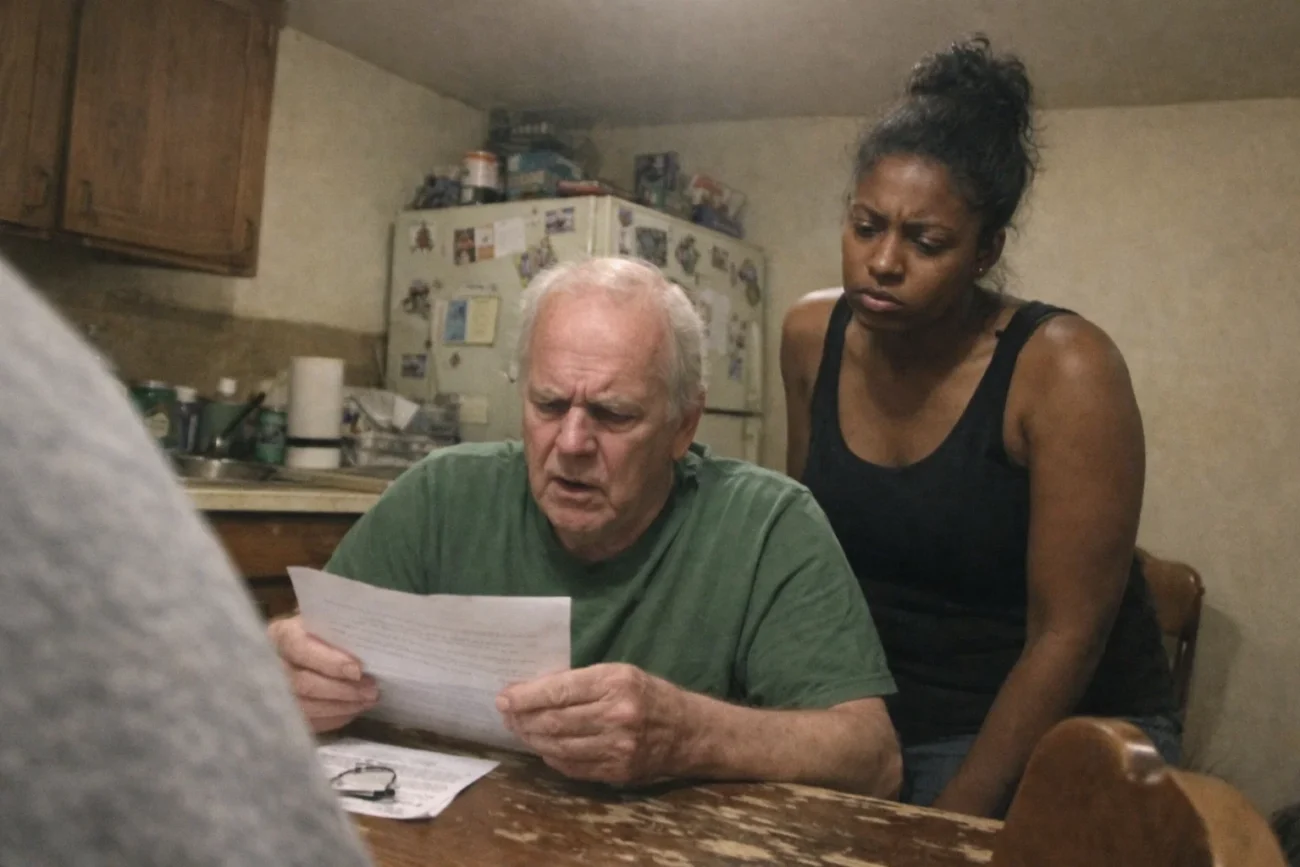
I’m 70 years old.
At my age, you think life has already shown you every kind of pain there is. You think the worst things that could happen have already happened.
I believed that.
Until a few weeks ago.
Because twenty years ago, on a cold December night, I buried my son, his wife, and my grandson.
And for twenty years I believed what everyone told me:
It was just a terrible accident.
But my granddaughter came home with a piece of paper that changed everything.
And the first line on it said:
“IT WASN’T AN ACCIDENT.”
Twenty years ago, a few days before Christmas, my son Michael brought his family to my house for dinner.
Michael.
His wife Rachel.
Their two kids — eight-year-old Sam and little Emily, who was only five.
It was nothing special. Just dinner, laughter, the smell of cinnamon from the pie Rachel baked.
Outside, snow had started falling.
The weatherman said it would be light.
He was wrong.
By the time they were getting ready to leave, the wind was already picking up and the roads were getting slick.
Michael stood in the doorway holding Emily. She was half asleep, her little pink jacket zipped all the way up.
He smiled the way sons do when they think their fathers worry too much.
“Relax, Dad,” he said. “We’ll be fine.”
Rachel wrapped Sam’s scarf around his neck and waved goodbye.
“We’ll call when we get home.”
Those were the last words I ever heard from them.
Three hours later, someone knocked on my door.
Not a normal knock.
The kind of knock that makes your stomach drop before you even open the door.
Officer Reynolds stood on my porch, snow melting off his coat.
I knew something was wrong the moment I saw his face.
“There’s been an accident,” he said.
The road they took home had iced over.
Their car slid off the shoulder and slammed into a row of trees.
Michael died.
Rachel died.
My grandson Sam died.
Only Emily survived.
She spent days in the hospital.
Concussion.
Broken ribs.
Seatbelt bruises dark enough to make the nurses wince.
The doctors said something else too.
“She may not remember what happened.”
They called it trauma.
They told me not to ask questions.
Not to push her memory.
“Let her heal,” they said.
So I did what they told me.
I buried my family.
And I brought Emily home.
Overnight, at fifty years old, I had to become a father again.
I learned how to braid hair.
Badly.
I burned pancakes.
I showed up at school plays and soccer games and science fairs.
Emily grew up quiet, but kind.
She never caused trouble.
Never rebelled.
She loved puzzles, mystery books, and crime shows.
Sometimes she would stare at old family photos for a long time.
But she never asked about the crash again.
The only time she ever mentioned it was when she was six.
“Why didn’t Mommy and Daddy come home?”
I swallowed my grief and told her what everyone had told me.
“It was an accident, sweetheart. A bad storm.”
She nodded.
And she never asked again.
Years passed.
Emily went to college.
Graduated.
Got a job as a paralegal at a small legal research firm downtown.
She was twenty-five now.
Smart. Independent. Sharp.
But a few weeks ago, right before the anniversary of the crash, something about her changed.
She got quiet.
Focused.
At dinner she started asking strange questions.
“Grandpa, what time exactly did they leave that night?”
“Did the police ever come back after the investigation?”
“Was there anyone else on that road?”
The way she looked at me made my skin crawl.
Like she was measuring every word I said.
Then last Sunday, she came home early.
She didn’t take off her coat.
She stood in the doorway holding a folded piece of paper.
“Grandpa,” she said.
Her voice was steady.
Her hands weren’t.
“Can we sit down?”
We sat at the kitchen table — the same table where she used to do homework when she was little.
She slid the paper across the wood.
“I need you to read this before I say anything.”
I opened it.
The first line made my heart stop.
“IT WASN’T AN ACCIDENT.”
I looked up at her.
“Emily… what is this?”
She didn’t smile.
“I remember things now,” she said quietly.
I felt the air leave my lungs.
“The doctors said you didn’t remember.”
“I didn’t,” she said.
“Not until recently.”
Then she pulled something from her bag.
An old silver flip phone.
Scratched. Broken.
“I found this in the county archives,” she said.
“It belonged to the officer who handled the crash.”
Officer Reynolds.
The same man who knocked on my door that night.
“There was a voicemail saved on it,” she said.
“One that had been partially deleted.”
She pressed play.
The recording was full of wind and static.
But two voices were clear.
A man saying, panicked:
“You said nobody would get hurt.”
Another voice answered.
Cold.
Sharp.
“Just drive.”
The message cut off.
My hands started shaking.
“What does that mean?” I whispered.
Emily looked at me.
“They weren’t alone on that road.”
She told me everything she had discovered.
For months she had been searching through records.
Police reports.
Internal investigations.
Court files.
Officer Reynolds had been under investigation twenty years ago.
For falsifying crash reports.
For taking bribes.
From a trucking company.
The road my son had taken that night was supposed to be closed.
A jackknifed truck had blocked it earlier in the evening.
Barricades should have been there.
They weren’t.
Reynolds had removed them.
Michael swerved to avoid the truck.
That’s why the tire marks didn’t make sense.
That’s why the crash didn’t look like a normal skid.
They weren’t sliding.
They were trying to avoid something.
Something that shouldn’t have been there.
“Why did I survive?” Emily asked quietly.
Then she answered her own question.
“I was asleep.”
She looked down at her hands.
“My body didn’t brace.”
Reynolds died three years ago.
Heart attack.
There will never be a trial.
No courtroom.
No justice in the way people imagine justice.
But Emily wasn’t finished.
She handed me one more envelope.
It was a letter.
From Reynolds’ widow.
In shaky handwriting she confessed everything.
Her husband had been in debt.
The trucking company paid him to ignore safety violations.
To keep certain roads open when they shouldn’t be.
“He never meant for anyone to die,” she wrote.
“He thought the road would be empty.”
The final line nearly broke me.
“I hope knowing the truth gives your family peace.”
For twenty years I believed my son died because of a snowstorm.
Because of bad luck.
Because of fate.
Now I know the truth.
It wasn’t fate.
It was greed.
That night Emily and I lit candles for Michael, Rachel, and Sam.
The way we do every year.
But this time something was different.
We didn’t sit in silence.
We talked.
About Michael’s terrible jokes.
About Rachel singing off-key in the car.
About Sam’s drawings I kept hidden in my wallet for two decades.
Outside, snow started falling again.
Soft.
Quiet.
Not angry anymore.
Emily reached across the table and took my hand.
“You weren’t wrong to feel something was off,” she said.
“You were right.”
I pulled her into a hug and whispered something I should have said years ago.
“Thank you for bringing them home.”
Because after twenty years of questions…
The truth finally did.
Note: This story is a fictional narrative created for storytelling purposes.